Blog


The role of the Registered Nurse or Newborn Care Provider is to feed, soothe, bathe, change & provide all other gentle care to baby through the night.

Home » Page 7

Download the NIH Infant Safe Sleep and Maternal Health Materials

In 1994 the Back to Sleep Campaign was launched by the National Institutes of Health. Back to Sleep delivered one of modern public health’s most dramatic victories. With the simple directive of “Put your baby on their back to sleep,” Sudden Infant Death Syndrome (SIDS) deaths in the U.S. dropped by 30–40% within just a few years. And deaths plummeted by 60%+ over two decades! That’s why it’s vital for infant safe sleep and maternal health materials to be available to all.

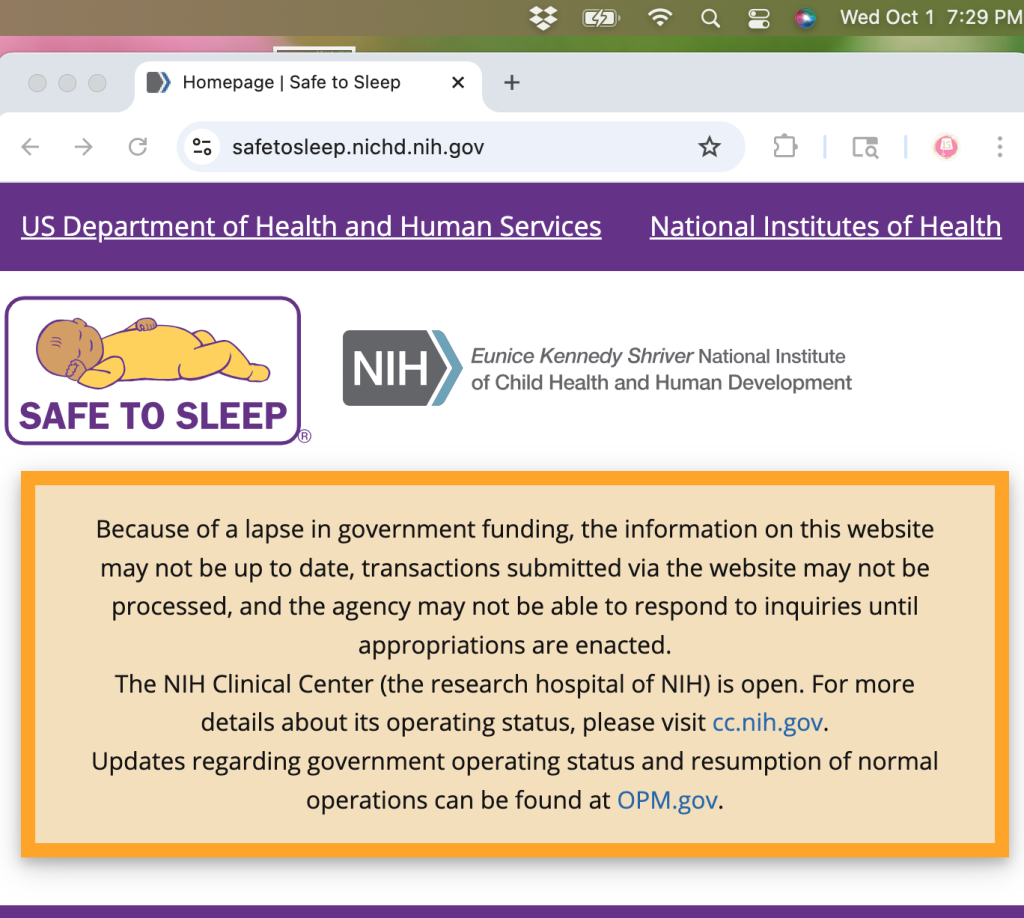
On October 1, 2025, NIH like other government sites, posted a message on their homepage: “Because of a lapse in government funding, the information on this website may not be up to date.” This means materials on things like infant safe sleep, maternal health and cultural competency might not be updated. Additionally there are threats of funding cuts.

Download NIH Safe Sleep Materials

As a means of preserving critical evidence-based safety information, we’ve created this hub where you can review, share and download the NIH Infant Safe Sleep and Maternal Health Materials.

Included in this resource hub:

  • Infant Safe Sleep
  • Safe Sleep Materials in Spanish, French and Arabic
  • Maternal Health Studies
  • Cultural Competency and Cultural Humility Info

In addition to safe sleep guidance, you can review resources on maternal health and cultural competency. We recognize that infant safety is intertwined the health of parents. Infant health and maternal wellness also includes the cultural contexts in which families live. These materials help healthcare professionals and caregivers approach safe sleep and maternal health with sensitivity, respect and a deeper understanding of diverse family needs.

NIH website message

Infant Safe Sleep and Maternal Health Materials – More Resources

Please visit 10 Steps to Safe Sleep for more information about the expanded newborn and infant safe sleep recommendations made in 2022.

10 Pasos para un Sueño Seguro del Bebé

To learn more about baby gear safety, read the Consumer Product Safety Commission’s CPSC Ban and Recall of Inclined Sleepers info.

Are you a caregiver or newborn care specialist who would you like to learn more about promoting safe sleep in your community? Learn more about Cribs for Kids and how they help individuals, groups and hospitals.

The Back to Sleep campaign remains one of the greatest public health successes of our time. With so much progress made, it’s vital that families and caregivers such as night doulas continue to have access to accurate information. Access needs to remain even during times when government resources may be paused. Multilingual materials and culturally relevant postpartum resources are also important. Every family should have the tools they need to prioritize infant safe sleep and maternal health.

Let Mommy Sleep is dedicated to evidence-based and safe practices. Read The State of Newborn Care, Policy Paper (2026) for more information.

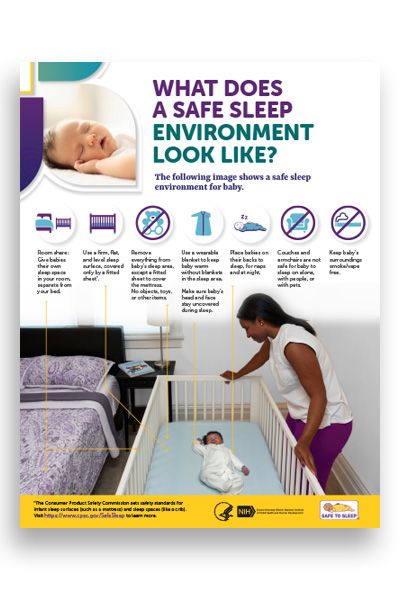
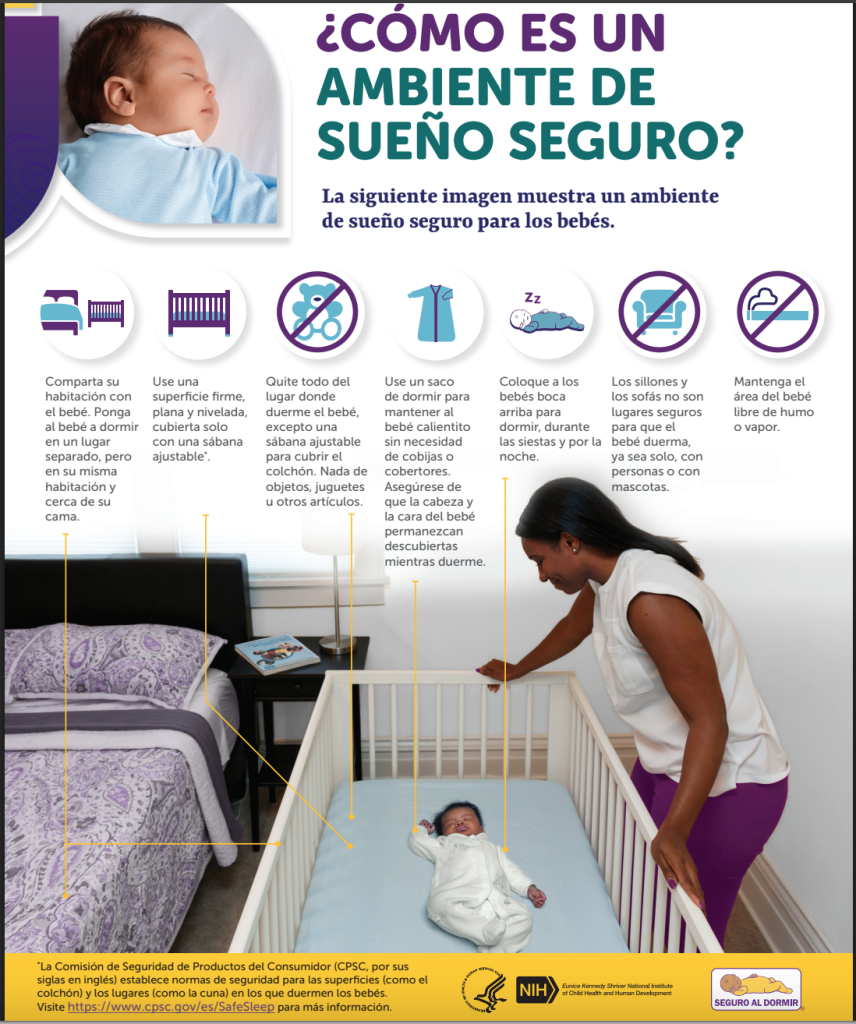
NIH safe sleep environment on let mommy sleep

10 Pasos para un Sueño Seguro del Bebé

Por favor lea 10 Pasos para un Sueño Seguro del Bebé.

Pasos para un sueño seguro del bebé: Dormir boca arriba (Back to Sleep):

Dormir boca arriba sobre una superficie plana es la posición más segura para que los bebés duerman. Esto mantiene sus vías respiratorias despejadas sin riesgo de que la cabeza se incline y restrinja el flujo de aire. Se recomienda el tiempo boca abajo cuando el bebé esté despierto para que pueda ejercitarse. También ayuda a prevenir el síndrome de cabeza plana por pasar demasiado tiempo acostado boca arriba.

Recuerda: boca arriba para dormir, boca abajo para jugar.

10 Pasos para un Sueño Seguro del Bebé

Superficie plana y despejada:
Coloca al bebé sobre una superficie firme y plana, libre de juguetes, protectores de cuna, mantas y otros objetos. Esto también significa no usar cuñas, posicionadores para dormir y otros artículos que dicen ayudar a los bebés a
dormir mejor.
Compartir habitación:
Mantén al bebé en la misma habitación contigo, pero no en la misma cama, durante al menos 6 meses. Antes se recomendaba compartir habitación durante el primer año de vida del bebé. Reconocemos que millones de familias
comparten la cama sin problemas y que a menudo es una norma cultural, pero para minimizar el riesgo de muerte súbita del lactante (SMSL), el espacio seguro para el bebé es solo en una cuna libre de sábanas y almohadas.
Evitar fumar:
Sueño seguro del bebé: No fumes en casa ni cerca del bebé. No hay una cantidad segura de humo para tu bebé, incluyendo el humo de segunda mano.

Además, debe evitarse la exposición de padres e infantes a nicotina, alcohol, marihuana, opioides y drogas ilícitas.

Más pasos para un sueño seguro del bebé

Lactancia materna:
Si puedes, amamanta a tu recién nacido durante al menos 2 meses, lo que ha demostrado reducir el riesgo de SMSL en un 50%. Esto aplica tanto si la leche se da directamente del pecho como en biberón. La leche materna promueve el crecimiento cerebral, fortalece el sistema inmunológico y reduce los episodios de reflujo, manteniendo despejadas las vías respiratorias.

Vacunación:
Todas las agencias de salud nacionales e internacionales coinciden, y los datos prueban, que las inmunizaciones reducen el riesgo de SMSL. Las vacunas disminuyen la posibilidad de infecciones que pueden afectar la respiración y estabilizan las respuestas inmunitarias.

No dejar que el bebé se sobrecaliente:
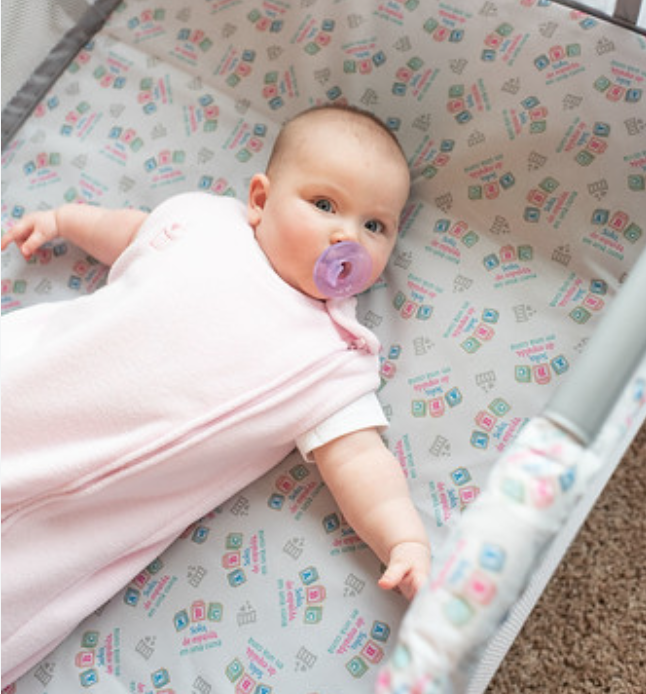
Viste al bebé acorde a la temperatura. El exceso de calor puede afectar su capacidad para regular la respiración, el ritmo cardíaco y el despertar durante el sueño.

Ofrecer un chupete:
Según la Academia Americana de Pediatría, chupar un chupete requiere que la lengua esté hacia adelante, lo que disminuye el riesgo de obstrucción orofaríngea. Asegúrate de no usar una cuerda o cualquier otro dispositivo para sujetar el chupete.

Evitar productos contrarios a las pautas de sueño seguro:
Aunque aún se pueden encontrar en algunos vendedores, los productos inclinados para dormir han sido prohibidos para la venta. La Comisión de Seguridad de Productos del Consumidor (CPSC) prohibió desde 2022 los mecedores, almohadas, nidos, cuñas y posicionadores para dormir. Los bebés no deben usarlos para dormir.

Sueño Seguro del Bebé Infografía

Una palabra sobre los sacos de dormir con peso y los monitores-

En 2022, en las actualizaciones más recientes de la Academia Americana de Pediatría (AAP),la AAP aborda el uso de sacos de dormir y envolturas con peso, afirmando que las mantas, sacos de dormir o ropa con peso sobre o cerca del bebé no son seguros y no se recomiendan. En cuanto al uso de la técnica de envolver al bebé (swaddling), todavía se recomienda para
ayudar a que los recién nacidos se sientan cómodos, pero no hay evidencia de que envolver al bebé reduzca el riesgo de Síndrome de Muerte Súbita del Lactante (SIDS).

La AAP también menciona específicamente los monitores cardiorrespiratorios y otros dispositivos comerciales que afirman reducir el riesgo de SIDS u otras muertes relacionadas
con el sueño. No existe evidencia que respalde las afirmaciones de estos productos. Por lo tanto, el uso de productos que dicen aumentar la seguridad durante el sueño puede dar una falsa sensación de seguridad y fomentar la complacencia. En otras palabras, se deben evitar monitores y cunas que afirmen que emitirán una alarma si la respiración del bebé se detiene o
su ritmo cardíaco disminuye.

Nos enorgullece ser un socio de Cribs for Kids Safe Sleep, y cada doula nocturna y enfermera de recién nacidos de Let Mommy Sleep es una Embajadora del Sueño Seguro. Seguir los pasos para un sueño seguro del bebé ayuda a garantizar que tu bebé duerma de forma segura y tranquila en todo momento.

Descubre más información sobre el sueño seguro del bebé a Download the NIH Infant Safe Sleep and Maternal Health Materials.

10 Steps to Safe Sleep for Baby: Current AAP Guidelines Explained

Last updated October 1, 2025 – Below are the 10 steps to safe sleep for baby, with a breakdown of why each guideline is in place using the AAP’s evidence-based guidelines. You can also download all of the NIH Infant Safe Sleep and Maternal Health materials here.

Visita 10 Pasos para un Sueño Seguro del Bebé para esta información en español.

10 Steps to Safe Sleep for Baby

Steps to safe sleep for baby

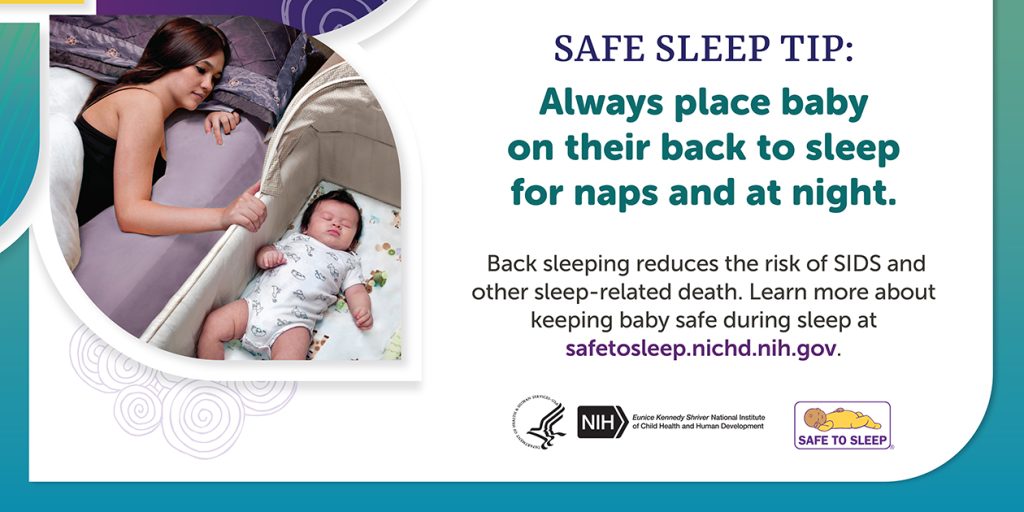
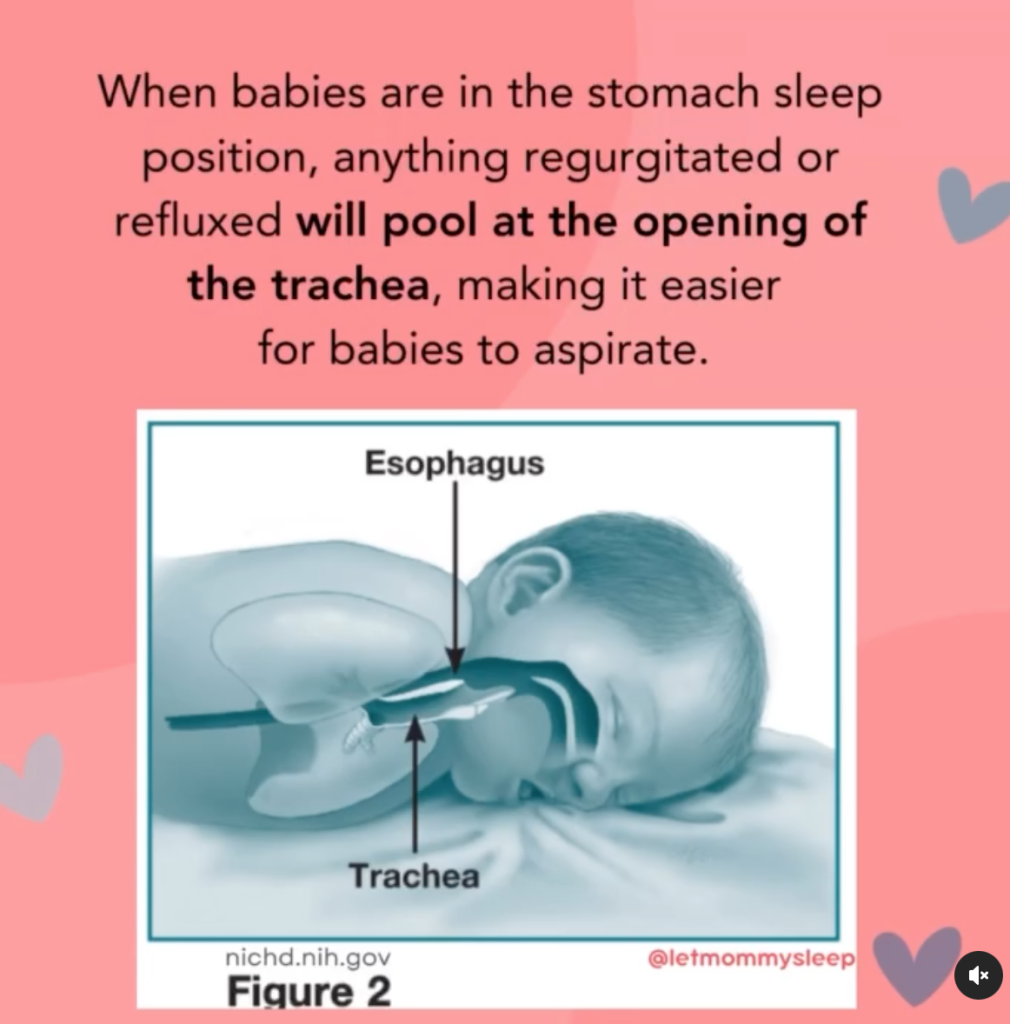
  1. Back to Sleep – Sleeping flat on their backs is the safest sleep position for babies. This keeps their airways clear without any risk of the head lowering and restricting airflow. Tummy time is recommended during awake times so that baby can exercise! It also ensures that babies don’t develop flat head syndrome from being placed on their backs too much. Remember, back to sleep, tummy to play.
  2. Flat, clear surface: Place baby on a firm, flat surface clear of toys, crib bumpers, blankets  & other items. This also means no crib wedges, sleep positioners or other items marketed to help infants sleep more soundly. The AAP recommends no blankets, pillows, or soft bedding until at least 12 months of age.
  3. Room Sharing: Keep baby in the same room as you, but not the same bed for at least 6 months. Previous advice was to stay in the same room for at least the first year of baby’s life. We certainly acknowledge that millions of families happily co-sleep with no problem and it’s often a cultural norm. But in terms of minimizing SIDS, the only safe space for baby is alone, in a crib free of sheets and pillows.
  4. Avoid Smoking: in the home and around baby. There’s no risk-free amount of smoke for your baby. This includes secondhand smoke.
  5. Avoid parent and infant exposure to nicotine, alcohol, marijuana, opioids, and illicit drugs.
  6. Breastfeeding: If you can, nursing your newborn for at least 2 months has been shown to reduce the risk by 50%. This counts for milk given from a bottle as well as from the breast. The reason breastmilk helps is because it promotes brain growth, builds up the immune system and reduces instances of reflux. Lowered instances of reflux keep airways clear.
  7. Vaccinate: All national and worldwide health agencies agree, and the data proves that immunizations reduce the risk of SIDS. Vaccines reduce the chance of infection which may affect breathing and stabilize immune responses.
  8. Don’t let baby overheat: Dress appropriately for the temperature. Being too warm can affect an infant’s ability to regulate their breathing, heart rate, and arousal from sleep.
  9. Give a pacifier: As the AAP has noted sucking on a pacifier requires forward positioning of the tongue, thus decreasing this risk of oropharyngeal obstruction. Be sure not to use a string or other attachment device when using a paci.
  10. Avoid products that go against safe sleep guidelines: While they can still be found at many resellers, inclined sleepers have been banned for sale. The Consumer Product and Safety Commission (CPSC) ban affects rockers, pillows, nappers, wedges and sleep positioners. This ban took effect in 2022. Infants should not be put in these for sleep. Read the full info in CPSC Ban and Recall of Inclined Sleepers

A Word about Weighted Sleep Sacs and Monitors

In 2022, the most recent American Academy of Pediatrics updates, the AAP addresses weighted sleep sacs and swaddles stating that Weighted swaddles, weighted clothing on or near the baby are not safe and not recommended. As far as swaddling goes, it is still recommended to help newborns stay comfortable but there is no evidence that swaddling is a SIDS deterrent. Learn How to Swaddle Like a Pro.

The AAP also specifically calls out cardiorespiratory monitors and other commercial devices that claim to reduce the risk of SIDS or other sleep-related deaths. There is no evidence to support these product claims. So the use of products claiming to increase sleep safety may provide a false sense of security and complacency. In other words, monitors and cribs that claim they will buzz or ring if baby’s breathing stops or heart rate lowers should be avoided.

We are Proud To Be A Cribs For Kids Safe Sleep Partner and every Let Mommy Sleep night doula and newborn caregiver follows AAP safe sleep guidelines. Following the steps to safe sleep for baby helps ensure that your baby sleeps safely and soundly every time. Contact us for safe, overnight newborn care.

Postpartum Recovery: What if You’re Not Breastfeeding?

Postpartum recovery doesn’t look the same for everyone. If you can’t or choose not to breastfeed, you may be wondering what changes to expect in your body and how to take care of yourself in the weeks after birth. Your body will still go through hormonal shifts, breast changes and physical healing and Postpartum Recovery: What if You’re Not Breastfeeding? aims to make the transition smoother to help you focus on rest, healing and bonding with your baby.

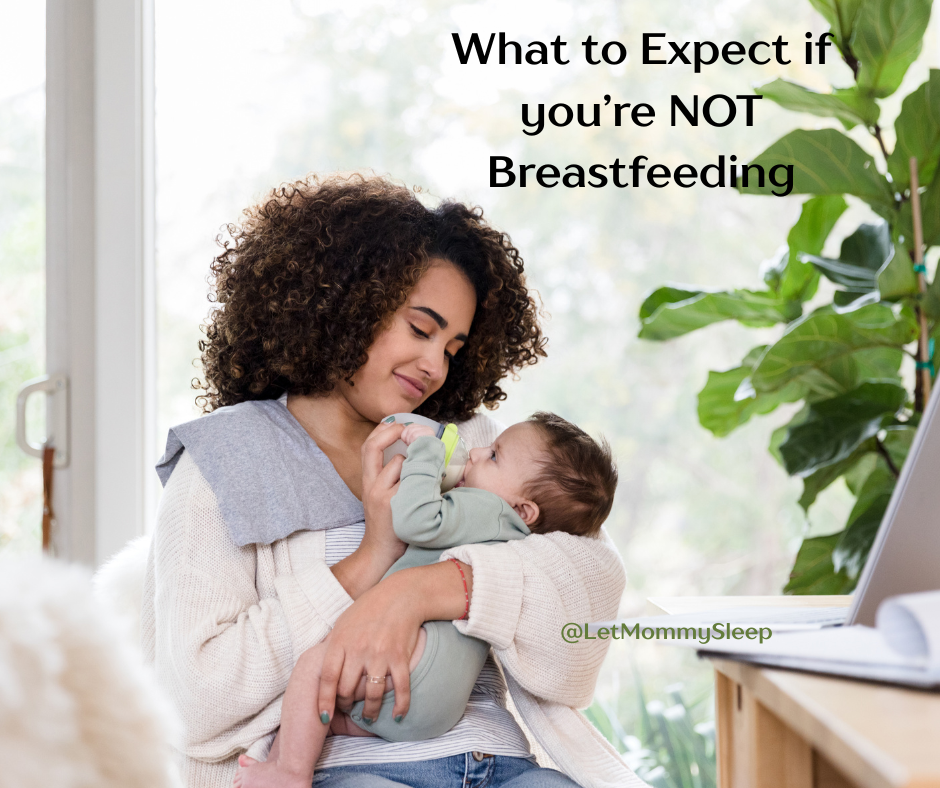
What to Expect if you’re NOT 
Breastfeeding shows a mom formula feeding her newborn

Breast Changes if You’re Not Breastfeeding

Nursing or not, your breasts may still become swollen, tender, or engorged around day 3–5 postpartum. This is normal and gradually subsides within 1–2 weeks.

Q: How can I get my milk to dry up If I’m not breastfeeding?

  • Wear a supportive, snug bra without underwire to minimize irritation and stay comfortable. A sports bra or compression bra give gentle support while allowing milk to gradually reabsorb and production to slow down. The focus is on comfort and reducing stimulation so your body knows that milk isn’t needed.
  • Use cold compresses or chilled cabbage leaves to reduce swelling.
  • Hand-express only enough to relieve discomfort; avoid fully emptying breasts to prevent prolonging milk production. Breastmilk is produced on a supply and demand basis, so when emptying the breasts you don’t want to increase demand.

Q. What’s Cabergoline?

Cabergoline is a simple, effective and generally safe medication that suppresses lactation. Cabergoline is a tablet that works by stopping your body’s production of prolactin, the hormone that helps maintain milk supply. While only 1 dose is typically prescribed, side effects of dizziness, headache or bloating may occur.

Q. How long does it take for breast milk to dry up if you are not breastfeeding?

For most people milk production decreases significantly within 7 to 10 days when not stimulated. Engorgement typically peaks around day 3 to 5 and gradually subsides within 1 to 2 weeks. Full cessation varies; some people see milk completely stop within a week while others may notice small amounts for several weeks. Avoiding stimulation is the key factor in how quickly supply diminishes. It’s okay to release small amounts of milk to avoid engorgement but try not to put baby to the breast.

Physical Recovery and Hormone Shifts

Postpartum physical and hormonal changes will happen regardless of your feeding choice. Estrogen and progesterone fluctuate and this can lead to mood swings or fatigue. To manage your hormonal health be sure to stay hydrated and eat nutrient-rich meals, rest when you can and track your mood to self-screen for postpartum depression.

Physical recovery will be directed by your maternal healthcare team but in general, these home remedies aide in healing and pain management:

  • Over the counter pain relief such as ibuprofen if cleared by your doctor
  • Use of ice packs or sitz baths for perineal discomfort. Sitz baths are simply warm bathwater with a small amount of salt added that you can sit in for 10-20 minutes.
  • Begin gentle pelvic floor exercises once cleared by your healthcare provider to support your bladder, bowel and uterus. 
  • Supporting your body with nutrition and light activity is also important for energy and recovery.

Postpartum Recovery: What if You’re Not Breastfeeding – Call your OB/GYN or midwife if you experience:

  • Severe breast pain, redness, or warmth. This can indicate possible mastitis which is internal inflammation, often accompanied by infection.
  • Fever, chills, or flu-like symptoms
  • Heavy postpartum bleeding, soaking a pad in under an hour

Emotional and Social Support

Mom-guilt is real, and emotional and social support may look a bit different for exclusively bottlefeeding parents.

First and foremost, it’s important to remember that your newborn’s wellbeing is directly connected to your wellbeing. A mother who is healthier, confident and more rested because she chooses not to nurse is giving her baby an enormous gift. At the same time, there are many reasons a mother can’t breastfeed ranging from illness, past trauma, taking medications that are contraindicated in breastfeeding or previous surgeries that make nursing impossible. Guilt may creep in in these situations but again, a parent who is healthy or trying to be, is a good parent.

What doesn’t always get said is that bottle feeding has real advantages for the whole family. Not only do you get uninterrupted sleep, but your partner and even extended family get more opportunities for early bonding. The feeding relationship isn’t exclusively maternal with formula. Older children also benefit from a rested parent who is present during the day.

If you’re faced with any shaming by others, set boundaries simply stating, “This is what works best for our family.” Surrounding yourself with supportive voices whether from friends, online groups, or other mothers who made similar choices can also help.

Postpartum Recovery What if You’re Not Breastfeeding shows donor milk banks

Postpartum Recovery: What if You’re Not Breastfeeding? – Donor Milk

Whatever the reason for not nursing, breastmilk is always available via donor milk banks. If this is something you choose to do, you can contact the Human Milk Banking Association of North America (HMBNA) for a donor bank near you, or so an online search for possible smaller, local donor milk banks.

Whatever infant feeding choice you make, postpartum recovery still involves breast comfort, hormonal adjustments, physical healing, nutrition and emotional support. Empowering yourself with these tips can make your early postpartum weeks safer and more comfortable. Recovering postpartum is exhausting regardless of feeding choice. Our overnight RNs support non-breastfeeding families. Contact us anytime.

Postpartum Fashion: Style and Self-Care

Comfort is crucial when you’re caring for a newborn, so wearing the right clothes can protect healing areas, reduce discomfort and help promote a positive mindset. This blog, Postpartum Fashion, Style and Self Care will help you get ready with versatile postpartum outfits can help you feel comfortable and confident, giving a little boost to physical and mental health after your baby arrives.

Postpartum Fashion: Style is Self-Care

Postpartum Wardrobe Essentials

For a versatile postpartum wardrobe, prioritize pieces that are comfortable, stretch with your body and can adapt to different occasions. Choose stretchy, breathable fabrics, nursing friendly styles and invest in multi-functional pieces like wrap dresses, leggings, and flowy tops. And of course keep quality sleepwear and adaptable home wear on hand.

  • Invest in high-quality, multi-functional pieces that can stand up to lots of washes.
  • Prioritize stretchy fabrics like jersey or cotton blends and breathable fabrics like bamboo or organic cotton.
  • Maternity wear will still be functional postpartum. Look for adaptable pieces like the maternity jeans with elastic side panels that can expand/contract as needed.

An example of an essential is a wrap dress like this; it provides comfort, style and easy nursing access if you’re breastfeeding.

Postpartum C-Section Fashion Tips

If you’re recovering from a c-section, prioritize comfort and gentle support. While c-section sutures usually come out after 6 weeks, it can take months for the sensitivity to go away. Here are some options:

  • High-waisted, soft fabrics: Choose leggings, pants, or skirts that sit above your incision to avoid pressure.
  • Loose or wrap-style tops and dresses: Allow room for your healing abdomen and easy nursing access.
  • Breathable materials: Cotton, bamboo, or soft blends reduce irritation and keep you comfortable.
  • Avoid tight waistbands: Steer clear of anything that presses on or rubs the incision.
  • Layering for comfort: Cardigans, lightweight wraps, or adjustable layers make it easy to stay cozy and feed your baby.

Comfortable Clothes at Home

Being comfortable at home is essential, especially in the early weeks home with your newborn when you’re spending most of your time around the house bonding and recovering. Continuing to wear maternity clothes during this time is an easy and great option, but there’s also nothing wrong with being a little stylish while you’re at it.

  • Button-down shirts and wrap tops for quick feeding access.
  • Nursing tanks layered under regular tops for coverage.
  • Dresses with hidden zippers or overlapping panels for discreet feeding.

What about postpartum undergarments? Q&A

The right undergarments provide gentle support while helping your body heal. A soft nursing bra or seamless camisole keeps you comfortable on top, while high-waisted underwear offers coverage without irritating incisions.

Q. Why do I need a Nursing Bra?

Nursing bras are different than regular bras as they have drop-down cups or front panels that allow for feeding without removing the bra. They’re made with stretchy, breathable fabrics that adapt without constricting so they adjust to fit as needed throughout postpartum. Nursing bras also provide support while avoiding the kind of pressure that can restrict milk flow.

Q. What Should I Wear if I Choose Not to Breastfeed?

A. If you choose not to breastfeed or are in the process of weaning, supportive undergarments can help minimize discomfort. Avoid underwire styles and choose a snug, but not overly tight, sports bra or compression-style bra. These provide support and help reduce engorgement because there is less localized pressure on the breast tissue. When breasts are engorged, changing, or still producing milk (even if you’re not breastfeeding) that pressure can restrict milk flow in the ducts and be painful.

Q. Do I need a belly binder?

A. Yes. As Night Nurse (NP) Brigett says: “In addition to helping with pain -particularly after cesarean birth- abdominal binders help with internal and external healing by adding compression to the abdomen while improving blood circulation and oxygen levels.”

Examples of Stylish and Comfortable Postpartum Looks

  • High-waisted dark wash jeans + flowy top + structured jacket.
  • Maxi dress + denim jacket for comfort and nursing access.
  • Stretchy maternity leggings + long-line sports bra + oversized sweater for casual or errands.

Sleep and Nutrition During Postpartum

If you’re planning for postpartum, don’t forget the basics of sleep and good nutrition. Being able to have blocks of time when you are “off” is essential for recovery, maintaining a healthy immune system and mental health. You can even consider a night nanny registry for sleep. Food and drink options that contain lots of healthy protein, vitamins and iron also aide in recovery and are great options if you’re breastfeeding.

And when it Comes to Postpartum Fashion, Remember…

You should wear whatever the heck you want! If a tight dress makes you feel great- wear it! If your 10 year old pajama pants feel good, wash and wear them every single day and night. And of course, your partner’s hoodie might have that extra-comforting vibe that helps you feel supported and you should totally steal it. There are no rules of postpartum fashion except for you to feel good.

Meme of how to get a bikini body. 1. have body, 2 put on bikini