updated, April 1, 2023 – We began franchising in 2016 and proudly remain the only overnight newborn care franchise in America! What began as a simple service in Washington DC has now grown to 11 locations nationwide. Read our Night Nurse Franchise Updates below!
Night Nurse Franchise Updates
Here at Let Mommy Sleep Franchising, our Registered Nurses and Newborn Care Providers support brand new parents as much as we support their babies. We’re bringing this detailed model of evidence-based teaching and newborn care to families across the country. In addition to caring for others, franchise partners have the time and means to be present for their own families. Ownership means working from home while contributing financially to your own family. We call this a circle of success for families.
We currently service these locations:
Washington DC
Northern & Central NJ
Chicago
Boise, ID
Dallas
Houston
Las Vegas
Loudoun Co, VA
Tampa and Orlando FL
Boca Raton, FL
Philadelphia
San Antonio
Wichita
What’s different about us?
We are 100% woman owned and operated. This wasn’t done on purpose, we just happen to match the demographics of the child care and nursing professions. These are both overwhelmingly staffed by women.
The overriding mission of Let Mommy Sleep is to work together with families, nurses, caregivers, corporations and local businesses to truly raise the standards and accountability in postpartum care.
Besides having local offices, our Nurses and team members contribute to local and national media.
Our curriculum was awarded a government contract and taught from 2015-2020, ending when covid forced closures of public school facilities. The same coursework is now taught online as well as to families.
Our non-profit, Mission Sleep is back up and running! We provide free, overnight newborn care to families whose babies arrive when a parent is deployed, wounded or deceased.
Why We Decided to Franchise
The words “certified” and “accredited” are used often in business to market providers as trained and professional. However, there is little oversight on the use of these terms. In child care, the only legally protected title is “Nurse,” referring to Registered Nurses and Licensed Practical or Vocational Nurses. Other licensed professionals in healthcare are licensed by and accountable to their state’s Board of Nursing. In other words, there is accountability in healthcare.
We would like to bring this same level of accountability to the newborn care industry to help families and elevate caregivers. Our goal is to make the franchising the training and concepts at Let Mommy Sleep the industry standard. We will continue to pursue licensing but in the meantime make the LMS brand trusted by new parents and families.
Becoming a night nanny or newborn care specialist requires experience, certification and a calm presence during overnight hours. Here’s what you need to know about training, pay, and how to build a career in overnight newborn care.
What Does a Night Nanny Do?
A night nanny’s primary role is to care for newborns overnight, allowing parents to rest and recover. Typical responsibilities include:
Feeding the baby (or bringing the baby to a breastfeeding parent and assisting with positioning)
Burping, soothing, and swaddling the baby back to sleep
Sharing evidence-based newborn care guidance with parents
Helping with an age-appropriate schedule, therefore helping babies sleep longer stretches overnight
Aid in postpartum recovery by offering support to both parents
While the main focus is on caring for baby, night nannies also support parents’ health and well-being by giving them the chance to get restorative sleep. Sleep is linked to better mental health outcomes, physical recuperation and overall health. Learn how a doula supports parents in Sleep Deprivation and Postpartum Depression: Proven Tips to Help
Though sometimes the roles overlap, there are key differences:
Postpartum Doulas typically work during the day. In addition to newborn care, they may cook, help with older siblings or handle household tasks. Their focus is on supporting the entire household.
Night Nannies/Night Doulas work overnight, ensuring babies are fed and soothed. The emphasis is on newborn care but postpartum support such as lactation assistance is also a part of the role. You might hear this job called “baby nurse” but remember that “nurse” is a protected title.
As the Doulas of North America (DONA) website says, Postpartum doulas understand what everyone needs, and part of their role is to help the entire family adjust and settle in.
Newborn care specialists are also caregivers in the immediate postpartum phase. They can work during the day or night and the job description is largely the same as night nannies.
Night Nanny or Postpartum Doula: Training and Qualifications
To become a night nanny or postpartum doula, experience and education both matter.
Hands-on baby care experience – Comfort with newborns comes from working directly with them. This can be gained through parenting, nannying, daycare work or shadowing a current caregiver.
Certification – Online programs such as the NAPS Night Doula course are highly recommended. These cover infant safety, SIDS prevention, feeding, and sleep expectations, and list you on the National Night Doula Registry.
Continuing education – Stay current with CPR, safe sleep guidelines, and newborn care. Specialized classes in twin care, lactation or bereavement can make you stand out.
Vaccinations – Families want reassurance that their newborn caregivers are up to date on recommended vaccines, including TDaP and MMR.
Ready to get certified?
The NAPS Night Doula Certificate is the evidence-based standard for night nannies and newborn care specialists, required across all 26 Let Mommy Sleep territories and recognized by nanny agencies and pediatric practices nationwide.
We understand people can have big feelings when it comes to vaccinations. The facts remain that one way to protect newborns is to ensure that all ofthose caring for them are vaccinated.
Skills of a Great Night Nanny
There are many ways to be a great newborn caregiver! Some noteworthy skill and traits to give parents the peace of mind that their baby is in competent and caring hands are:
Experienced and confident with infant care
Patient and calm
Knowledgeable in safe sleep practices
Respectful of family preferences and routines
Able to work independently in a family’s home overnight
How Much Does a Night Nanny Make?
Pay varies by location, but to compare it to known pay rates, night nannies typically earn more per hour than Certified Nursing Assistants or Home Health Aides. Rates are determined by geography but are higher than home health agency pay. At Let Mommy Sleep, Registered Nurses earn $28-$60 per hour depending on location, and caregivers are compensated at the high end of home health pay scales.
What It’s Like to Work at Let Mommy Sleep
Let Mommy Sleep is an evidence-based company. That means that in addition to a hands-on experience and compassionate spirit we require:
vaccinations that protect infants too young to be immunized including: MMR and TDaP
CPR and First AideCertification
Non-judgemental approach to breast and bottle feeding
Working with Let Mommy Sleep means joining the Industry Leaders in In-Home Care. Here’s what you can expect:
Overnight shifts (10 pm–6 am) – You’ll diaper, feed, soothe, and track the baby’s care while also educating parents.
Twins care – Many of our families have twins or triplets, and we specialize in helping them.
Flexible scheduling – Work as little or as much as you like; we love our PRN staff.
Supportive leadership – All LMS owners are Registered Nurses, Veteran Night Doulas or Postpartum Specialists.
Continuing education – We provide evidence- based training and continuing education in newborn care.
Opportunities for growth – Staff may teach Baby Basics classes, provide postpartum visits or do virtual visits anywhere in the US.
Caregivers often choose overnight newborn care for personal satisfaction, newborn and postpartum experience while in nursing school or the balance it offers with family life. They can also switch times they work through the year as a night nanny or postpartum doula.
The skills of a great night nanny are often seen when they care for newborn twins! Remaining calm when two babies need comforting from reflux for example shows that you’ve been in this position before and have tools to help each baby feel better.
Quality sleep after childbirth is essential. It helps parents recover physically, supports mental health by reducing the risk of postpartum mood disorders, strengthens the immune system, and allows families to be present and engaged during the day. Night nannies play a direct role in making this possible.
Don’t forget that working in overnight newborn care also means being prepared with specific items to keep yourself comfortable on night shift. Read Night Doula Essentials for some of our team’s favorites.
Apply to Work With Let Mommy Sleep
If you’re ready to begin your career as a night nanny or postpartum doula, Let Mommy Sleep invites you to apply. You’ll receive training, mentorship, and the opportunity to make a difference for families during one of the most important times of their lives. You can also visit us on Indeed and read what current and former staff have to say!
Night Nanny and Postpartum Doula FAQ
Do I need to be a nurse to be a night nanny? No. While some licensed nurses choose to work as night nannies, the role is open to trained caregivers with newborn experience and certification. The title “nurse” is legally protected, so only licensed RNs, LPNs, or LVNs can use it professionally.
What are the typical hours for a night nanny? Shifts are usually from 10 pm to 6 am, though schedules may vary based on family needs.
Is certification required? Certification is not legally required to work in newborn care but it is recommended as perspective families can see that you have had some type of formal training.
How do I get newborn experience if I don’t have any yet? Start by being a mentee to an experienced caregiver, volunteering in a church or community childcare nursery or working in a daycare with infants. Families want to see hands-on comfort with babies.
How much can I earn as a night nanny? Rates vary across the US but pay is typically higher than CNA or home health aide rates. At Let Mommy Sleep, Registered Nurses earn $28-$60 per hour and all caregivers are paid competitively.
Where do I apply to become a night nanny with Let Mommy Sleep? You can apply directly through your local Let Mommy Sleep, or visit us on Indeed.
What’s the difference between a postpartum doula and a night nanny? Postpartum doulas focus on household and family support during the day. This can include sibling care, cooking and household tasks. Night nannies specialize in overnight newborn care and postpartum support.
Why do families hire night nannies? Newborn care is demanding, and parents need sleep to recover from birth, support mental health and stay present during the day for older kids or their jobs. Night doulas provide peace of mind and healthier beginnings.
When working as a night nanny or postpartum doula, families welcome you into their home during one of the most vulnerable and life-changing times of their lives: bringing home a new baby. With the right skill-set and a heart for family-centered care, you can make a positive impact on the lives of newborns and their families.
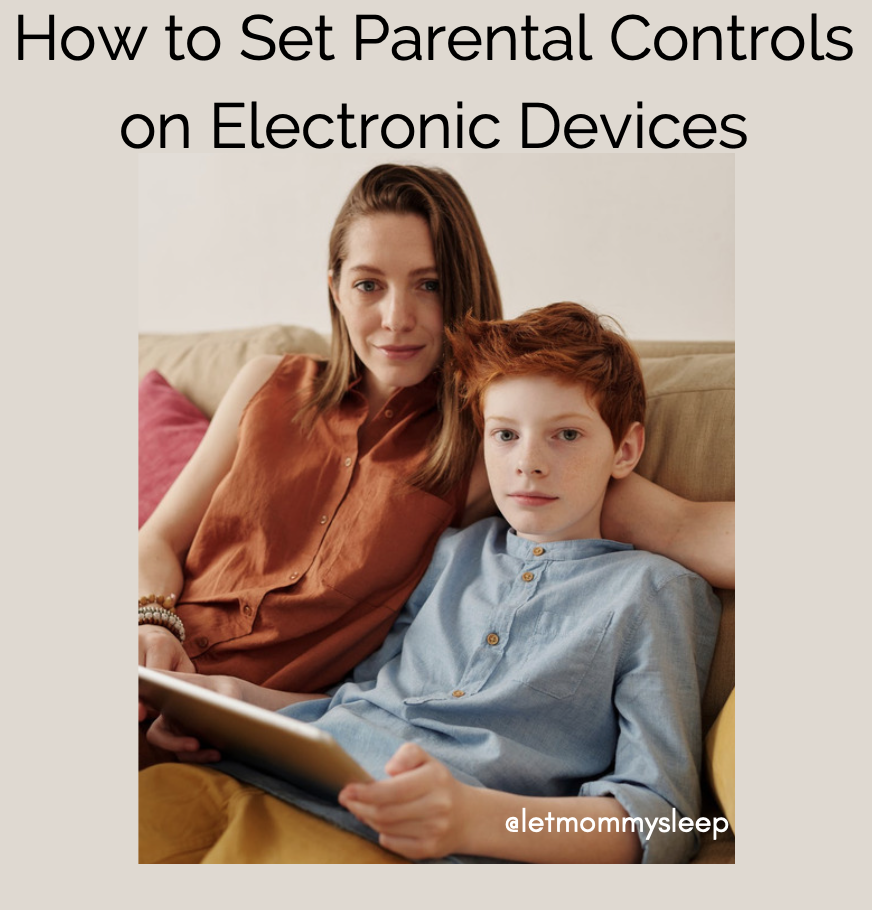
updated January 9, 2023 – Balancing responsible and safe internet use for kids is an ongoing challenge for parents. In addition to age- appropriate content, there’s blue-light and screentime limits to worry about. How to Activate Parental Controls on Your Child’s Devices shares info on making screens a little safer for infants, toddlers and older kids.
Kids and Screentime- First Thing’s First
There’s no substitute for parental involvement when it comes to screen time use and children. Research shows this is especially true for infants now that we know that screens affect development. The true protections from screens are:
Do not allow screens at all for your newborn and infant’s health and development
Activate parental controls but continue ongoing involvement and monitoring of your child’s computer use
Making sure your kids understand they can talk to you about something they’ve seen that’s inappropriate
Newborns, Infant and Toddlers and Screens
Simply put, according the all major research, babies should not be exposed to computers, televisions and phones.
The Journal of the American Medical Association (JAMA) for example recently found that “screen exposure at 12 months of age was associated with a 2-fold increased odds” of future sensory processing disorders. This is in addition to the AAP’s long standing recommendation of that babies younger than 18 months get no screen time at all because babies’ brains are still developing.
How to Activate Parental Controls on Your Child’s Devices – Apple Devices
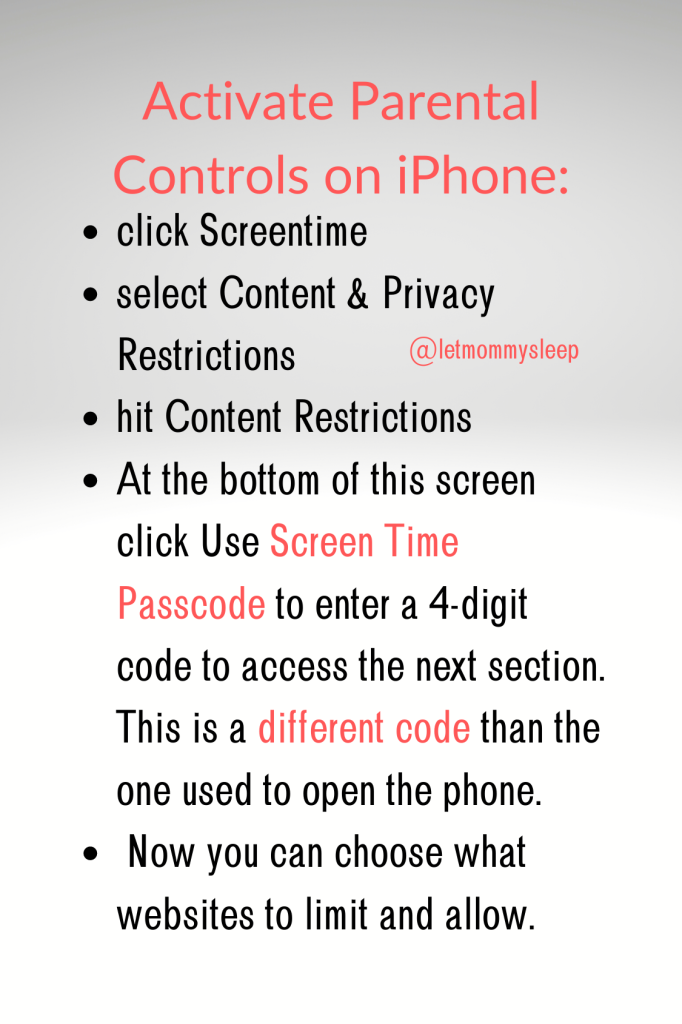
Parents can choose what content is suitable and what’s not by accessing the area called Screentime in the iPhone/iPad Settings. In “Screentime” you’ll see that restrictions can be set to filter out explicit material, but don’t stop there. Filtering out explicit material is good of course, but you can go deeper in to the Content Restriction area to control access to specific types of media. Here’s what we mean:
go to Settings
click Screentime
select Content and Privacy Restrictions
hit Content Restrictions
At the bottom of this screen you’ll be able to click “Use Screen Time Passcode” to enter a 4-digit passcode to access the next section. This is a different passcode than the one used to open the phone and should only be known by the parent.
After choosing and confirming your passcode, you can access Content Restrictions and choose what ratings you feel are appropriate for: Movies (R, PG-13, PG, G), Books (clean or explicit), Apps, TV and Music (all ages, age 7+, age 14+).
In addition to obvious adult content sites, you might consider blocking sites a child could accidentally stumble upon. Reddit for example, isn’t a site my 12 year old will actively seek out, but popular news and memes often originate there. So Reddit threads may come up first in search results for “funny cat meme,” or another innocent search. Clicking on that search result puts him on Reddit which is fine in itself, but now he’s literally 1 click away from content inappropriate for his age.
How to Activate Parental Controls on Your Child’s Devices – ChromeBooks and Android Devices:
Schools are increasingly requiring Chromebooks for elementary and middle schoolers and because of their price are a common choice for younger users. Chromebooks allow teachers to communicate with the class and monitor learning app use and help kids to learn basic computer skills by completing writing assignments via GoogleDocs.
Here’s how to keep a Chromebook safe:
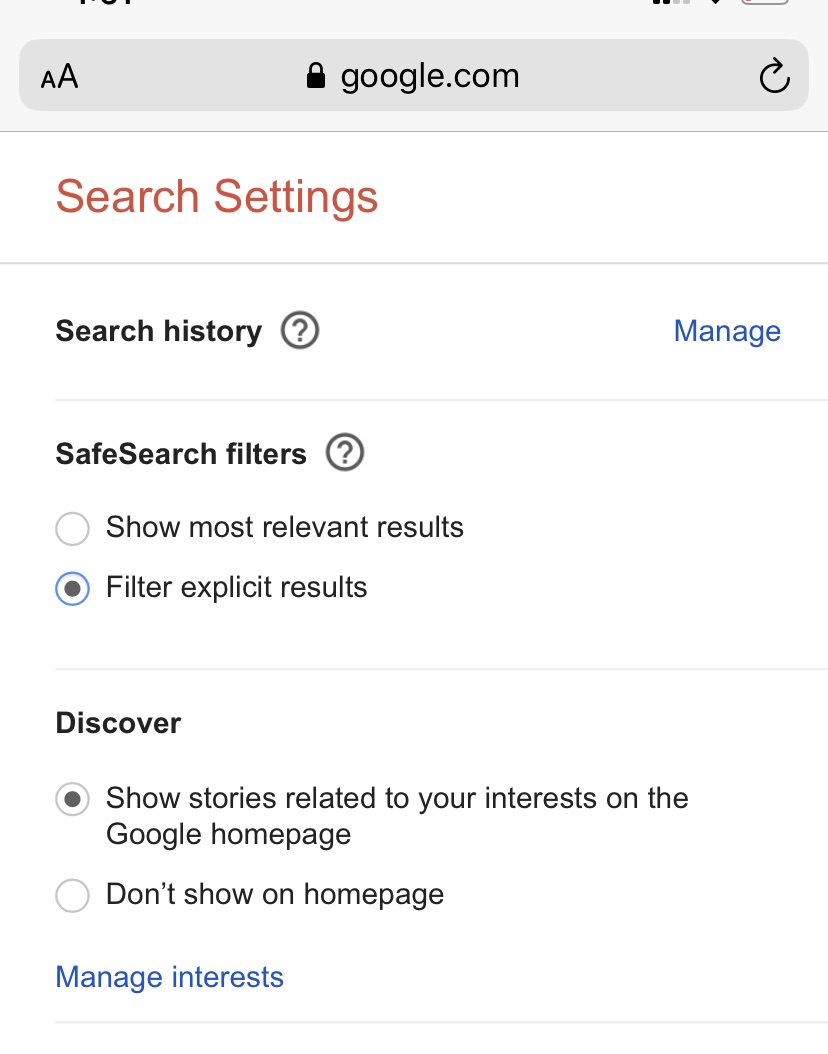
1. Since Google is the default search engine, be sure SafeSearch is enabled (see above).
2. In order to block websites or content, a Chromebook requires the installation of “Chrome extensions” which are separate applications that can be dowloaded or purchased from the GooglePlay store. As the name implies, this is just like Apple’s App Store and works the same way:
– To access GooglePlay, simply type it into the Google browser.
– Type “website blockers” into the GooglePlay search field.
– You’ll see 5-10 choices of content blocking Apps that are free to download. Once you download them, you are able to type in specific sites or words to block. Once downloaded, these Apps can be accessed in the device’s settings and will also stay in the top right corner of the web browser. BlockSite is the most popular App but there is no harm in downloading as many as you like.
Activate Parental Controls on iPhone and iPad
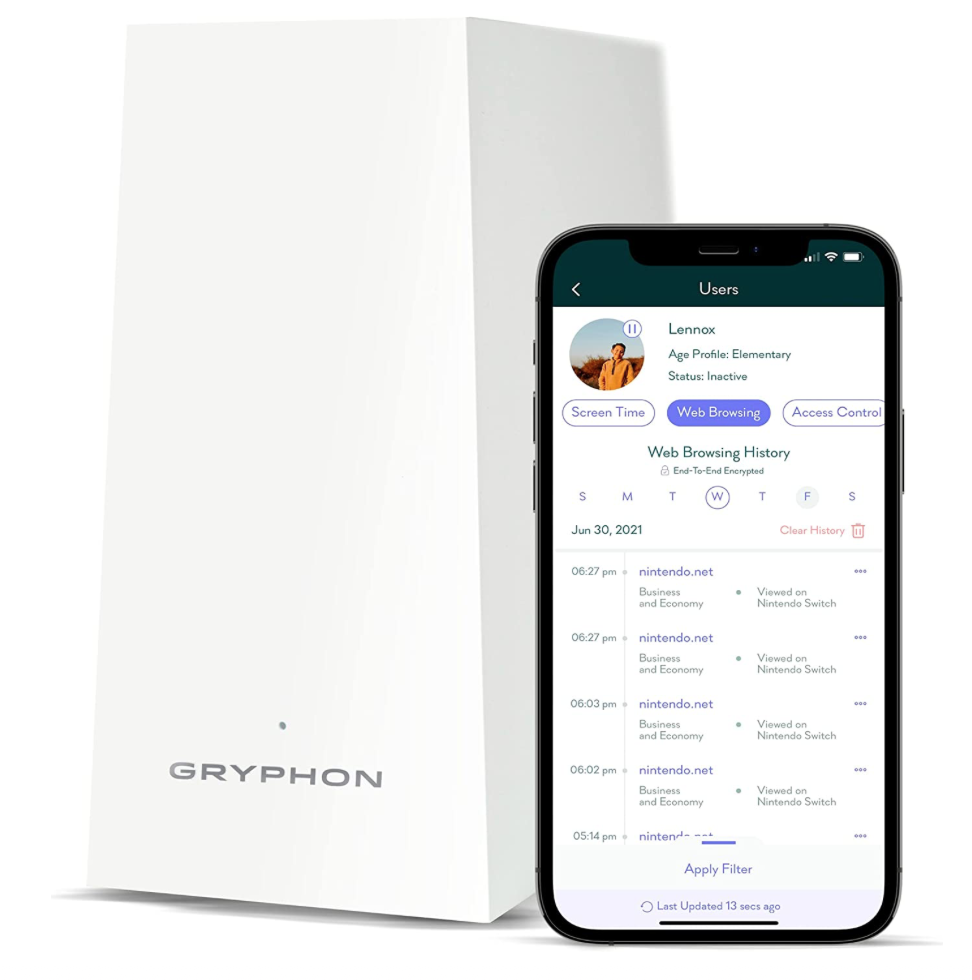
Use a Parental Control Device like Gryphon
What’s Gryphon?Gryphon is a free-standing device that is placed in the home and requires download of an app to set up. The WiFi Parental Control app allows you to filter inappropriate content, view each devices browsing history and suspend internet use. You can also set screen time limits.
How is this device used? In addition to easy-to-use parental controls, the Gryphon gives all of your devices an extra layer of network safety by blocking ransomware and malware from coming in your home’s network. It protects your internet from hackers (no one will be able to access your baby monitor), but also manages and restricts access on each device. There were other items similar to Gryphon like Koala Safe or the Circle by Disney but those items have been discontinued.
Can it protect our devices too? The nice thing about this device is that parents can control all their kids devices from one central location so your 7 year old can have different restrictions than your 14 year old. Additionally the Gryphon offers malware protection for all connected devices.
Gryphon Parental Control System
How to Activate Parental Controls on Your Child’s Devices to Make Google Safer:
Click “settings” (located in the lower right corner on a computer, and in the 3 horizontal bars on the upper left on a phone.
Click “Filter explicit results” if using a phone.
Check the “Turn on SafeSearch” box on Safe Search Filters on a computer.
Make sure Google Search settings are in SafeSearch mode
Filtering YouTube Content:
We’ve written before about YouTube Kids and how it’s mostly safe, but videos depicting suicide, sex and violence can still get through. Curb this from happening by doing the following:
On YouTube Kids Turn Auto-Play Mode OFF the: located in the upper right hand of your screen turning auto-play OFF ensures kids don’t get taken down the wrong path by having videos continually running.
Keep Restricted Mode ON when using regular YouTube. This is found under Settings on YouTube.com.
YouTube’s algorithm isn’t perfect. With millions of videos uploaded every day and filters need time to check each one, questionable content definitely gets through. When videos are posted and then shared, each new version is another video YouTube needs to “catch”.
Your Family Screentime Plan
Even with every protection in place, it’s likely inevitable that your child will be exposed to inappropriate content for their age. This is because of the sheer amount of content being produced and because you’re depending on every device your child encounters has protections in place. If kids are playing on devices together, it’s okay to ask other parents what their screen time rules are. Insisting that devices be used while parents are present and keeping an eye on kids’ activity shows kids that the internet is a serious place. Parents can have expectations of kids’ behavior online just like in the real world.
For more guidance implementing sensible internet rules, check out the AAP’s Family Media Use Plan for families.
While there are four types of tongue-tie in babies, it is rarely a medical problem. However, being born with a slightly limited range of motion in the tongue can make feeding difficult. Karen King, PCD-DONA, CLC explains how this easy-to-fix condition presents below in What’s Tongue Tie?
Most cases of tongue-tie are mild and not medically serious, but even a small restriction can make feeding more tiring for babies. Additionally, it is much more common than generally thought. And while tongue-tie is typically very easy to fix, it does lead to frustrating feeds because baby is not able to get a strong latch on breast or bottle.
What is Tongue Tie?
A tongue-tie (ankyloglossia) is a condition present at birth where the thin piece of tissue (frenulum) under the tongue is unusually short, tight or thick. This restriction can limit tongue movement, sometimes making breastfeeding, bottle-feeding, or later speech more difficult.
Severity varies; some babies have no problems, while others need evaluation by a pediatrician or lactation consultant. Babies with tongue tie are able to drink, but not as efficiently as they could be. They are getting enough milk/formula to keep them interested in feeding and often fall asleep before they are full because they are working so hard to get milk. Additionally they may take in unnecessary air, due to their limited latch, which causes them to have excess gas and a reflux misdiagnosis.
What are the signs of Tongue-Tie?
If you suspect baby might be tongue-tied, observe how feeding feels and looks. The following signs may suggest a restricted tongue movement:
Baby’s tongue lifts in a small “hump” instead of cupping around your finger or nipple.
Baby makes clicking sounds while sucking, or milk dribbles from the corners of the mouth.
Baby tires easily during feeds, often falling asleep before finishing.
The nursing parent’s nipples appear sore, creased, or with a red circular spot after feeding.
When you gently sweep your finger under baby’s tongue, you feel a tight band or bump instead of a smooth surface.
If any of these signs are present, or if feeding remains painful or inefficient despite good positioning, suggest contacting the pediatrician, ENT (ear, nose, and throat specialist), or IBCLC-certified lactation consultant for an assessment. These professionals can evaluate how the frenulum is affecting feeding and recommend next steps.
What’s Posterior Tongue Tie?
Posterior tongue-tie is the most common presentation of tongue tie, and there are three quick ways to tell if baby is tongue-tied. If any of the three below is present, ask a pediatrician for an ear, nose & throat referral so the ENT doctor can give baby a proper diagnosis and help.
Give baby your pinky and let her suck on the tip to see what her latch looks like. If the back of her tongue goes up in a little hump, that is indicative of tongue tie. A proper latch will be tongue enveloping your pinky, where her tongue wraps around the pinky.
For breastfeeding moms, examine your nipple- if a red circular spot is present on your nipple, it indicates baby’s tongue is rubbing back and forth in that one area which shows TT. There is enough milk coming out to keep baby feeding but perhaps not enough to satiate baby.
Sweep your pinky under baby’s tongue. If you feel a bump where the side-to-side sweep is interrupted, that can be indicative of tongue-tie. If the underside of her tongue is smooth she is not tongue-tied.
Do Preemies Have a Greater Chance of Tongue Tie?
Yes there is evidence that premature babies experience tongue tie at a greater rate than full term babies. However the assessment and interventions are no different and are just as effective. (Wiley)
How is Tongue-Tie Is Treated?
Tongue-tie is treated with a quick procedure called a frenotomy. During a frenotomy, a trained provider snips the tight tissue (the frenulum) under the tongue to improve movement. It usually takes only a few seconds, causes minimal discomfort and babies can feed immediately afterward.
Most mild tongue-ties don’t need treatment though; they’re managed with positioning support, lactation guidance and monitoring feeding and weight gain.
In cases where the frenulum is thicker or extends further back, a frenuloplasty may be done instead. This involves a slightly longer procedure and a few stitches to allow for proper healing.
After either procedure, gentle stretching exercises are sometimes recommended to prevent the tissue from reattaching. This usually means gently sliding a clean finger under the tongue and lifting it toward the roof of the mouth, until you see the diamond-shaped healing area. Many babies feed and latch more easily once the tongue has full range of motion.
Tongue-tie is one of those things in babies that we may not find unless we really look. But once it is corrected baby will nurse and bottle-feed much more efficiently.
If you suspect tongue tie is affecting your baby’s feeding, overnight monitoring of feeding patterns, diaper output, and weight gain can help you build the picture before your pediatrician visit. Let Mommy Sleep’s registered nurses and certified newborn care specialists do exactly that.
Updated January 22, 2026– Every first-time parent has questions, and for expecting parents of twins, the need for information can feel…well, doubled. In this guide, So You’re Having Twins! Proven Support and Fun Facts, you’ll learn how to book in-home twin care classes, get answers to common parent FAQs, and discover some fascinating twin trivia along the way. The goal is simple: to help you feel confident and supported when your newborns arrive.
So You’re Having Twins! Proven Support: In-Home or Virtual Education for the Whole Family
If you’re wondering how to feed both babies at the same time, what gear you actually need, or how to get twins on the same schedule, this Twins Baby Basics class is designed for you. Our team come to your home to share practical tips, hands-on techniques, and reassurance so you can care for your twins with confidence. Virtual classes are also available if you prefer, or live outside our service areas.
Let Mommy Sleep’s model is to have a Registered Nurse in on the first week home from the hospital and then transition to care with a newborn care provider. This can be especially helpful for parents recovering from a c-section/twin birth.
What You’ll Learn in a Twin Care Class
Safe sleep practices for twins and triplets: We’ll help set up safe sleep environments that still keep babies close for convenience but still safe. Read 10 Steps to Safe Sleep for Baby for more info.
Tandem feeding and practical positioning tips: Practice hands-on techniques with pillows and supportive positions, whether you’re bottle-feeding or nursing.
Getting twins on the same schedule: Feeding is the anchor of a baby’s schedule. We’ll show you how this works naturally so naps and bedtime fall into place together without rigid “sleep training.”
Diapering, swaddling, and soothing strategies that actually work: You’ll learn calming techniques and time-saving diaper hacks that parents of twins swear by.
The best gear for twins (and what’s not worth the hype) From double strollers to twin bassinets, we’ll help you figure out what’s worth investing in and what’s just clever marketing. If there are older siblings, we also share tips for Toys Siblings Can Play with Together!
What parents can expect in the postpartum phase: Recovering from birth, handling visitors and balancing your own sleep looks very different when you have newborn twins.
Your nurse also stays on call once your babies arrive, available by text or phone to answer your questions as you adjust to life with twins. You can schedule a Twins Visit here.
So You’re Having Twins! Parent FAQs Answered
How do you get twins on the same sleep schedule?
Feeding is the anchor to a baby’s schedule. In the early days, newborns feed on demand. Soon enough, feeds stretch to 2 hours, then 3, then 4. When twins are fed at the same time, their bodies sync, which naturally leads to naps and sleep lining up too. After a few days of offering milk at the same time, many parents are surprised at how quickly “hungry times” and nap times align.
A funny side effect: parents of older twins often say potty training is extra tough because both toddlers need the potty at the same time. Years of synced eating and sleeping leads to synced bathroom schedules too!
What’s Adjusted Age?
Adjusted age (also called corrected age) is the age of a premature baby calculated from their original due date rather than their actual birth date. If a baby is born early, their development is compared to where they would be if they had been born at full term. This is important in tracking baby milestones accurately.
Example: If a baby is born 8 weeks early and is now 12 weeks old (chronological age), their adjusted age is: 4 weeks old
Feeding infant twins at the same time
It’s inevitable that one baby will cry while you’re tending to the other. To minimize stress, get used to feeding both at once. For bottle-feeding, this often means using supportive pillows to free up your hands. If you’re breastfeeding, tandem nursing in the football hold allows both twins to latch comfortably while you can burp one without disturbing the other. Keeping two bassinets or sleepers next to your bed makes nighttime feeds easier. It takes practice, but you and the babies will find your rhythm quickly.
How often should I expect to feed twins?
Most twin parents find their babies need to eat about every 2 hours, especially in the first weeks. Remember that twins are usually born premature which means that are smaller than full term babies. Some preemies may need gentle waking for feeds, since they can be sleepy. Other newborns might wake to feed every 2 hours or more simply because their stomachs are so small. Don’t let even the tiniest bottle fool you- learn about how much to feed in How big is a newborn’s stomach?
Should twins share a crib?
No. The American Academy of Pediatrics advises against co-bedding. Twins should each sleep on their own flat, firm surface, free of pillows, blankets, or toys. However, awake time together can be beneficial, especially for preemies. Studies show premature twins sometimes help regulate each other’s heart rate and breathing. Think of togetherness as something to offer while awake and supervised, but sleep as a time for safe separation.
How do parents get sleep when they have newborn twins?
It’s crucial that parents of twins have a “sleep plan” in place before the babies arrive. Swap nights, or even half nights caring for the twins with your partner, even if it means sleeping in separate bedrooms. It may take a week or more before you are both comfortable solo-parenting the twins but allowing each other time to sleep will keep you both healthy and energized. Here are more Sleep Hacks: 4 Tips to Maximize New Parents’ Sleep
Accept help from family and friends. If funds allow, hire a night nanny who specializes in twins to allow you to recuperate and catch up on sleep. You might also consider a night doula fund on your baby registry if you’re expecting twins.
If your newborns or infants need to be soothed at the same time, try one of the 12 Ways to Soothe Baby. This is where the baby carrier comes in handy…wear one twin while holding the other!
So You’re Having Twins! Bonus Tips and Tricks
How do I keep from mixing up my identical twins?
Hospitals usually place “Baby A” and “Baby B” hats on newborns, but those get small quickly. Parents use tricks like painting a toenail with non-toxic polish, dressing each twin in “assigned” colors, or marking a hand with a safe marker. Over time, subtle differences in appearance and personality make it easier.
What’s the must-have product for parents of multiples?
A carrier. Whether it’s a Baby Bjorn, wrap, or twin-specific sling, having a way to wear one baby while tending to the other gives you freedom and keeps everyone soothed. Babies thrive when held close, and hands-free time is invaluable for parents.
How many diapers do I really need?
Newborns go through about 10 diapers a day. For twins, that’s 20 changes every 24 hours. In the first three months, expect to use about 1,500 diapers—yes, one thousand five hundred. Stocking up in multiple sizes ahead of time saves you midnight store runs.
A pro tip: make a grocery list of your family’s top 20 essentials. When friends or relatives ask how they can help, hand them the list. They can check what you need and do a store run for you, saving you time and energy.
What kind of social support is there for parents of twins?
In addition to local Facebook groups for parents of twins and higher order multiples, Multiples of America will help you find other twins families in your area. In addition to fellowship, these groups often have consignment sales where you can buy gently used gear and clothing.
So You’re Having Twins! Fun Facts
Parents of multiples often hear the same questions: “Are they identical?” “Do twins run in your family?” or the blunt “Were they natural?” Beyond those, here are some fascinating twin facts:
What are mirror twins?
About 23% of identical twins are “mirror twins,” meaning the egg split later than usual, around days 8–12 of fertilization. These twins may have opposite dominant hands, mirrored hair whorls or even reversed dental patterns.
Do twins have the same fingerprints?
No. Fingerprints do start as identical ridge patterns, but differences in pressure and hand movement while in the womb create unique prints. Twins’ prints are similar, but never identical.
What is cryptophasia?
Cryptophasia is a private language sometimes developed by twins, understood only by them. It often appears during early language stages when twins spend so much time together. While charming and sometimes baffling to outsiders, most twins also develop regular speech on track.
If you’re expecting twins or higher order multiples remember that while it may be exhausting at first, there are many supports available to you. Having a plan in place for care of the babies as well as your own sleep and recovery will benefit all of you!