Blog


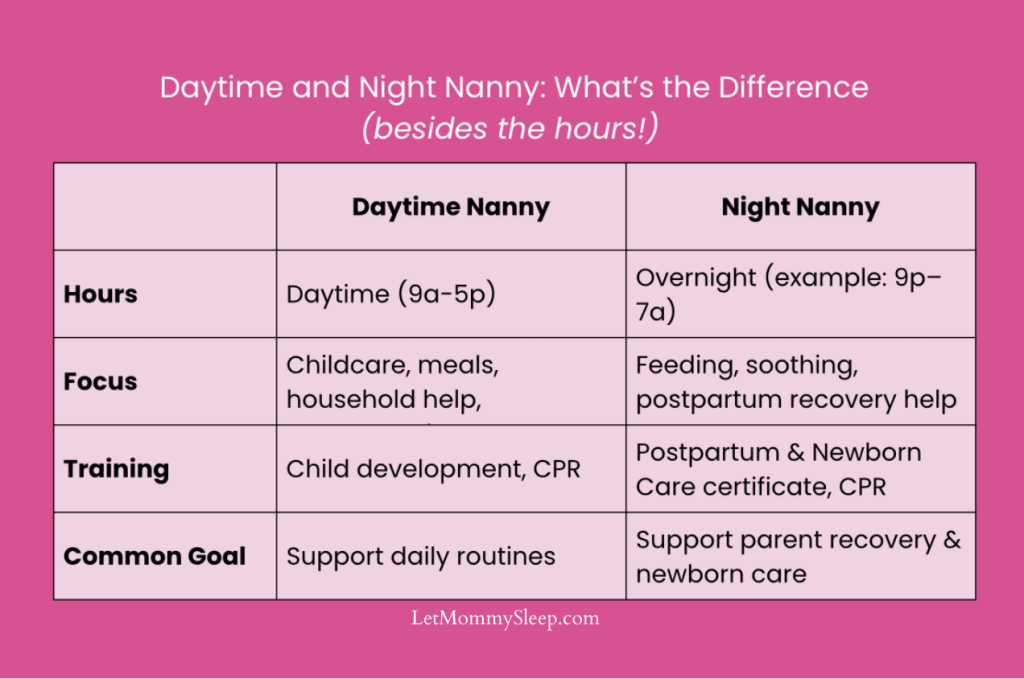
The role of the Registered Nurse or Newborn Care Provider is to feed, soothe, bathe, change & provide all other gentle care to baby through the night.

Home » Page 13

Essential First Aid Skills for New Parents

There are so many unknowns to parents of newborns and infants! Being prepared in case of an accident or other emergency will not only help your baby, but also help you.  Having the skills to help your newborn, twins or any infant in distress will not only give them the best chance of healing, but allow you to stay calm. Essential First Aid Skills for New Parents are detailed below.

Essential First Aid Skills for New Parents described by newborn care nurses
Baby Nurse (RN) caring for newborn with mom

Essential First Aid Skills for New Parents

Know How to Treat a Burn:

Burns are unfortunately a common childhood injury. Depending on the severity of the burn, they are categorized as first, second, or third-degree burns. 

  • First Degree Burns: use cool water (not ice) to treat first degree burns and apply aloe cream to the area. Do not apply any other ointments or home remedies. The Mayo Clinic suggests, keeping the area clean with a sterile gauze pad for 24 hours. Take care not to use adhesive bandages on young children since they can be choking hazards.
  • Second and Third Degree Burns (more severe): Seek medical assistance immediately and try to elevate the burned area. While waiting for help, remove baby’s clothes, apply cool water for five minutes and then cover the area with a clean dry cloth. If the burn is chemical in nature, rinse the burn persistently before taking off his/her clothes. Then remove clothing from the burned area and continue flushing the burn.

Be able to stop excessive bleeding:

In many cases, the best way to stop bleeding is to use clean gauze and apply firm pressure. If a cut won’t stop bleeding after 5-10 minutes of applied pressure, or the cut is very wide or deep, it’s time to seek professional help by visiting an ER. Continue to apply pressure to the area while in transit to the ER.

It is okay to give your older baby an age-appropriate dose of acetaminophen (Tylenol) for the pain, but never give ibuprofen (Motrin,) which can sometimes increase bleeding. For very severe bleeding cases where blood is spurting out (arterial bleeding,) call 911 right away. While waiting for help, continue to apply pressure and elevate baby’s legs to increase the flow of blood to the heart and brain.

Essential First Aid Skills for New Parents Save a Choking Baby:

If an object gets lodged in baby’s airway, all parents should know what to do. Please note, if baby has a strong cry or is coughing hard, do not perform this procedure. Strong cries and coughs can often push the object out without any additional intervention. But, if your baby is not coughing or crying, follow these steps, as outlined by the American Heart Association:

Saving a Choking Baby

  1. Position infant face-down along your forearm using your thigh for support.

    Keep the infant’s head lower than their body.

    2. Give 5 firm back blows.

    Use the heel of the hand to strike between the shoulder blades.

    3. Turn infant face-up with their head lower than their body.

    4. Give 5 quick chest thrusts.

    Chest thrusts should be about 1 ½ inches deep.

    5. Continue giving 5 back blows and 5 chest thrusts.

    Continue until the infant can cough or cry or becomes unresponsive.

    6. If the infant becomes unresponsive, lower them to a firm, flat surface and begin CPR (starting with compressions) according to your level of training.

    Trained responders: After each set of compressions and before attempting breaths:

    Open the infant’s mouth.

    Look for an object.

      For all the steps to help a choking baby, visit our updated guide on choking first aid for infants.

      Essential First Aid Skills for New Parents – Poisoning

      Part of babyproofing your home and the homes of others looking after baby means keeping harmful substances out of reach. If baby ingests something poisonous, or even if you just suspect they may have been exposed, call Poison Control or 911 immediately.

      Put Poison Control in your phone contacts 1-800-222-1222. Contacting Poison Control is free and confidential.

      It may be tempting to induce vomiting if your baby has ingested something harmful. But inducing vomiting in a baby should never be done without the explicit guidance of a healthcare professional.

      In the past, parents were counseled to induce vomiting in a child that ingested something harmful using Ipecac syrup. This is no longer recommended. We learned that Ipecac syrup caused side effects such as prolonged vomiting, diarrhea, dehydration, and damage to the gastrointestinal tract.

      Identify & Treat a Fever:

      If your newborn or infant has a fever, it’s important to monitor their temperature. For babies making eye contact and responding to you, drinking fluids and/or playing, there’s probably no cause for alarm. However there are times when it’s vital to call the doctor.

      Call your child’s primary care physician if:

      • Your newborn up to 3 months old has a rectal temperature of 100.4°F (38°C) or higher.
      • Your infant age 3 – 6 months old, has a temperature of 102°F (39°C) or higher
      • Infant age 3-6 months has a lower temperature but is acting unusually irritable, sluggish or uncomfortable
      • Baby age 7- 24 months has a 102°F temperature for longer than 24 hours or has additional symptoms such as cough, or diarrhea

      In addition to fevers, Registered Nurse and Newborn Care Provider Liz Hawkes reminds us: “Newborns temperatures will more commonly drop when septic or fighting serious illness, temps below 97.0 should be taken just as seriously as a high fever.” A doctor or 911 should be called.

      List of infant temperature to know if too high or low
      Infant Fevers: When to Call the Doctor

      As always, if you feel something just isn’t right with your baby, call the pediatrician or even visit the ER.

      In an emergency, if your baby is unresponsive and not breathing normally, call 911 and begin CPR. Below are general CPR instructions but these do not take the place of learning proper CPR. Parents and caregivers should take a class and get certified.

      1. Place baby on a firm, flat surface
      2. give 30 chest compressions using two fingers in the center of the chest.
      3. Follow it with two rescue breaths, covering the baby’s mouth and nose with your mouth while maintaining a tight seal.

      The above is not a substitute for actual CPR training. Attending a class is the only way to understand proper technique and practice skills.

      Let Mommy Sleep’s registered nurses and certified newborn care specialists are trained in CPR and first aid. Find overnight newborn care near you.

      What Should I ask a Night Nurse?

      Newborns and their parents have different needs than families with older kids. Postpartum care, breast and bottle feeding and infant sleep safety are just a few of the areas that make overnight newborn care different. If you’re wondering, What Should I ask a Night Nurse to find a great postpartum care, this blog is for you!

      Question 1: Are you a Nurse?

      The terms Night Nurse and Baby Nurse have been used for many years, but they are not always technically correct! Nurse is a legally protected term in most of the US and may only be used by Registered Nurses (RN) and Licensed Practical Nurses (LPN) or Licensed Vocational Nurses (LVN). Just like every tissue is not a “Kleenex” not every baby nurse is an RN or LPN! If you’re interviewing someone using this title, it’s a good idea to clarify their actual credentials.

      Postpartum caregivers may use different titles such a postpartum doula, night nanny or newborn care provider. These terms are not protected and anyone can use them. While the spirit of care is the same, the level of education and focus can vary widely. However, all of these are non-medical caregivers. For example, a trained postpartum doula may be expected to prepare meals and provide care to older children, while a newborn caregiver may focus just on the baby. It’s good to clarify expectations before care begins.

      What’s Your Experience?

      What Should I ask a Night Nurse?

      Experience can look different in newborn baby care and it’s important to know that there’s no required state registry or requirements for newborn caregivers. While there’s no substitute for hands-on experience, Let Mommy Sleep’s training is required across all of our team including newborn care specialists who often have prior certificates. We’ve compiled a list of basics that professional postpartum or newborn care providers should have:

      • First Aid and CPR Certification – this should also be a given for anyone in home health or child care. These expire after 2 years; an unexpired cert shows a commitment to understanding and practicing safety protocols.
      • Continuing Education Courses – Recommendations for baby care change over time, so continuing education is vital. Reputable agencies such as a daycare centers or online sources offer updated information in feeding, soothing and safety.
      • References – This is perhaps the most important question of all! Can you speak with multiple parents who can provide honest feedback? Are the references recent? And are the references excellent…or just okay?

      Do You Have a Background Check?

      There is no single national database that contains all criminal records in the United States. Criminal records are maintained at the local, state, and federal levels by law enforcement agencies and each agency is responsible for maintaining and providing access to its own records, subject to applicable laws and regulations. In other words, records from one state might not be shared with another.

      While no background check is perfect, using a highly-rated background checking service along with references can give you a good picture of a caregiver’s character. If the night nanny has a clinical license, you can also investigate their history on the Board of Nursing.

      What are your care and feeding philosophies?

      Hiring a night nurse or newborn caregiver whose values and philosophy match yours can make service a true partnership. Here are some things to think about:

      • Do you have specific opinions about infant sleep training? How about attachment parenting? Is it important that your caregiver have these same beliefs?
      • How about breastfeeding vs. bottle feeding? Are you a “fed is best” parent or do you prefer to have a lactation counselor who will on coach you through potential nursing challenges?

      Having a postpartum caregiver who understands and supports your philosophy as a parent allows for consistency of care and ultimately the most comfortable relationship for your family. As a follow up, you may wish to ask your night nurse or doula to share soothing techniques for baby.  Someone who can explain many safe ways to comfort single babies, preemies and twins is not only demonstrating experience, but also shows that they are attentive and alert to babies’ needs.

      Are you vaccinated?

      We know some folks have big feelings about vaccines. It’s important to note though that babies 6 months and under are a vulnerable population due to their developing immune systems and inability to receive vaccinations. Because of this, caregivers should take basic precautions to protect vulnerable newborns and infants. (NIH).

      In addition to the flu vaccine, it’s recommended that all postpartum doulas and newborn care providers have proof of Hepatitis B, MMR (Measles, Mumps and Rubella) and TDaP (Tetanus, Diphtheria and Pertussis, also known as Whooping Cough). These are the childhood vaccines we all receive.

      There are so many wonderful newborn care providers out there and while references and background checks are the most important part of the interview, the peace of mind of safety, good health and demeanor can be what defines a great partnership for your family.  As we always say, someone may be an expert in babies, but you are the expert on your baby!

      About Let Mommy Sleep

      Let Mommy Sleep is a U.S. provider of newborn and postpartum care services. We’ve been caring for newborns and their families since 2010 and advocate for newborn care industry regulation and standardized care and safety practices. All staff is educated using evidence-based models, approved and overseen by a third party Advisory Board of Registered Nurses, IBCLC’s, Public Health Nurses and postpartum subject matter experts. Read Let Mommy Sleep’s policy paper The State of Newborn Care, published on SSRN.


      Newborn Breathing Patterns: What’s Normal?

      The pauses, the quick breaths, the tiny sighs of your newborn; it all looks so different from adult breathing. This guide, Newborn Breathing Patterns: What’s Normal? written with input from Let Mommy Sleep’s registered nurses and newborn care experts, explains what’s normal, when to call the pediatrician and how to help your baby breathe comfortably.

      Newborn Breathing Patterns: What’s Normal?
      Newborn Breathing Patterns: What’s Normal? image credit: RTD Photography

      Normal newborn breathing is 40 to 60 breaths per minute and often includes short pauses of 5 to 10 seconds, grunting, snorting, and irregular rhythms, all of which are completely normal. Blue lips or tongue, breathing faster than 60 breaths per minute, or pauses longer than 20 seconds require immediate medical attention.

      Your newborn breaths differently than you because up until birth, baby’s lungs were filled with amniotic fluid. They didn’t need to breathe on their own because oxygen was received from the placenta. Adapting to breathing air instead of fluid happens right away, but the lungs and airway passages are underdeveloped compared to an adults.

      Normal breathing patterns for newborns can vary depending on their age, activity level, and sleep state but there are general guidelines to keep in mind.

      • 40-60 breaths per minute

      You can assess your newborn’s breathing by looking at their abdomen. Your infant’s abdomen rises and falls with each breath.  The normal rate is 40-60 breaths per minute in the healthy, full-term infant (counted for a full minute), and will vary depending on whether she or he is sleeping, awake, active, or crying.  (More info in this study on UptoDate)

      • Apnea

      A baby born preterm, or before 37 weeks gestation, is at risk for apnea. Apnea is a pause in breathing for more than 20 seconds. For any parent, this is a very long time! The good news is that pauses that are 5-10 seconds long are completely normal.  These short pauses, also called periodic breathing, are commonly seen in preterm infants.  After 15 seconds, the baby needs stimulation to resume breathing such as rubbing his or her back, arms, or legs, suggested in this article on KidsHealth.org.  If your baby is prone to Apnea, the hospital will monitor this closely and may prescribe an apnea monitor upon leaving the hospital so you will know if baby ever needs stimulation.

      If your baby requires home monitoring due to apnea or respiratory concerns, read Infant Pulse Oximetry: Owlet and More for guidance on prescription versus consumer devices.

      • Skin Color and Newborn Breathing

      Another good indication that your baby is breathing well is his or her skin color.

      • Pink skin = good perfusion of tissues = good breathing.
      • Blue hands, feet, and around the mouth are actually normal in newborn babies too.   This is called acrocyanosis and is often seen the first few days of life while newborns transition to life outside the womb.
      • Blue INSIDE the mouth is not normal and suggests that baby is not breathing well. 911 should be called immediately if this occurs at home. More on this below.
      Newborn Breathing Patterns: What’s Normal
      Newborn Breathing Patterns: What’s Normal?

      Luckily, breathing issues will resolve on their own as your baby’s brain and spinal cord mature and muscle tone strengthens. You can help your baby breathe best by laying baby on his or her back on a firm, flat crib or bassinet to ensure baby’s airway is open.

      • Obligate Nose Breathing

      Babies are obligate nose breathers, which means they breath through their nose primarily. This is because they are born with relatively small nasal passages and underdeveloped lungs compared to adults.

      How long are babies obligate nose breathers? Most babies develop the ability to breathe through their mouth around 3 to 4 months of age as their airways and lungs mature. Until then, keeping nasal passages clear with saline drops or a bulb syringe is especially important. How to Use a Bulb Syringe

      • Grunting and Noisy Breathing

      Parents might surprised by how LOUD their babies can be! Newborns often make noises while breathing, including during sleep. Grunting, snorting, or whistling are perfectly normal. These noises are usually harmless and may be due to their small nasal passages. Grunting in particular may also be due to normal digestion. Remember that the hard work of eating, digesting and ultimately passing breastmilk or formula is new to your baby’s system.

      Sometimes grunting can be a sign of gastroesophageal reflux (GER), a common condition where stomach acid flows back up into the esophagus and makes baby uncomfortable. If grunting is accompanied by spitting up, irritability, and poor weight gain and you’re concerned, contact your pediatrician.

      Below are signs of respiratory distress that while rare, require immediate medical attention:

      • Rapid breathing – breathing faster than usual, taking more than 60 breaths per minute.
      • Flaring nostrils – Flared nostrils during breathing show that baby is working harder than normal to breathe.
      • Retractions – The skin between the ribs or under the ribcage may be sucked in with each breath.
      • Grunting – Sounds of grunting with each breath, instead if just once in a while.
      • Wheezing – Baby may consistently make a high-pitched whistling sound when they breathe.
      • Cyanosis – The baby’s skin, lips, or nails may turn blue or grayish in color. This is different than acrocyanosis which is temporary and normal as newborns circulatory systems adjust to life outside the womb.
        • A new presentation of cyanosis is a sign of low levels of oxygen in the blood. New cyanosis is serious.
        • Persistent cyanosis is a sign of an underlying medical problem.
      • Lethargy: Weak or unresponsive, with little energy to cry or move.

      When to Call the Doctor or 911

      SignWhat It May MeanWhat to Do
      Breathing pauses >20 secPossible apneaCall pediatrician or 911
      Blue lips/tongueLow oxygenEmergency – call 911
      Flaring nostrils/retractionsWorking hard to breatheContact pediatrician
      Lethargy or poor feedingPossible infection or distressCall pediatrician ASAP
      When to Call the Doctor about Baby’s Breathing

      How to administer Choking First Aid to infants in an emergency.

      Babies are born with relatively small nasal passages and underdeveloped lungs compared to adults. Overwhelmingly this is not cause for concern but parents and infant caregivers should always contact the child’s pediatrician if they’re concerned about baby’s health.

      What Can Parents Do

      To help your baby breathe comfortably:

      • Keep baby on their back for every sleep.
      • Use a firm, flat surface without loose bedding.
      • Keep nasal passages clear with saline drops or a bulb syringe when needed.
      • Avoid smoking or strong fragrances near baby.
      • Stay calm; while most newborn breathing quirks are completely normal it’s never wrong to contact your pediatrician for reassurance and guidance.

      Read Your First Week Home with Baby: Ultimate Q&A for more information like this.

      Let Someone Else Watch Tonight

      If your newborn’s breathing patterns are keeping you up at night, that’s exactly what Let Mommy Sleep is here for. Our RN-led newborn care specialist model means monitoring and overnight care across 26 territories nationwide. Find care in your area. We are here to help.

      Reviewed by: Kathleen Hager, RN, BSN, Perinatal Nurse and Newborn Care Specialist
      Edited by: Let Mommy Sleep Clinical Team

      Cloth and Hybrid Diapers

      A hybrid diaper combines a reusable outer shell with either washable cloth inserts or disposable inserts, giving parents the flexibility to choose based on convenience, cost, and environmental preference. Cloth diapers are fully reusable. Disposable diapers are single-use plastic. Hybrid diapers sit in between; they’re more eco-friendly than disposables, less laundry than full cloth.

      The cloth versus plastic diaper debate is not as clear cut as it seems. Plastic is known to be bad for the environment but cloth diapers while overall better for the environment do require more hot water to kill germs and adds to the mental load of parents. Written by postpartum doulas and night nannies, this blog is overview of eco-conscious diapering options so parents can make the decision that works for them.

      First things first-

      We are all just doing our best! If you’re eco-conscious but cloth diapering seems like 1 more thing you can’t put on your plate, that’s okay! You can:

      • Try cloth diapering when the amount of diapers subsides a little or become more predictable.
      • You can use cloth diapers during the day and then disposables at night.
      • You can cloth diaper but keep a stash of disposables for grandparents, postpartum doulas or night nannies to use.

      Cloth, Hybrid and Biodegradable Diapers – Which is Really the Best for the Environment?

      There have been several recent studies comparing the environmental impact of cloth and disposable diapers, and while cloth diapers emerge as the winner, the results are often complex and depend on various factors. Here’s what we mean:

      • A 2019 study compared the environmental impact of cloth and disposable diapers in the United States. Cloth diapers have a lower environmental impact but only if they are washed in cold water and line-dried instead of using a dryer.
      • Overall, cloth diapers have less environmental impact, particularly because they do not take decades to break down. They may not be ethical if the family is not in a drought prone area and these are considerations for individual families.
      • The Environmental Working Group also notes that harmful chemicals in plastic diapers can affect baby’s health.
      Cloth diapers arranged in a circle with text,
      Cloth, Hybrid and Biodegradable Diapers

      Cloth, Hybrid and Biodegradable Diapers – FAQ’s

      How Exactly Do I Cloth Diaper? 

      Instead of one plastic disposable diaper, a cloth diaper is 2 parts. The reusable outer shell is on the outside and then a towel-like insert on the inside. The insert can be washed and reused again and again. Simply throw the insert in the wash and replace with a clean one the same way you throw the dirty diaper in the trash and replace with a new one.

      The shell protects baby’s skin from waste and holds the insert. The insert actually absorbs and holds the urine/poo. After the insert is used you can place it in your diaper pail, but if it’s a “poo diaper” you’ll want to dispose of the actual waste in a toilet first. If you’re out and about or not near your home diaper pail, you can use a plastic diaper bag to hold the wet diaper until you get home to dispose of the waste and wash the insert. (Yes, it’s a *plastic* bag but that’s okay! As our friend Voltaire said, “Don’t let perfect be the enemy of good!”)

      What’s a Hybrid Diaper?  

      A hybrid diaper has a reusable shell just like a traditional cloth diaper system but uses disposable inserts, usually made of cotton. So you keep the shell but flush, throw away, – or if you have the time and room – compost the inserts. Unless you are composting, there is no need to “scrape” the diaper of its contents, you simply throw away the insert with the waste inside, just as you would a plastic diaper. Any cloth diaper brands can use the disposable inserts. 

      Cloth, Hybrid and Biodegradable Diapers
      Cloth, Hybrid and Biodegradable Diapers

      I have twins…what diapers should I use? 

      For parents of twins or multiples, hybrid diapers are especially worth considering. Twins use a minimum of 5,000 diapers per year, so the cost savings of reusable shells add up quickly even if you use disposable inserts. Many twin parents start with a small hybrid stash to test the system before committing fully. Like anything new, cloth diapering takes a little practice.

      What about Grandparents or Babysitters that Don’t Want to use the Cloth Diapers? And what if I change my mind?

      If baby is going to stay with a caregiver who isn’t confident using cloth diapers, that’s okay! It’s also fine if you try it and don’t want to cloth diaper forever.  You can still be green by using biodegradable diapers. There are other planet friendly products such as organic diaper creams or reusable DIY wipes too! And if you are committed to one way of diapering, it’s FINE if you are able to do it your chosen way most of the time. Allow others to do what they are comfortable with.

      Diapering is just like any other parenting choice. Cost, convenience, comfort and social responsibility can be taken into consideration. Whatever decision you make will be the right one for your family. 

      For more info, our Amazon Shop contains everything you’ll need to make cloth diapering easy…and cute! Amazon.com/Shop/LetMommySleep

      Overnight, Let Mommy Sleep’s night nannies and postpartum doulas are comfortable with whatever diapering system your family uses; cloth, hybrid, or disposable. If you’d like overnight support in those early weeks, please let us know!

      postpartum doulas know you can cloth diaper and use disposables!
      Diapering doesn’t have to be all or nothing!

      Best Gift for a New Mom: Night Nanny and Postpartum Doula Gift Certificates

      A Let Mommy Sleep gift certificate gives new or expecting parents overnight newborn care from a certified night nanny or Registered Nurse; the most practical and meaningful gift for someone in the postpartum period. Certificates are emailed within minutes and can be redeemed for overnight newborn care, Baby Basics classes or postpartum visits. They are valid for one year.

      What do new and expecting parents really want this holiday season? SLEEP! And not just in the funny “I need another cup of coffee” way, but in the truly helpful and healthy way. Not only will postpartum doula care help your loved ones receive the deep, restorative sleep that keeps them healthy, gift certificates are able to be used for baby care classes as well.

      Let Mommy Sleep gift certificates for Night Nanny Service

      Gift certificates are available now and emailed to the parents-to-be within minutes! You can also add Let Mommy Sleep services to your BabyList Registry.

      In addition to relief, expecting and new parents who receive the gift of a night nanny, night nurse or postpartum doula receive newborn care instruction. This means the also receive the gifts of:

      • confidence
      • peace of mind
      • a stronger immune system
      • a tool to battle postpartum depression
      • the ability to be present during the day for older kids and loved ones

      Why Overnight Newborn Care Is the Best Postpartum Gift

      New parents receive a lot of onesies and casseroles. What they actually need is sleep. A night nanny gift certificate is the only gift that directly addresses the physical and mental health needs of the postpartum period, not just for moms but for the whole family. It is especially meaningful for families who have no local support, are returning to work quickly, have older kids to tend to during the day or are expecting twins.

      Night Nanny Gift Certificate FAQ’s

      What should I get new parents for Christmas?

      Sleep is the most helpful gift for new parents, especially during the postpartum period when rest directly supports recovery and mental health. A Let Mommy Sleep gift certificate provides overnight newborn care, breastfeeding support and hands-on education from trained professionals. Parents receive restorative sleep and expert guidance they can use long after the visit.
      Sleep deprivation is directly related to postpartum depression as well, so a night nanny can help parents maintain their mental health.

      Are night nanny gift certificates worth it?

      Yes. Families who use night nanny or postpartum doula services report better sleep, increased confidence and reduced postpartum stress. Gift certificates can be redeemed for overnight care or in-home newborn care education, making them useful for both expecting parents and families with newborns.

      How do parents redeem a night nanny gift certificate?

      Redeeming a Let Mommy Sleep certificate is simple. Parents choose their preferred nights, and within 24–48 hours they receive a caregiver candidate with a photo, resume and full profile. Once the family approves, overnight care is confirmed.

      Sleep certificates are good for a year and can be used for in home education or evening visits. If a family doesn’t want a whole overnight of care that’s okay, they can use the time for Baby Basics classes, sleep training or evening visits.

      What happens when the Night Nanny is here?

      The night nanny provides safe newborn care from roughly 10pm–7am. This includes feeding support, diapering, soothing, swaddling, documentation of the night’s care and preparing bottles or pump parts. Parents sleep while the caregiver handles the full overnight routine. Of course they are always welcome to check on their night doula or ask questions through the night.

      Is it worth it to get a night nanny if I’m breastfeeding?

      Yes. Night nurses bring baby to you and then do all of the diaper changes, soothing back to sleep and other tasks related to baby after you’re done nursing. This saves 2-3 hours per night and you never need to get out of bed unless you want to. Caregivers also support breastfeeding by assisting with positioning, tracking feeds, preparing and sterilizing pump parts and bottles and storing milk so families can start the next day organized and rested. We did the math in Breastfeeding? Yes You Get More Sleep with a Night Nanny.