A Birthing Friendly Hospital is a CMS designation awarded to hospitals that meet evidence-based standards for maternal care quality and equity. It is the first federal designation of its kind and a meaningful marker when choosing where to deliver.
In June 2022 the White House unveiled the Blueprint for Addressing the Maternal Health Crisis, which aims for better birth outcomes. Successes of the blueprint include expanded Medicaid postpartum coverage and increased access to care. One of the most powerful improvements however, is the Birthing-Friendly Hospital designation.
Why You Want a Birthing Friendly Hospital – the Facts
Over 80% of pregnancy deaths are preventable. And the rates of death for Black women are significantly higher than rates for White and Hispanic women. (CDC) To help address this, the Centers for Medicare & Medicaid Services (CMS) has implemented the Birthing Friendly Hospital designation.
From the CMS website: “Birthing-Friendly” is the first-ever CMS designation to describe high-quality maternity care. To earn the designation, hospitals and health systems:
Participated in a statewide or national perinatal quality improvement collaborative program; and
Implemented evidence-based quality interventions in hospital settings to improve maternal health.
Hospitals and health systems also continually report their progress to the CMS Hospital Inpatient Quality Reporting (IQR) Program.
Further, the designation as a Birthing Friendly Hospital involves meeting certain criteria that focus on patient-centered care, evidence-based practices, and equity. As CMS Administrator Chiquita Brooks-LaSure says: As maternal health inequities persist across the nation, the designation offers a tangible marker of the evidence-based practices that hospitals and health systems can pursue to close these gaps and ultimately provide the kind of care all expectant parents deserve.
Evidence-Based Practices: Hospitals must implement evidence-based protocols for labor and delivery, including practices that are known to improve maternal outcomes and reduce complications.
Equitable Care: Addressing disparities in maternal health outcomes by providing equitable access to care, particularly for marginalized and underserved communities. Additionally, this includes respectful and culturally competent care
Continuous Improvement: Committing to ongoing quality improvement initiatives that monitor outcomes, address any disparities or issues identified, and strive for excellence in maternal health care delivery.
Delivery Rooms: Fully stocked with life saving equipment for use during labor, delivery and postpartum. (VP Harris, July 10, 2024)
Click the Map to find a Birthing Friendly Hospital
Postpartum Doulas and Newborn Care at Home
Choosing a birthing friendly hospital is one of the best decisions you can make for your birth experience. The decisions you make in the days after you arrive home matter just as much. Let Mommy Sleep’s Registered Nurses and certified newborn care specialists are available the night you get home. Find your team here.
For help once parents arrive home with their newborns, postpartum check-ups are now covered by Medicaid in 44 states. On the other hand, families that do not participate in Medicaid, postpartum care is typically an out-of-pocket expense. However, there are options to make the cost of a night nanny or postpartum doula more manageable and while it is rare, it is worth exploring if your own health insurance will cover a night nanny.
There is still more work to be done for better birth and postpartum outcomes, but expanded access and life-saving interventions are steps in the right direction.
In-home newborn care is not typically covered by traditional health insurance, but that’s changing. More insurers, employers, and benefit programs now recognize postpartum doula and night nurse care as medically relevant. Understanding your options can make the difference between affording support and going without it.
And if you’re not sure what a night nanny, night nurse or postpartum doula does, start with our guide: What is a Night Nanny?
When Will Health Insurance Cover a Night Nanny?
Traditional health insurance rarely covers overnight newborn care automatically. Coverage almost always requires medical necessity documentation and a physician referral. The three pathways where we’ve seen it work:
1. Your Newborn Has a Medical Need
When a newborn, especially if you have twins or multiples, requires clinical care at home, insurance will typically cover a licensed nurse in the home. A referral to a pediatric home health agency is standard. If no agency serves your area, or you prefer Let Mommy Sleep, we pair you with a licensed nursing team and provide weekly invoices for you to submit directly to your insurer for reimbursement.
2. A parent has a documented medical condition
If a parent has a condition worsened by sleep deprivation – epilepsy and multiple sclerosis are the most common examples we see approved — a physician referral for overnight care may result in insurance coverage. The parent’s doctor needs to document that sleep restoration is part of treatment.
3. A parent has a documented history of postpartum mental health conditions
If a parent has a documented history of postpartum depression, anxiety, or psychosis, a doctor may prescribe postpartum doula or night nurse care. Doctor advocacy is often the deciding factor.
When a newborn has medical need, health insurance overwhelmingly covers the cost of pediatric night nurse (RN/LPN/LVN) care. When a parent has medical need however, doctor directed care and advocacy are almost always needed.
Steps to Improve Your Chances of Insurance Coverage
Talk with your Primary Care Provider early – especially if you have a pre-existing condition.
Contact your insurerdirectly –
Ask if they cover postpartum services under taxonomy code 374J00000X (doula), 99501 (home visit for postnatal care, initial) or 99502 (subsequent newborn care visits).
Then ask what requirements are needed to obtain coverage; a doctor’s referral? documentation of pre-existing condition? Care provided by an RN or LPN?
Clarify caregiver requirements – Some insurers will only reimburse if care is provided by a Registered Nurse (RN), Licensed Practical Nurses (LPN) or a Licensed Vocational Nurse (LVN). Let Mommy Sleep can provide all three levels of care and will issue invoices with the correct clinical wording for reimbursement.
Can Employee Benefits Cover a Night Nanny or Doula?
Yes. And this is often the most accessible pathway for working parents.
Maven – Offers maternity and family benefits from preconception through postpartum. Let Mommy Sleep staff are Maven-approved and listed on the NAPS Night Doula Registry.
Employer-Sponsored Corporate Care — Businesses can add professional night nanny or postpartum visits as a standalone employee benefit. Let Mommy Sleep has an established corporate care program that is straightforward for HR teams to implement. The impact on recruiting and retention consistently outweighs the cost.
Note on Carrot: Carrot requires a postpartum doula or night doula certificate. They do not accept “newborn care specialist” certifications.
In-home postpartum night doula and night nurse services are sometimes HSA/FSA eligible. Acceptance depends on your specific plan. Some plans will only cover care provided in a healthcare facility for example. If your plan confirms eligibility, you can use your HSA or FSA card directly the same way you would use a credit card. Note for tax time – Let Mommy Sleep services qualify as child care expense, allowing you to write off the charges.
Medicaid
As doula services become more accepted by private insurance, many states now cover birth and night doula care through Medicaid. For example, United Health offers up to 48 fifteen-minute units at any time from first prenatal visit to 12 months postpartum for postpartum doula services in Ohio. Check your state’s Medicaid portal for current coverage.
Finance Over Time with Affirm
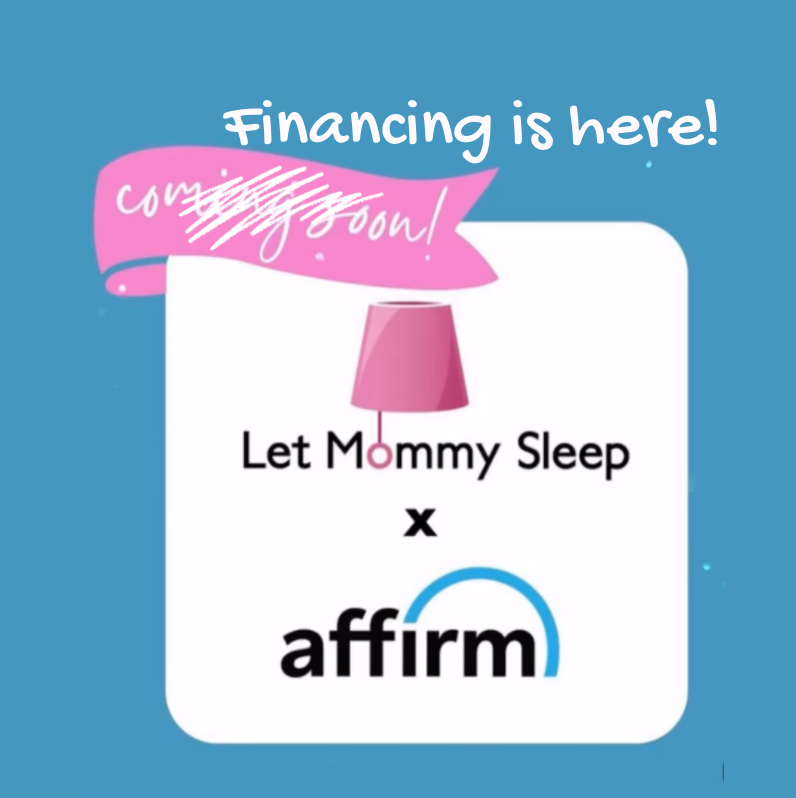
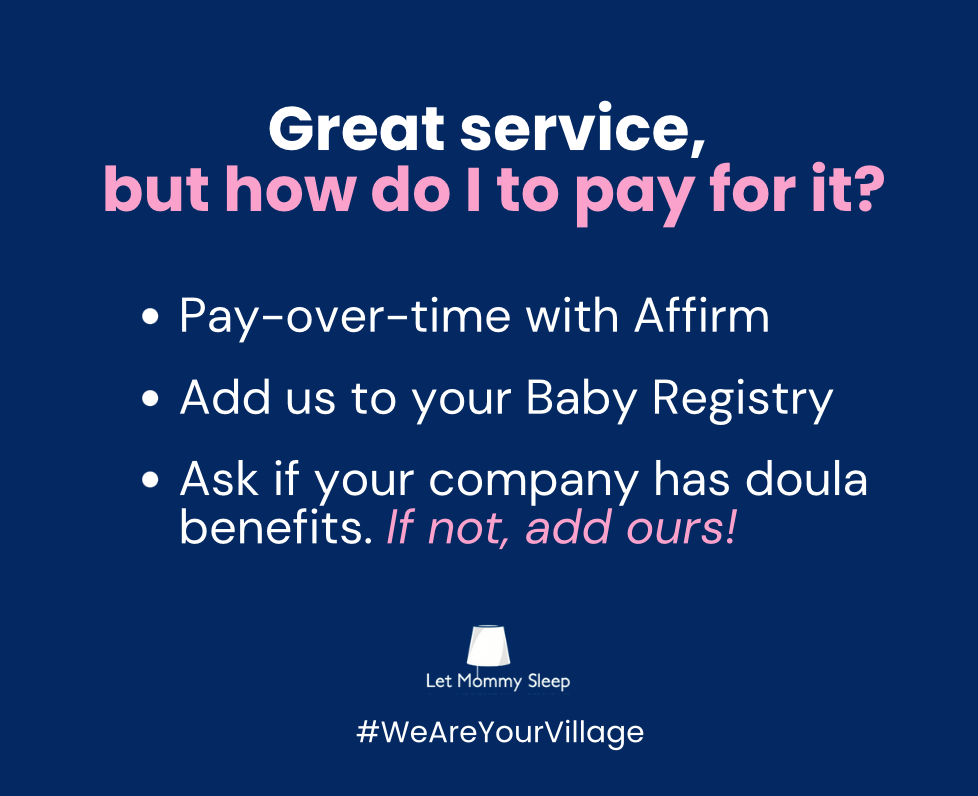
Every Let Mommy Sleep location is partnered with Affirm, giving families a pay-over-time option, sometimes at 0% interest. Checking your Affirm terms does not affect your credit score. You can purchase a package of nights upfront and use them on your schedule, or simply pay as you go.
Give or Receive Let Mommy Sleep as a Gift
Night nanny care makes one of the most practical and memorable baby gifts a new family can receive and it’s easier to give than most people realize and especially helpful to parents expecting twins or multiples.
Let Mommy Sleep Registry– Gift Certificates are available directly from your local Let Mommy Sleep team. Friends, family, or employers can purchase any denomination and the recipient applies it toward overnight care whenever they’re ready. There’s no platform fee, no middleman and the full value goes directly to the expecting parents.
Babylist Registry — If you’re building a baby registry, Let Mommy Sleep gift certificates can be added directly to your Babylist. Here’s how:
Night Nanny and Postpartum Doula Insurance options
Still Have Questions?
If insurance doesn’t cover your care, financing, registries and employer benefits can help close the gap. Contact us to talk through options and we’ll help you figure out what works for your situation.
The lack of insurance coverage for postpartum care reflects a broader gap in how the United States supports new families. Let Mommy Sleep founder Denise Iacona Stern examines this gap in The State of Newborn Care in the United States, a policy paper published on SSRN exploring why professional newborn care remains inaccessible to most families and what needs to change.
Yep, we wish postpartum care was cheaper too. The cost is still out of pocket for most, even though the need is there. Until newborn care is accessible to more families through insurance, we’ve got options of How to Pay for a Postpartum Doula below.
How to Pay for a Postpartum Doula
Yes We Have Carrot and Maven Approved Doulas
Companies sometimes offer employee benefits which pay for overnight postpartum doulas. The most widely known are Carrot and Maven. In addition to labor and night doula care, these private insurers can help you cover fertility treatments, adoption and more. Carrot and Maven coverage requires certified doulas who can provide proof of their education and experience. Let Mommy Sleep has Carrot approved night doulas and Maven approved providers listed on the Newborn & Postpartum Support (NAPS) Registry.
If your company does not offer one of these benefits, ask about including Let Mommy Sleep Postpartum Visits or night nanny care to the benefit program. The LMS package is very easy to implement and the impact on recruiting and retention far outweighs the costs.
Put Us on Your Baby Registry
Be Her Village is a baby registry solely for newborn and postpartum care services. Think of it as your night doula GoFundMe. As a Be Her Village partner, hours of Let Mommy Sleep services can be added to expecting parents’ baby registry. Loved ones simply deposit funds directly into the new parents’ account. Instead of a baby registry full of “stuff,” parents receive the support they need! ***This is especially helpful for parents of newborn twins. ***
Creating your registry is free and you get your FULL gift every time, with no fees taken out. If someone sends you $100, you get the full $100.
Pay Over Time and Finance with Affirm
Every Let Mommy Sleep location has partnered with Affirm. This means you have a pay-over-time financing option, sometimes without interest. Checking the terms of an Affirm purchase does not affect your credit score and there’s also is a 0% interest option. Families can purchase packages of nights and then use the nights however they wish or simply pay when they sign on. (You’ve probably seen or used Affirm when making an Amazon purchase!) Learn more.
How to Pay for a Postpartum Doula – Health Savings Accounts (HSA)
In-home night doula and postpartum services are sometimes HSA eligible. Acceptance depends on the parameters of your HSA issuer; some will only cover care that occurs in a healthcare facility, not in the home. If coverage is confirmed, you can use your HSA card just like a credit card and receive the tax savings of a Health Savings Account. On that note, Let Mommy Sleep services are also eligible to be included in the child-care tax credit during tax time.
Private Insurance
While pediatric care is covered in the home when a newborn has medical need, it’s not as common for private insurers to cover night nurses for a parents medical need. However, when coverage is doctor directed, insurance must cover the cost. The parent’s physician usually needs to write a letter attesting that the parents health will be positively impacted by getting sleep.
An important note is that “night nurse” is often used as a colloquial term for “overnight caregiver.” In terms of health insurance coverage however, insurers may require that services are provided by a licensed Nurse. This means the newborn or postpartum care provider must be 1 of the following: Registered Nurse (RN), Licensed Practical Nurse (LPN) or Licensed Vocational Nurse (LVN). We can provide this level of care and while we don’t communicate with insurance companies, we can provide invoices with the correct wording for you to receive reimbursement.
Medicaid
Medicaid offers postpartum benefits varying by state. If you are eligible for Medicaid, coverage typically includes pregnancy and delivery. But you can check online if your state includes postpartum visits. More and more states are doing this!
Parents often ask us if we can help their baby or twins sleep through the night. The honest answer is yes- when a baby is developmentally ready, we can help families work toward longer stretches of overnight sleep, usually gradually over the course of a week or two. But the answer is also no: we do not offer “shock-and-awe” sleep training or short, 1–3 night interventions. We don’t have secret information that parents don’t already have, and we don’t believe families need an outside expert to take over in order for their baby to learn healthy sleep.
What we do have is long-term pattern recognition from working overnight with thousands of babies across every feeding method, temperament, and household setup, often with the same families for weeks or months at a time. That experience allows us to answer a more useful question:
“At this age, what is biologically realistic sleep?”
When it comes to helping infants sleep through the night, one of the biggest challenges is wondering if your child is physically ready. What if they’re hungry? Are they starting to get sick? Do they feel abandoned? Even with all the data out there, these are all valid worries and they’re exactly the kind of questions a night nanny who has been with your family for weeks can help answer in real time.
This guide outlines what overnight sleep typically looks like at each stage of infancy, when longer stretches become possible, and how overnight feeds are gradually reduced when families want that outcome. These are not rigid schedules. They are age-based sleep expectations grounded in infant physiology and circadian development.
What Longer Sleep Looks Like at Each Stage of Infant Development
0–8 Weeks: There’s No “Night Sleep,” There’s Only Sleep
In the newborn phase you are following your baby’s lead. Our nurses like to say if it feels like you’re always feeding the baby you’re doing it right! Newborns have tiny tummies so they eat frequently and it’s common for them to wake up hungry every 2 to 3 hours, and sometimes even more.
Circadian rhythm: Not developed
Typical longest stretch: 2–3 hours
Night waking: Normal and necessary
Primary goal: Safe sleep, feeding on demand, parental recovery
Night Nurses Note: Newborns cannot be conditioned to sleep through hunger, discomfort or the need for connection. Any reduction in overnight waking must be gradual and responsive.
8–16 Weeks: Emerging Patterns, Not Training
Circadian rhythm: as your baby matures, their system will begin to produce melatonin (the sleep hormone) and they will begin to develop the day and night cycles that they will have for the rest of their lives.
Typical longest stretch: 3–5 hours
Night feeds: Still expected and typical
Common change parents notice: One longer stretch early in the night. It is also normal for baby to be awake and alert during the night, the same way they are during the day after a feed.
This stage reflects pattern emergence, but not readiness for abrupt or time-limited sleep training.
4–6 Months: Readiness Window
Circadian rhythm: Established
Typical longest stretch: 6–8 hours for some babies
Night feeds: May still occur
Pediatricians often discuss sleep expectations at the 4-month visit
This is the earliest window where gentle, gradual overnight changes, including slowly reducing overnight feeds, may be discussed, often over weeks rather than nights. Our Ultimate Guide to Baby Sleep Training contains step by step instructions on how to reduce feeds.
6–9 Months: Consolidation Phase
Typical night sleep: 10–12 hours with or without a feed
Night waking may still happen due to:
Teething
Illness – congestion and illness can cause night waking but remember that starting a new solid food can also cause gastric distress as baby’s body adjusts to the new foods.
Growth spurts – sometimes infants need calories overnight to fuel their growing bodies
Developmental leaps – babies love to practice the new skills of standing up, scooting around, talking and singing in the comfort of their cribs!
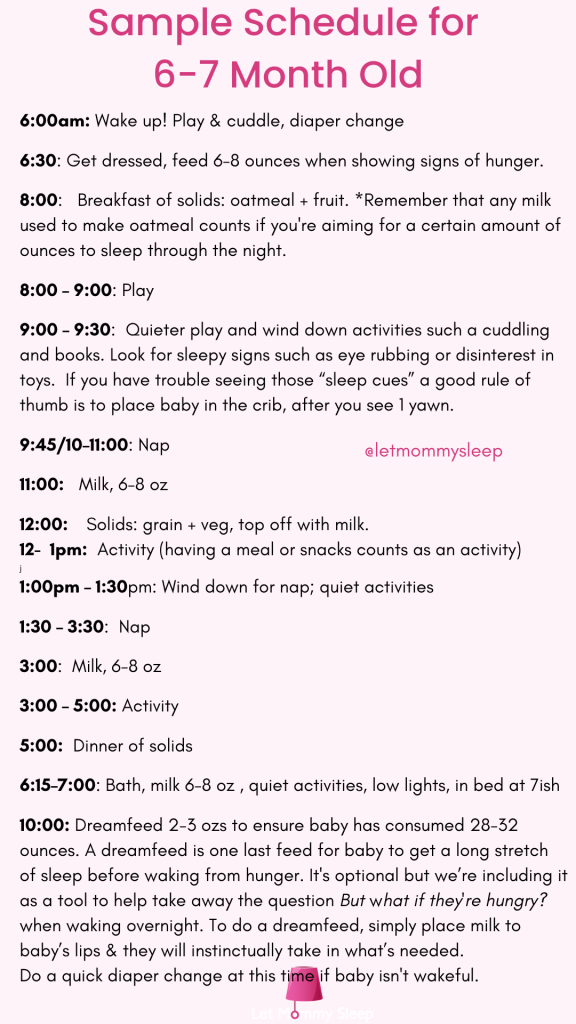
Longer sleep is common during this phase, especially when overnight feeds are reduced slowly and intentionally. Parents might consider giving a Dreamfeed around 10pm to help 6-7 month old infants stay full until they wake up in the morning. Regression is still normal during these months.
9–12 Months: Habit vs. Hunger
Night waking often becomes behavioral rather than nutritional – it’s not that baby has “bad habits” when it comes to sleep, it’s simply that they’ve never done sleep any other way than a series of long naps.
Consistency matters more than method – the sleep training methods really aren’t all that different, it’s more about what parents can stick with.
Separation anxiety may temporarily disrupt sleep
At this stage, routines, not rigid schedules or rapid sleep-training methods, matter most. But if and when parents decide it’s time for formal sleep training, success will depend on the parent’s ability to stay consistent.
Things to Remember
Twins and Multiples
Twins and higher-order multiples typically follow the same sleep-readiness timeline as singletons. When room-sharing, minimal overnight intervention can help babies learn to sleep through each other’s normal sleep noises. More tips for twins here.
Nursing Parents
Night weaning is a physiological process for the parent as well. If you’re breastfeeding, gradual reduction protects milk supply, comfort and hormonal balance. A lactation consultant can help guide the process safely and comfortably.
Crying and Sleep
Crying does not automatically indicate distress. Some babies cry briefly as a way to transition between sleep cycles. If sleep training does not feel right for your family, waiting is a valid choice. Healthy attachment is not dependent on sleep method.
FAQ: Baby Sleep Schedules by Age
When do babies start sleeping through the night? Biologically, most babies are not capable of sustained overnight sleep until at least 4 months of age, when circadian rhythm matures. It’s also normal for many babies age 4 months and older to need to take in calories overnight, so it’s recommended that parents ask their pediatricians if their baby is ready to start sleeping through the night.
Do formula-fed infants sleep longer than breastfed babies? No. While feeding type affects digestion, sleep consolidation depends more on neurological development than feeding method.
Can I ruin my baby’s sleep by responding at night? No. Responsive nighttime care in infancy does not create bad habits. Sleep patterns evolve with development and babies do not learn to sleep through hunger, pain or discomfort.
What if my baby slept well and then stopped? Sleep regressions commonly occur during growth spurts, illness, teething, and cognitive development. These are temporary. In other words, your baby didn’t forget how to sleep. Something changed, and it will change back and progress.
Are schedules necessary for good sleep? No. Schedules are tools, not requirements. Biological readiness matters more than clock-based timing.
If you’d like overnight support while your baby is working through these stages, Let Mommy Sleep’s night nannies and Registered Nurses have worked overnight with thousands of families across every feeding method, temperament and household setup. We don’t have shortcuts, but we do have the patience and experience that’s hard to replicate. Find your local team here.
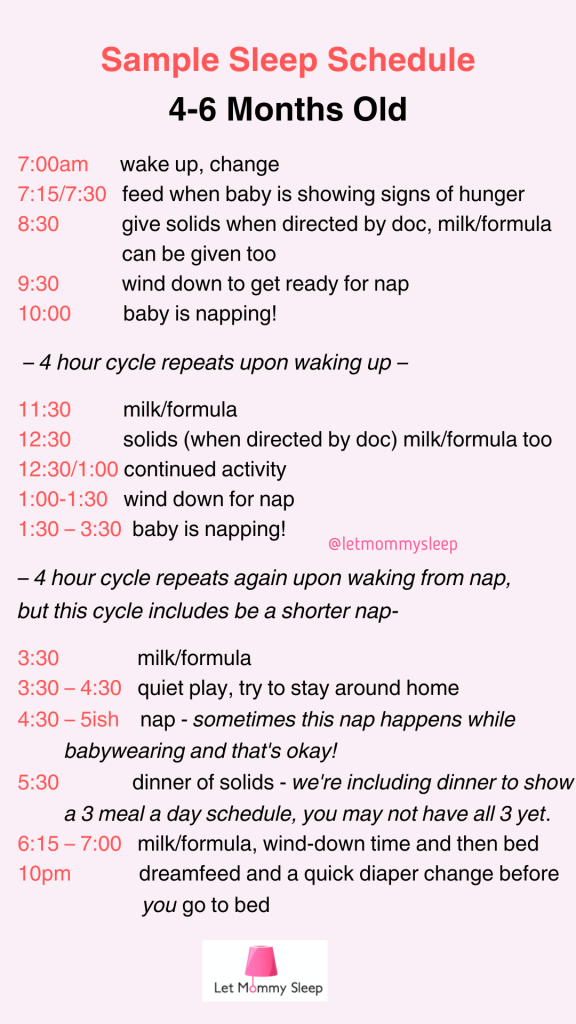
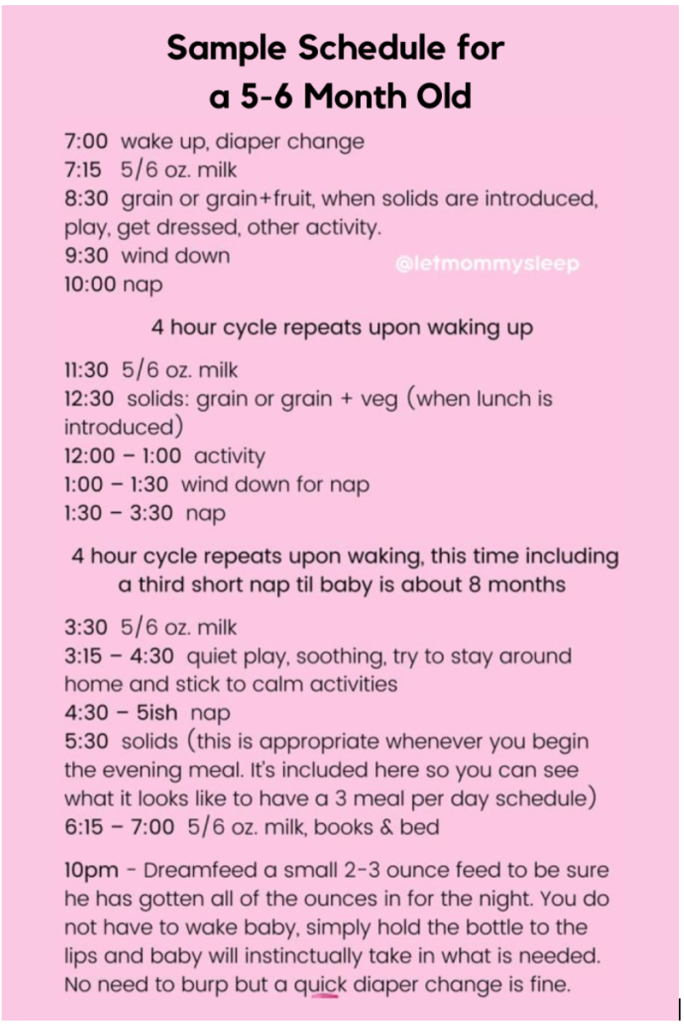
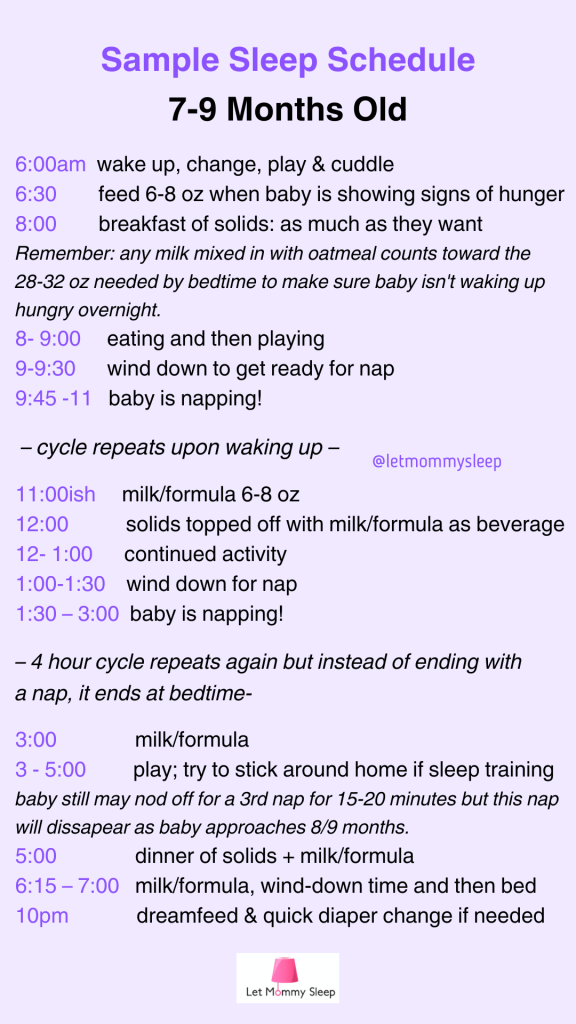
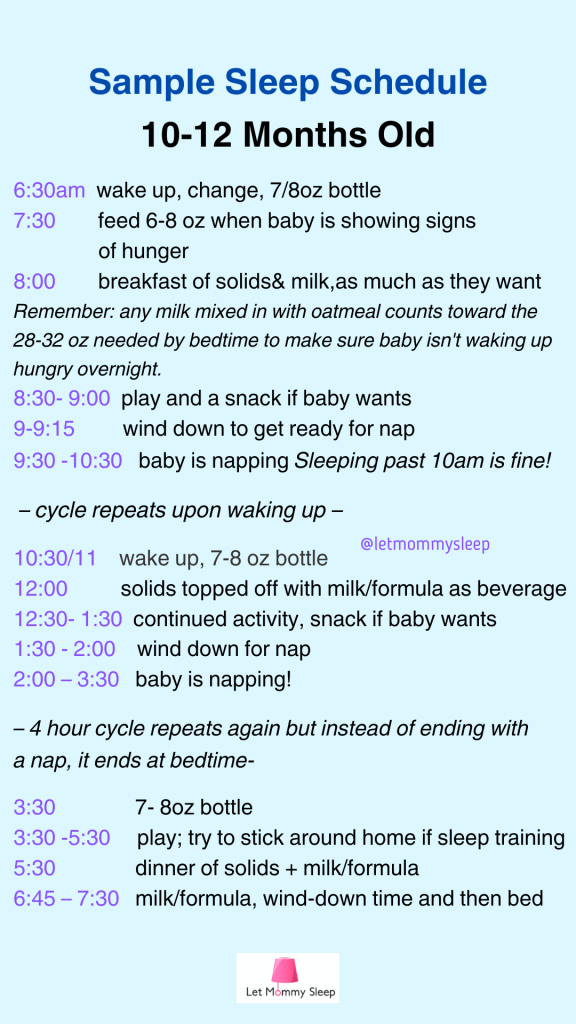
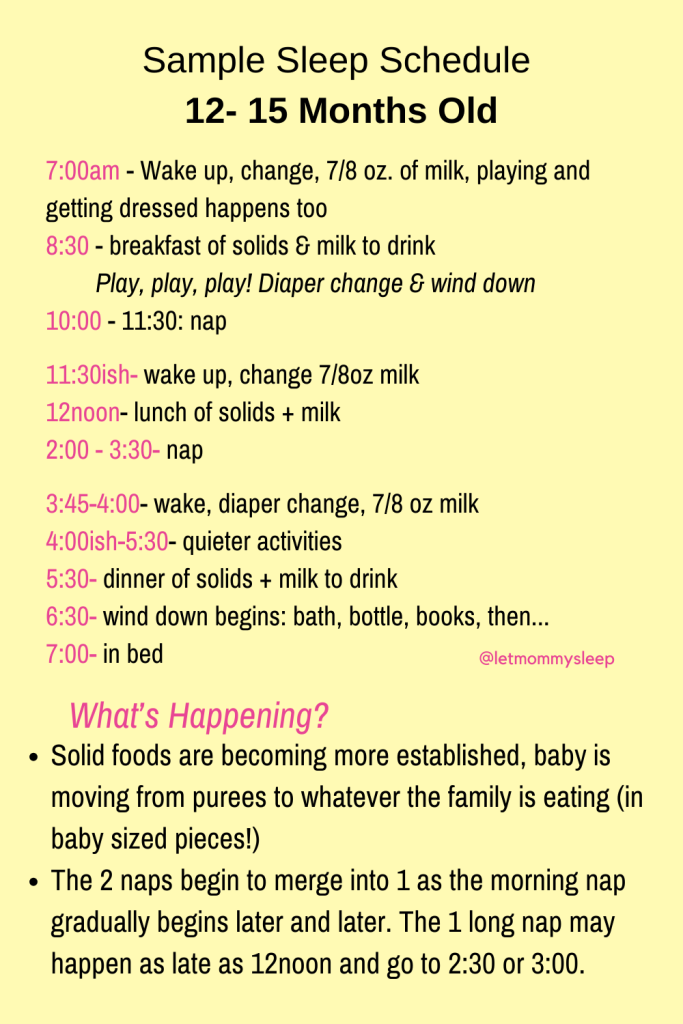
You might be highly respected in your career, an organizational whiz everywhere else in your life, or a Type-A genius. Your baby does not care! Because these babies do whatever they please, new parents often seek routines and schedules; humans love predictability! So our team of Night Nannies and Baby Nurses made these Infant Sleep Schedules to help. Of course these are just examples of typical infant sleep, but if you need a starting point, All the Infant Sleep Schedules in One Place is for you.
All the Infant Sleep Schedules in One Place – Expectations
While sleep schedules can be helpful, we all know that every baby is different and there are so many things that can affect infant sleep and feeding. Illness, growth spurts and older siblings’ activities are just 3 examples of instances why we can’t expect an exact schedule everyday. Babies also grow into their next daily routine gradually over the course of weeks and sometimes months. Your baby will show you when they’re ready for a change in nap or sleep schedule.
When your baby is ready to sleep through the night, a step by step guide can help.
Til then, use the schedules below to help!
Infant Sleep Cycles Guideline for typical times awake for a full term baby typical awake times
Why Not Before Four Months Old?
Before 4 months of age (16 weeks!), infants have not yet developed a mature circadian rhythm, which regulates their sleep and wake cycle. Their sleep patterns are still evolving. They’re also still very little! So the need to wake up during the night for feeding and other essential needs is normal and healthy. Please do not try to sleep train a newborn, we can’t coach them not to be hungry or need a diaper change.
And of course if you’re breastfeeding, your own body will still wake you in the night. It’s perfectly normal for baby to nurse through the night for nutrition and comfort well after 4 months old. This is true of formula fed babies as well but it’s important to note that breastfeeding doesn’t just “stop” cold-turkey. La Leche League talks about weaning much better than we ever could here. You can begin the discussion about sleep training and sleep expectations at the 4 month pediatrician visit.
Simply put, newborns can’t be taught to not feel hunger, need a diaper change or need to be held by a trusted adult.
All the Infant Sleep Schedules in One Place photo courtesy of Cribs for Kids
All the Infant Sleep Schedules in One Place – What About Toddler Sleep?
Allowing your toddler to sleep through the night is easier -but also harder!)- than helping your infant sleep without interruption. It’s easier because you can talk about sleep expectations and your child will understand! It’s harder because it can be uncomfortable and even scary for them to sleep in a whole new way, without visits from you or being in the big bed through the night.
Patience is the key here. There are 4 basic steps to allowing toddlers to sleep through the night and repetition and consistency is key. There are many variation of sleep training toddlers and you can search for the one that feels right for your family, but the 4 basic steps are almost always:
Talk about the expectation of sleep before the formal sleep training begins.
During the first few nights, stay next to the bed until your toddler is sleepy. If toddler is standing up, gently place them back in a laying down position. Yes, you will most likely have to place them back into bed several times. Stay patient and calm, you’re there so they can feel safe and secure.
Continue to stay with them but for less and less time.
If your child wakes in the night, you can bring them back to their bed or stay with them in their room until they are asleep.
One note, even if your toddler sleeps in the bed with you try to remember it won’t be forever. You are their favorite person so of course they want to be near you. It’s comforting in the big bed.
If you’re expecting and want more tips, sign up to receive our free newborn and postpartum support guide!