updated November 13, 2025 – Let Mommy Sleep San Antonio recently celebrated their 2 year anniversary! Co-owners Jasmin Brunnelson and Jane Bolalin have become part of the community and continue to care for newborns and their parents as the Experts in Certified Newborn Care Now in San Antonio.
Who are the Night Nanny and Postpartum Doula Team in San Antonio?
All of Let Mommy Sleep San Antonio staff are licensed nurses or certified newborn care providers. This means they’ve received evidence-based newborn and postpartum support (NAPS) certification as well as safe-sleep, breastfeeding and first aid and CPR certs. All education is vetted and approved by a third party medical advisory board. If you’re wondering exactly what happens overnight, visit What’s a Night Nanny? Roles, Benefits, Costs and How They Help Families.
Meet Jasmin and Jane – The Experts in Certified Newborn Care Now in San Antonio
Jasmin Brunnelson is the co-owner who welcomes and onboards experienced, certified newborn caregivers. She personally connects with each team member to ensure every night nanny and baby nurse (RN) shares the Let Mommy Sleep values of empathy, professionalism, and evidence-based care. Jasmin has been with Let Mommy Sleep since 2013 and is a mother of 2 boys.
Jane, co-owner and case manager, brings over 23 years of teaching experience, including her role as an academic interventionist. Her background in communication, early intervention, and individualized support translates perfectly to the partnerships we build with families and caregivers.
You can read more about how Jane balances parenting and entrepreneurship in her Bold Journey profile.
When Let Mommy Sleep San Antonio first opened two years ago, the goal was simple: to give new parents the support they deserve during the most vulnerable and beautiful time of life. As Jane says, “We are grateful to have grown within the San Antonio community and look forward to continuing to serve local families with compassion and expertise. Together, we are your village; supporting moms, babies and families every step of the way.”
Frequently Asked Questions About Night Nannies in San Antonio
What does an overnight newborn care provider do?
An overnight caregiver handles feeding, diapering, soothing, infant safe sleep support and household tasks related to baby. They also monitor newborn cues, prepare bottles or assist with breastfeeding, and track overnight patterns so you wake up informed and rested.
How much does overnight newborn care cost in San Antonio?
Rates in San Antonio typically range from $32–$45 per hour, depending on experience, twins/multiples and if there are medical needs. Most families book 8–10 hour shifts. There are pay-over-time packages available.
Do you support breastfeeding and pumping overnight?
Yes. We assist with latch, positioning, clean pump setup and keeping milk storage organized. We also do all care of baby after feeding so you go tight back to sleep. If you prefer to sleep uninterrupted, we can offer expressed-milk feedings or formula, whichever aligns with your feeding plan.
Are your night nannies and newborn care providers trained or certified?
Yes. Our caregivers complete advanced newborn education, background checks, infant safety training, safe sleep certificates and CPR/First Aid. Many have medical or doula experience. You can review credentials before booking, and our teams follow evidence-based newborn care standards.
How early should families in SATX book overnight help?
Most San Antonio families book during the second or early third trimester so they have a plan in place. If your baby is already here, we can often onboard you within 24–48 hours depending on availability. Short notice care is usually no problem.
What services are included with Let Mommy Sleep’s overnight care?
Care includes feeding support, diapering, burping, safe sleep setup, soothing, tracking wake/sleep cycles and real-time documentation of the night. We also maintain bottle and pump parts, prep for the next feeding and offer personalized newborn care guidance.
Let Mommy Sleep San Antonio proudly serves: Alamo Heights, Olmos Park, Boerne, Stone Oak, Bulverde, New Braunfels, Live Oak, Universal City, Schertz, Cibolo, Seguin, Converse, Pleasanton, Southtown, Helotes, Alamo Ranch, Downtown, Terrell Hills, Hill Country, Timberwood Park, Fair Oaks Ranch, Hollywood Park, Garden Ridge, Shavano Park, Canyon Lake, Cross Mountain, Castroville, Selma, Castle Hills, The Northside, Scenic Oaks, Monte Vista, Windcrest, Northwest Crossing and the entire SATX area.
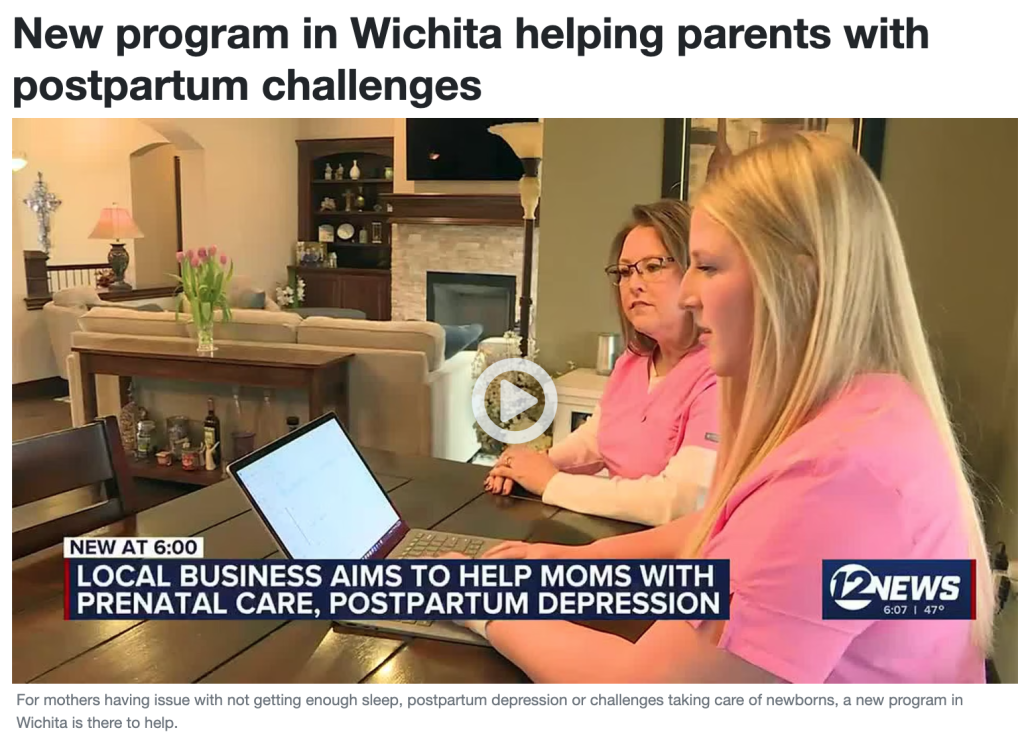
updated, April 20, 2024 – Veteran Let Mommy Sleep owner and mom of 3 Erin Thomas Walker has a personal passion and the experience it takes to serve new parents in the ICT! Get to Know Wichita’s Expert Baby Company below, and learn more about this elite night nanny, night nurse and postpartum doula team!
Get to Know Wichita’s Expert Baby Company – Recommended by Midwives and Birth Doulas
An excellent OB/GYN or midwife and pediatrician are a crucial part of your birth plan, but don’t forget the postpartum phase! We’re Wichita’s Expert Baby Company of postpartum doulas, night nannies, nurses and Certified Newborn Care Providers (NCP).
What Kind of Newborn and Postpartum Support is Offered?
As Wichita’s expert baby care company, we offer the following support:
Baby Basics Classes – In home or virtual infant care instruction including how to help your baby get on a schedule. Our Nurses also teach diapering, swaddling and other baby care basics. Don’t worry, you’ll learn about infant sleep too!
Overnight Postpartum Doulas – You’ll get peace of mind knowing your newborn is in the caring hands of a professional Certified Newborn Care Provider (NCP)
Postpartum Home Visits – RN visits mean your families gets early intervention in infant feeding and recuperation, therefore minimizing hospital readmissions. As a bridge between birth and the 6-week OB/GYN visit, a visit from a Registered Nurse helps the entire family. Baby care and parent care are crucial to maternal health and positive mental health outcomes.
As the Industry Leaders in newborn and postpartum care, these Wichita baby experts have garnered lots of local attention. The team of postpartum doulas, night nannies and baby company experts have appeared on CBS affiliate KWCH-TV, AOL and in the Wichita Eagle.
Get to Know Wichita’s Expert Baby Company – More of Wichita’s Newborn Care Resources
In addition to newborn care, parents in Wichita might need other specialized resources. Here are some important ones serving Derby, El Dorado, Andover, Bel Aire, Winfield, Goddard, Maize, Hutchinson, Haysville and beyond:
Wichita Midwives such as Miracle Moments Midwifery, a birthing practice specializing in deliveries outside of hospitals. While preparing for pregnancy with a Wichita OB/GYN is important, researching a midwife or birthing center may also be important to persepctive parents.
Wichita Area Parents of Multiples – WAPOM is a non-profit organization. They are committed to offering support, social events, resources and education to families with twins, triplets or higher order multiples. They serve families in the Wichita area.
Postpartum Support KS – Postpartum Support KS is part of Postpartum Support International. Their mission, as stated on their site is to increase awareness, education, prevention, and treatment of perinatal mental health issues affecting individuals, their families, and support systems in all areas of Kansas.
Families Together Inc. – Families Together, Inc. is dedicated to helping families with children who have disabilities or special health care needs. If you need support navigating school services, health care or community resources, let them know. They serve the whole state of Kansas.
Welcoming a newborn into your life is exciting and life-changing! As a new parent, you might find yourself in need of professional assistance, especially the first few weeks postpartum, and that’s okay! That’s where certified newborn care providers (NCP) come in. In this blog, Proud To Be A Cribs For Kids Safe Sleep Partner! we explore what it means to be a certified newborn care provider. Additionally, how being a trusted partner of Cribs for Kids, gives parents peace of mind that their newborns are receiving the highest level of safe care from Let Mommy Sleep.
P
Proud To Be A Cribs For Kids Safe Sleep Partner! – What’s Cribs for Kids?
From CribsforKids.org: The mission of Cribs for Kids® is to prevent infant sleep-related deaths by educating parents and caregivers on the importance of practicing safe sleep for their babies and by providing portable cribs to families who, otherwise, cannot afford a safe place for their babies to sleep.
Cribs for Kids has been advocating for safe sleep practices and educating parents and the public since 1998. This incredibly important work led them to become a nationally recognized non-profit in 2002 and while still keeping education at the forefront of the mission, the organization decided to help in a more concrete way- by making sure that every baby that needs one has a safe sleeping environment! This means actually distributing safe cribs and partnering with public safety community organizations through their National Public Safety Initiative. Let Mommy Sleep is PROUD to be a community partner!
Understanding the Role of a Certified NAPS Newborn Care Provider
Becoming a NAPS certified newborn care provider, involves training to support new parents and their infants during the postpartum period. This training is overseen by a third party Advisory Board and has been used by county and statewide education programs. The services provided to you by our specialized night nannies and postpartum doulas include:
Overnight Newborn Care: Certified providers have the expertise to provide your newborn or twins diapering, and soothing techniques.
Breastfeeding and Bottle Feeding Support: Non judgmental guidance and evidence based support for you, whatever feeding methods are used.
Postpartum Care: Assisting new mothers and fathers with postpartum recovery and mental health monitoring, meaning mobility support post c-section, screening for postpartum depression and more.
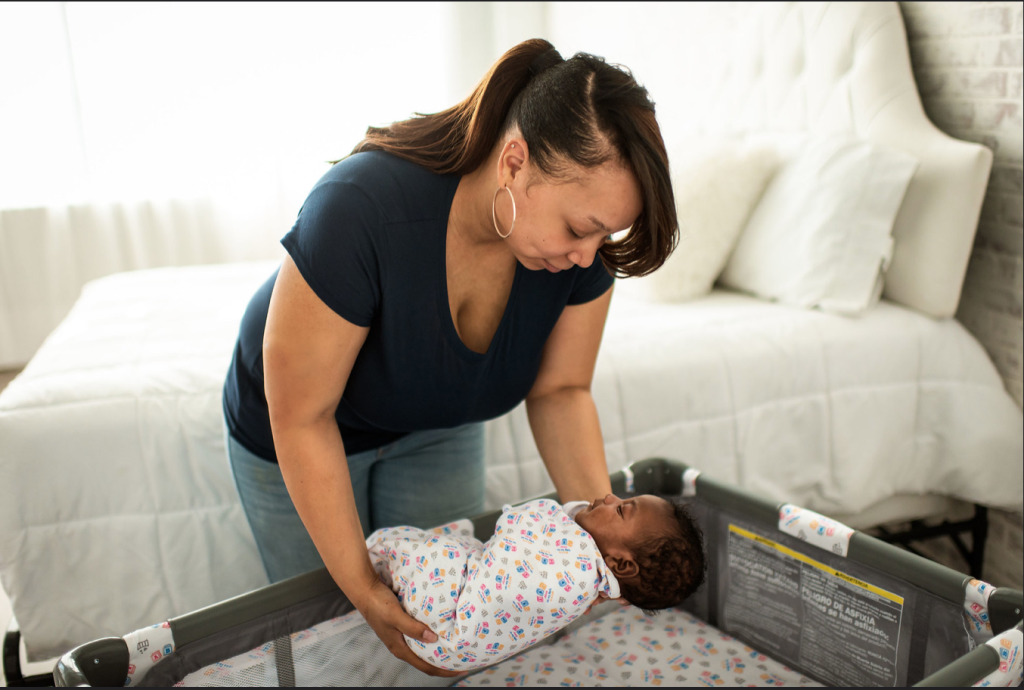
Infant Safe Sleep: Ensuring a safe sleep environment to minimize the risk of SIDS; a crucial aspect of professional newborn care.
Safe Care of Twins and Multiples: Your twins may arrive prematurely. Feeding and caring for your twins at the same time means understanding specific safety and feeding techniques. Did you know twins usually eat every 2 hours? This means 24 feeds in 24 hours!
Two Trusted Names in Certified Newborn Care and Safe Sleep
Let Mommy Sleep is a renowned provider of certified newborn care services, trusted by thousands of families across America. Our nurses, night nannies and postpartum doulas are expected to be experienced upon hire. To ensure they are adhering to the highest standards of care, they also undergo training to become certified in newborn care. This means they can support you with evidence-based education and compassion. Here’s what that means for you:
Newborn Care: Let Mommy Sleep’s caregivers are experienced in handling newborns with care, ensuring their comfort and well-being.
Helping Baby Get into a Routine: Healthy sleep patterns for both your baby and you are important if that’s your goal? Establishing a routine or schedule promotes better sleep for everyone.
Breastfeeding Support: The Let Mommy Sleep team includes lactation consultants who offer invaluable assistance to breastfeeding mothers.
Postpartum Care: They provide physical and emotional support to new mothers, aiding in their recovery and mental well-being.
Safety: What sets Let Mommy Sleep apart is going above and beyond in their commitment to safety and safe sleep. As a Cribs for Kids Safe Sleep Partner, we prioritize creating a secure sleep environment for your newborns and infants. All of our night nannies, newborn caregivers and postpartum doulas adhere to Cribs for Kids’ guidelines and are Safe Sleep Ambassadors.
Proud To Be A Cribs For Kids Safe Sleep Partner! – The Importance of Safe Sleep Partners
In a time where there’s no license to care for infants, Let Mommy Sleep’s partnership with Cribs for Kids is a testament to our dedication to providing the highest standards of newborn care. Being a Cribs for Kids Safe Sleep Partner means we’re fully committed to ensuring the safest sleep environment for your baby. Read 10 Steps to Safe Sleep for Baby for more.
Further, in a time where social media can muddy the educational waters, we actively promote evidence-based education and awareness regarding safe sleep practices. As partners, we’re able to promote evidence-based safe sleep practices to a wider audience of expecting and new parents.
Lastly, as we always say, Just because they sell it, doesn’t mean it’s safe! There are so many products on the market that are not safe for infant sleep. In fact, baby gear such as loungers, sleepers and swings which place baby on an incline can cause a risk of suffocation. This is due to the incline at which baby is placed; their airways can become blocked if they lean forward. Learn more about the CPSC Ban and Recall of Inclined Sleepers.
For this reason, the only safe sleep environment for baby is alone on their backs on a firm, flat mattress free of toys, blankets or other items.
updated, October 23, 2025 – Written and medically reviewed by the Registered Nurse Advisory Board of Let Mommy Sleep
One of the most common questions our night doulas and newborn caregivers receive is: “Can you help our newborn get on a routine and sleep through the night?” It’s completely natural for parents to crave predictability after their baby arrives. There isn’t one “right” way to help babies sleep, but there are evidence-based, gentle methods that support both infant development and family wellbeing.
That’s why we created The Ultimate Guide to Baby Sleep Training, so families everywhere can access practical, expert guidance.
TL;DR: Quick Start to Helping Your Infant Sleep through the Night
Want to skip to the essentials? Here’s the condensed version:
Wait until baby is about 4 months old and 14 pounds, with pediatrician approval.
Ensure baby’s environment follows safe sleep guidelines (flat surface, back to sleep, no weighted blankets).
Consolidate feeds to daytime and gradually wean overnight feeds.
Use a consistent bedtime routine and choose a gentle, structured sleep training method (like the Slingshot Method).
Stay consistent for 10–14 days while tracking progress.
Ultimate Guide to Baby Sleep Training
Should You Sleep Train?
For this guide, “sleep training” means helping your baby sleep at least 6 hours overnight without unnecessary waking or feeding.
This topic sparks strong opinions, and the fact is both sides are right!
YES, you should comfort your baby and meet their needs.
ALSO YES, it’s healthy for your baby to learn to sleep independently if that’s right for your family.
Maternal mood and overall family wellbeing improve when parents get uninterrupted sleep. In fact,maternal mood scales statistically significantly improvedwhen moms and dads get sleep. And we know there’s a direct correlation between Sleep Deprivation and Postpartum Depression. In other words, in a time where many of us don’t have loved ones to help care for our little children, we have to be our own little Village. This means using tools like sleep training to help the whole family function in a healthy way.
Managing Expectations: When to Start Sleep Training
Every baby is different of course but in general, 4 months and 14 pounds is a good time to start sleep training a full term baby. Here’s why:
because this is usually when baby has physically grown enough to be able to skip nighttime feeds; their stomach is big enough to hold enough calories to keep them feeling fuller, longer.
they’ve developed the hormone melatonin which induces sleep.
The 4 month pediatrician visit is the ideal time to confirm readiness for sleep training. This way you get the pediatrician’s confirmation that baby is ready to begin.
NOTE: Yes, we all have that friend whose child started sleeping through the night earlier than 16 weeks! And that’s great! And you and your pediatrician might agree that sleep training earlier is fine…and that’s also okay!
What Should NotHappen When Sleep Training:
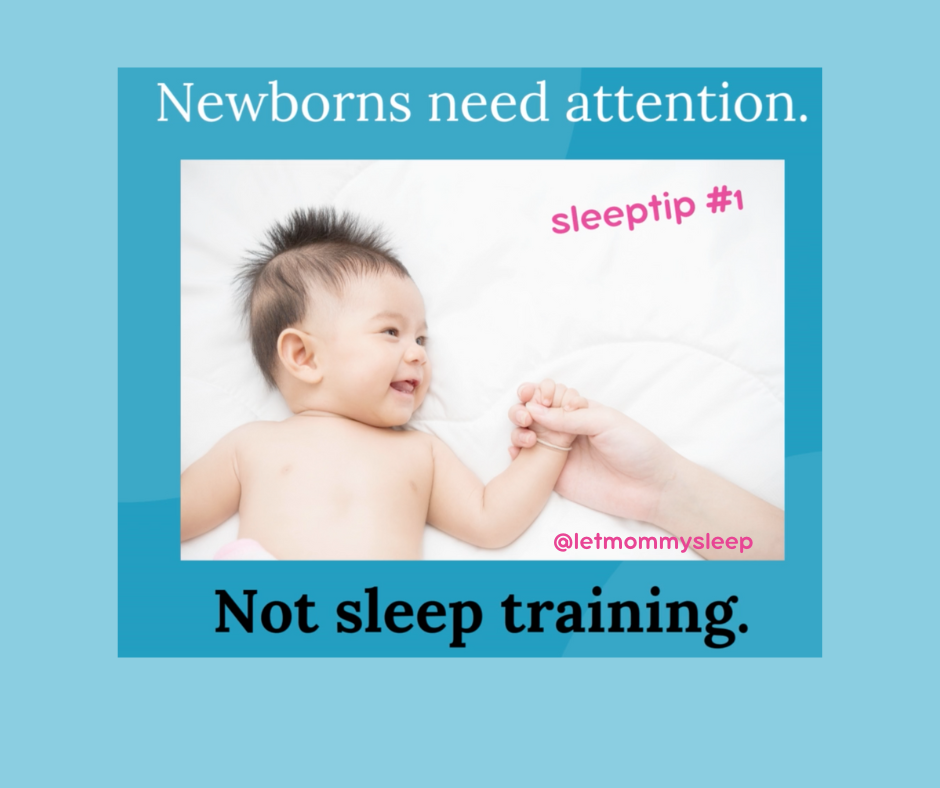
Don’t “Sleep Train” a Newborn – There’s no reason to let a newborn (baby aged 1 -3 months old) cry it out. Crying indicates a need. As Night Doula Erin says, Newborns don’t learn *not* to be hungry, uncomfortable or scared.
Don’t let newborns “cry it out.” They’re not manipulating you. They’re adapting to life outside the womb.
Frequent, on-demand feeding every 2–3 hours is normal and healthy.
Avoid rigid routines – Unless medically directed (e.g., NICU grads, preemies, jaundice), newborns don’t need strict schedules. Your baby’s natural clock will emerge if you remain responsive to their hunger and sleepy cues.
If it feels like baby sleep is a battle, pause and reset. Following your baby’s cues is the foundation of every effective sleep plan.
Understanding Infant Sleep Development – Ultimate Guide to Baby Sleep Training
The 4 Stages of Sleep
Adults experience four distinct sleep stages, but newborns only have two. Newborns gradually develop the full 4-stage cycle around 3–4 months, as melatonin levels mature.
REM (Active Sleep) – light sleep where the brain consolidates learning.
Knowing this helps parents catch the sometimes elusive “drowsy but awake” window; the optimal time to place baby in the crib. You can learn more about how the stages of sleep develop in The Four Month Sleep Regression Explained.
Sleep Cycles By Age
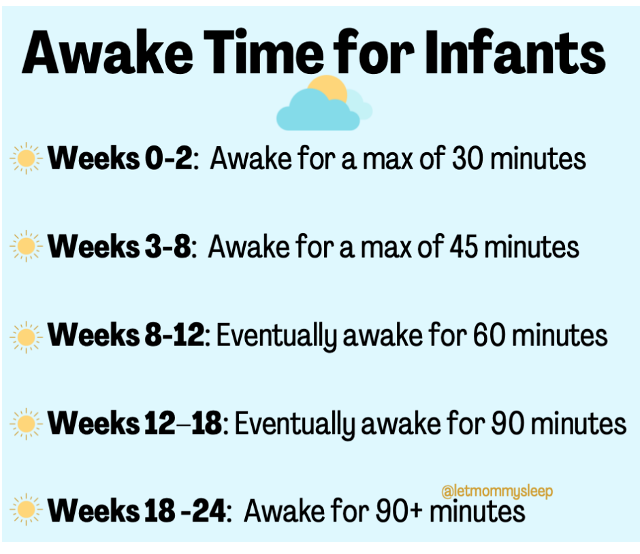
To help understand what’s expected in terms of baby sleep, here is a breakdown of newborns and infant basic awake and sleep times by age:
Age
Awake Time
Sleep Notes
0–2 weeks
30 mins
Sleepy newborn stage; most awake time spent feeding.
3–8 weeks
45 mins
Baby more alert; white noise and babywearing can help.
8–12 weeks
60 mins
Melatonin still developing; short naps are normal.
12–18 weeks
90 mins
Begin longer awake periods and fewer naps.
18–24 weeks
90+ mins
Consistent naps form as baby nears 6 months.
And here is a more in depth description of what’s typical each week:
Weeks 0-2: Baby is awake for a maximum of 30 minutes. This is the sleepy newborn stage where most of your newborn’s time awake is spent feeding. You might even have to prompt them to try to wake up during a feed.
Weeks 3-8: Awake for a maximum of 45 minutes. You’ll notice baby is more alert as they approach week 8. White noise, babywearing and giving a pacifier to help your baby sleep are all fine to do because at this age, your help to get and stay sleep is truly needed.
Weeks 8-12: Baby’s awake time is eventually 60 minutes. You might need to help your newborn with napping if they wake up after 10-15 minutes by giving a pacifier or patting. Please know you’re not instilling bad habits. It’s developmentally appropriate that your baby needs a little help because the system that makes melatonin is not mature yet.
Weeks 12 – 18: We’re getting to the 90 minutes of awake period! Baby is even more alert and may need help getting and staying asleep. Remember it’s okay to allow baby to play independently in the crib as long as they are happy. If you want them to sleep through the night eventually, there’s no need to rush them out of the crib when they wake up if they’re happy there.
Weeks 18 -24: Your infant is awake for 90+ minutes and you’re seeing longer and fewer naps. Naps will vary in length, especially if you’re out and about during the day. If you’ve begun nighttime sleep training these naps become even more consistent.
Safe Sleep: Reducing the Risk of SIDS
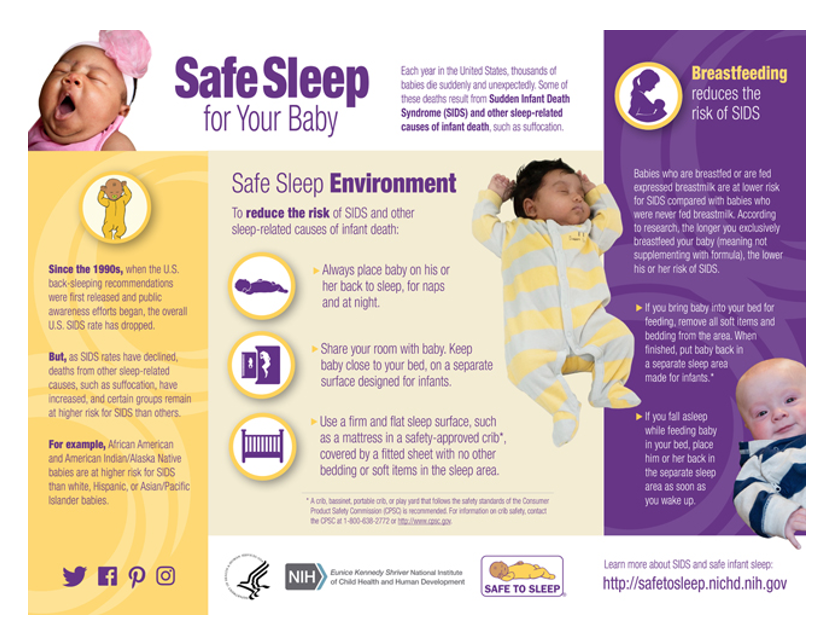
Before sleep training begins, ensure baby’s sleep setup meets AAP Safe Sleep Guidelines. Always place babies up to age 1 on their backs to sleep, alone on a firm flat mattress. This is true for naps as well as overnight sleep. You can read more in 10 Steps to Safe Sleep for Baby Please note that the AAP also cautions against using weighted swaddles and weighted sleep sacks on or near baby, as they are not safe and not recommended.
Steps to Sleep Through the Night
Now that we’ve addressed when to sleep train and how to make sure infants are in a safe sleep environment, we can move on to help baby sleep through the night.
There are 4 basic steps to sleeping through the night:
Confirm with your pediatrician – Ensure baby is developmentally ready to sleep 6+ hours without feeding. As our night nanny team often reminds parents, this is important because you want to baby set up for success, but also because you will feel confident that you’re making the right decision.
Consolidate daytime feeds over the course of about a week-
Offer 4 daytime feeds of 6–7 oz every 4 hours, plus one 10 PM dreamfeed.
Gradually space out feeds by 10–15 minutes each day until reaching 4-hour intervals.
Wean overnight feeds at the same time you’re increasing daytime feeds:
Reduce bottle size by ½ oz every 2–3 nights.
Replace comfort feeding with a pacifier or gentle soothing as best you can
Once night feeds are eliminated, you can begin formal sleep training.
implement formal sleep training using the Slingshot Method
The Slingshot Method, developed by Let Mommy Sleep, is a gradual, in-room approach:
Night 1–2: Stay beside the crib and soothe with voice or touch.
Night 3–5: Move slightly away; use voice only.
Night 6–10: Sit near the doorway until baby falls asleep independently. Consistency and remaining calm are key. The goal is to shift from “I get help to fall asleep” → “I can fall asleep myself.”
With 4 feeding sessions of 6-7 ounces plus a final dreamfeed, your baby is getting enough calories to sleep longer than 3 hours through the night. In other words, 28-32 ounces should be enough so your baby doesn’t wake out of hunger. Your baby might still wake because their body is used to waking every 3 hours, but having taken in about 30 ounces prior to sleep, you can be assured they’re not hungry.
A few notes about transitioning baby to a 4 hour feeding schedule:
Eating larger meals at predictable times means baby will also anticipate rest at predictable times. This is the natural transition to having a “night” and a “day” instead of the 24 hour schedule of eating a bit, sleeping a bit, eating a bit, sleeping a bit. As our night nannies and postpartum doulas like to remind parents: We’re not taking away ounces at night, we are simply repositioning them to be taken in during the day.
Upon waking in the morning, give as much milk as baby wants at feeding time. For the next feed, work on holding off for as close to the 4 hour mark as possible. THIS WILL BE A GRADUAL PROCESS and may take 1-2 weeks. We never want baby to get to a state of frenzied hunger so it’s recommended to hold off feeds for 3 hours and 10 minutes on these first tries, then work up to 3 hours and 20 minutes and so on. Just push the feeding time up by a few minutes each day as tolerated by baby.
You’ll see baby is able to go longer and longer stretches with each feed until after several days, they’ll be doing the larger 6/7 ounce feeds every 4 hours.
Once we know baby does not need to eat through the night, and of course there are no other physical ailments that are outside of your infant’s control waking them, we can help them sleep through the night.
The Dreamfeed Explained
Coined by The Baby Whisperer, a dreamfeed means gently feeding your sleeping baby around 10 PM to prevent middle-of-the-night hunger. The reason it’s recommended at 10:00 is because you are still awake but your baby hasn’t yet naturally awakened out of hunger.
Sample Dreamfeed Schedule:
7:00 PM: Baby’s bedtime feed
10:00 PM: Dreamfeed while baby sleeps
10:20 PM: Quick diaper change, back to bed
A dreamfeed works because it shifts baby’s natural hunger window closer to parents’ sleep cycle.
How do you do a Dreamfeed? If you gently touch the bottle or breast to your baby’s lips, they’ll instinctively begin to suck if they’re hungry and stop once they’re full. By giving this feed before your baby wakes up from hunger, you’re essentially topping them off so they can stay asleep through the time they would normally wake to eat. This “pre-emptive” feeding, often called a dreamfeed, helps everyone get a longer stretch of uninterrupted sleep.
Nurse’s Note: You can do quick diaper change after the feed too just to be sure your infant is comfortable and clean! Our night nanny and postpartum doula team loves using wipe warmers for the dreamfeed. A nice warm wipe can help keep babies calm. Why startle them awake with a cold wipe if you don’t have to?!
Why Does A Dreamfeed Work? Without a dreamfeed, a baby who typically feeds in the 7 PM hour may awakens naturally from hunger at midnight, 1 AM or 2 AM. Giving a feed in the 10:00 hour allows parents to head off this hunger and may allow baby to sleep longer, usually until 4 AM.
Sleeping Through the Night: The Wind-Down Routine
When we think about sleep training, we often picture those middle-of-the-night wakeups: it’s 1:30 AM, do you go in and soothe, or wait a few minutes to see if baby settles? In reality, successful sleep training starts at bedtime, not at 2 AM.
If your baby can fall asleep independently at bedtime, usually between 7:00 and 8:00pm, they’re far more likely to resettle on their own when they wake overnight. Starting at bedtime also helps you prepare mentally for the process and be more patient, rather than being caught off guard in the dark.
To encourage self-soothing, establish a consistent 20–30 minute wind-down routine that happens the same way every night. Two or three predictable, calming steps signal to your baby that it’s time to rest.
A common sequence is: Bath → Bottle/Breast → Books → Bed.
This repetition helps your baby reach that “drowsy but awake” state where they’re tired enough to sleep, but still aware of being placed in the crib. That’s when the learning happens.
At this point, your baby will learn to fall asleep without being rocked, fed to sleep or relying on a pacifier. These are parent-managed sleep associations. When babies learn to manage their own falling-asleep process, they can also use those same self-soothing skills to return to sleep naturally during night wakings without needing help from you.
Ultimate Guide to Baby Sleep Training – What Method?
There are lots of sleep training methods out there but they all have one thing in common; the parent eventually cannot intervene. Sleep training or sleep coaching as it’s sometimes called, usually involves crying as a transition from being awake to asleep and each method essentially comes down to where you want to be positioned to hear the baby cry. Next to the crib? (The pick up/put down technique) In the hall? (cry it out) Popping in every few minutes? (Ferber).
None are right or wrong, we’re just making the point that sleep training methods aren’t really all that different from your baby’s point of view.
The formal sleep training technique our night nurses use is the Slingshot Method where you stay in the room while baby learns to go to sleep. You may choose another method at this point though and that’s fine! The important part is that the path has been properly laid so you know baby isn’t waking from hunger or something else outside of their control.
The Slingshot Method of Sleep Training
The Slingshot Method is a gentle, gradual approach to sleep training that helps babies learn to fall asleep independently while still feeling supported and secure.
During the first few nights, stay close to the crib and offer comfort through your voice or gentle touch. Patting, soft singing, or using the familiar “shhhh” sound can be reassuring—but try not to pick your baby up. The goal is to show that you’re nearby, while allowing your baby to discover how to fall asleep on their own. If it helps you relax, it’s fine to sleep in the same room for the first few nights.
Crying is expected, especially during the first few nights or if this is the baby’s first time without a pacifier. It’s common to hear 7–10 minutes of crying before they begin to settle. If crying escalates after about 10 minutes and seems to worsen, it’s perfectly okay to pause the session and try again later that night.
Over the next few nights, move gradually farther away from the crib—first across the room, then near the doorway. Continue to soothe with your voice, waiting slightly longer each time before responding. Eventually, you’ll be able to leave the room entirely. The goal is a steady transition from “I get help to fall asleep” to “I can do this on my own.”
If your baby wakes between 10 p.m. and 5 a.m., wait about 5–7 minutes before responding. Once babies can fall asleep independently at bedtime, they can usually soothe themselves back to sleep during night wakings. If you do check in, keep it brief and avoid picking them up; a calm voice or gentle touch is enough reassurance.
Most babies’ natural wake-up time is between 5:00 and 6:00 a.m. While this may feel early, it’s developmentally normal. If your baby wakes happy and alert, there’s no need to rush in right away. Letting them play or babble in the crib for a few minutes promotes independence and helps them associate the crib with calm and comfort.
If this isn’t ideal, just remember that it’s not forever. Also- you don’t have to go rushing in to get your baby simply because they’re awake. If they are babbling or trying to scoot around the crib in the morning, it’s perfectly fine and healthy to let them play independently as long as they are doing so happily. After all, we want the crib to be somewhere they look forward to being!
Consistency is Key
The single most important factor in successful sleep training is consistency. Once you’re confident your baby isn’t hungry, teething, or unwell, sticking with your chosen method allows your baby to learn faster and with less confusion.
For example, if your baby cries for 10 minutes and is then given a bottle, they quickly learn that “crying for 10 minutes = bottle.” This resets progress and reinforces the behavior you’re trying to replace. Staying consistent—even when it’s hard—teaches predictability and builds your baby’s confidence.
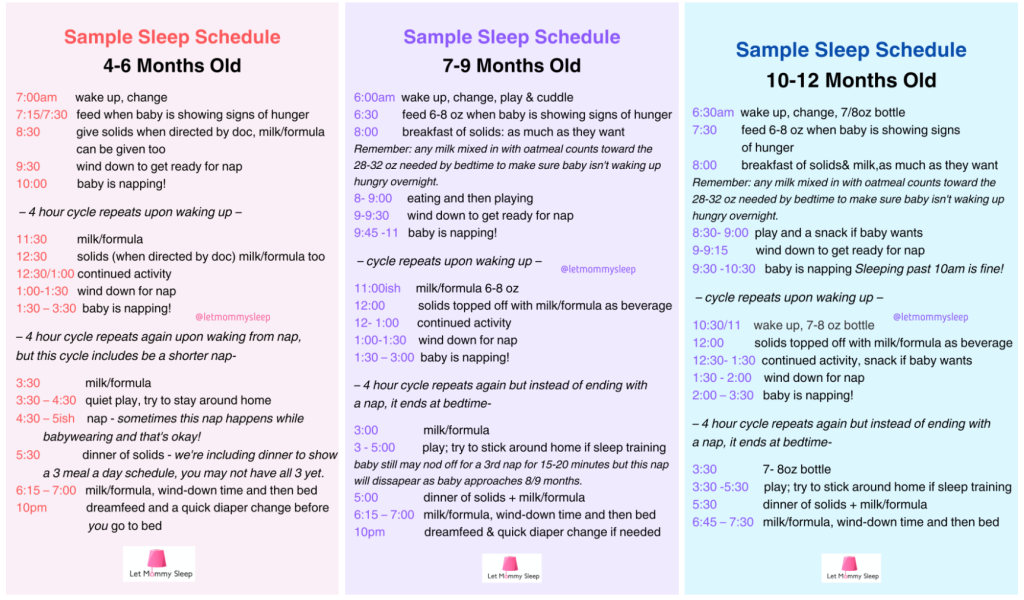
Sample Sleep Schedules For Babies
Now that you understand how to guide your baby toward independent sleep, these sample schedules can help you picture how feeding and naps fit into a 24-hour rhythm. Here are All the Infant Sleep Schedules in One Place
Things to remember about these Infant Sleep Schedules:
– These are examples only. Every baby and family is different, and it’s fine if your schedule looks different or if you don’t follow one at all. – The purpose of a schedule is simply to help establish consistent start and end points to each day, creating space for one long stretch of overnight sleep. – Use your baby’s actual wake-up time to adjust any example schedule. – Around 7–8 months, babies often drop their late-afternoon nap (around 4:00 p.m.), which is a normal part of consolidating sleep.
Ultimate Guide to Baby Sleep Training – The Four Month Sleep Regression
The “Four-Month Sleep Regression” is a normal developmental phase, not a setback. As we talked about above, newborns initially experience only two sleep stages: deep sleep and REM and around three to four months, the brain reorganizes to include all four sleep stages, just like adults.
When this change happens, REM sleep decreases from about 50% to 25% of total sleep, making room for lighter sleep stages. This means your baby is now more likely to wake up during the night—but that’s completely normal. Even adults wake up multiple times per night; we just don’t remember it.
What you can do to help your little one through the 4 Month Regression
Darkness: Babies aren’t afraid of the dark; they’re simply responsive to light. Keep sleep environments dark to encourage melatonin production and restful sleep.
White Noise: Light sleep means more chances to wake from sudden noises. White noise helps mask environmental sounds.
Bedtime Routine: Continue a 20–30 minute calming routine like bath, bottle/breast, books then bed placing your baby in the crib drowsy but awake.
Once again, our night nanny and postpartum doula team recommends talking to your pediatrician at the 4 month well check is so baby can get through this regression before formal sleep training. You’ll get reassurance that they’re now ready to follow the sleep patterns they’ll have for the rest of their lives.
Troubleshooting Common Infant Sleep Issues
Will adding rice cereal to the bottle help baby sleep longer? No. Studies, including those from the NIH, show no relation to thickening formula and longer sleep. Thickened formulas are used only under medical guidance for specific conditions.
My baby has gas, how can I help? Offer slow feeds with frequent burping, keep your baby upright for at least 30 minutes after feeding and try gentle tummy massage or bicycle kicks. Ask your pediatrician about probiotic options to support gut health.
Why does my baby wake at night if they’re not hungry? Common reasons include: discomfort from congestion or ear infection for example, teething (typically between 4–7 months), or simply following the same 3 hour cycle they do during the day. Once cleared by your pediatrician, gentle night weaning can help break the cycle of waking.
When should I stop swaddling? Stop swaddling once your baby starts rolling. Transition gradually by freeing one arm and then the other while keeping gentle pressure on the abdomen. Learn How to Swaddle Like a Pro
How do I reduce or stop overnight feeds? Wean slowly by decreasing one-half ounce (or a few minutes of nursing) from each night feed. You can give a pacifier after giving the smaller amounts of milk if baby needs to suck to feel soothed.
What about the pacifier itself? Gradually shorten pacifier time during bedtime or remove it once sucking stops or slows. If you prefer, you can go “cold turkey,” but the gradual method is often easier for both baby and parent.
How do I sleep train for naps? Once your baby is successfully sleeping through the night there is no special “nap training” that has to happen. One big caveat though: Naps can be inconsistent for so many reasons: your own family schedule, unexpected trips out of the house and the many gradual transitions babies make in growth.
My toddler still wakes up. What can I do? Toddlers often test boundaries or crave reassurance. Keep routines consistent and calmly return them to their bed each time. They’ll learn the new pattern through repetition. Learn more in Sleep Coach Your Toddler
The Bottom Line
Whether you’re dedicated to following an infant sleep schedule or you’re out and about without a schedule, there are a lot of ways to keep your newborn, infant and older kids happy and healthy. As long as your family is safe, harmonious and healthy, the parenting you’re doing is right.
Even if you follow expert advice exactly as it’s written, your newborn, infant and toddler will still cry. They will cry to a point where you might experience frustration that scares you. If this happens it is okay to put your baby down in the crib or other safe space and walk away for 15 minutes. You can go back in when you’re more calm. And maybe your child is more calm too. If you’re concerned about baby’s crying or health, please contact your pediatrician.
Our infant sleep plans were written by Registered Nurses and Night Nannies using the guidance of our Medical Advisory Board. They’re not intended to be used as or replace medical advice. Any kind of sleep training or change to your baby’s feeding and sleep habits should only happen under the direction of your child’s primary care physician.
updated, August 18, 2023 – When Dr. Maria Montessori started her classrooms for children in Rome in the early 1900’s, she created an environment based around children. Her classes included child size sinks, toys and shelves so that the children could freely and independently explore. The children of varying ages were also responsible for keeping their classroom orderly. They helped make meals for each other and cleaned up after play and meals. As a result of this set-up, Dr. Montessori quickly observed that the children were calmer, more caring toward each other and able to focus on activities for longer periods of time. Creating a Montessori Home for Babies and Toddlers brings these findings to your home
Creating a Montessori Home for Babies and Toddlers
Creating a Montessori Home for Infants and Toddlers
Many parents practice Montessori philosophies naturally, but want to implement the full program at home. Newborns and infants are of course a little more limited in what they can do but for older kids here’s what a Montessori program means:
“Self-care: washing, dressing, toileting, and eating, according to each child’s individual capacity
Care of the environment: cleaning, food preparation and food service; plant care and animal care
Large-motor activities (indoors and out): walking, climbing, running, jumping, balancing, climbing steps, and more
Fine-motor skills: reaching, grasping, picking up objects, transferring objects, using tools and utensils, doing art work
Language: naming objects, describing actions and intentions, discussing pictures, conversation, music, and singing
Social skills: developing manners through interactions with peers, teachers, and adult-led small group games”
Here’s how can you develop this type of learning environment in your own home:
Furniture – For toddlers, place developmentally appropriate furniture in their play space and around the house. This means furniture that’s sized for the child and easily accessible.
Rotate Toys – Don’t overwhelm your child with too many toys. eep a few toys available at a time and rotate them regularly. This maintains the baby’s interest and prevents overstimulation.
Natural Materials – Avoid toys that have batteries, flashing lights or that play loud music. Instead, have an open play space with a few toys out on a shelf that a child can choose to play with. Montessori encourages uninterrupted, deep engagement with an activity, which can be compromised by constant noise or flashing lights.
Safe Physical Play – Have a soft, physical playset area so baby can explore safely with minimal parent intervention. A playroom for an infant could also include a mirror so they can observe their body movements.
Age Appropriate Tasks & Routines – Make helping with meals and household tasks a routine part of your child’s day. A learning tower in the kitchen allows little ones to safely and independently help with things like putting vegetables in a salad, rinsing plates or wiping down the counters.
Other examples of Montessori style learning are to bring elements of nature indoors, like plants and natural light. Toys such as puzzles, blocks, cardboard boxes, musical instrumentals and art supplies also allow your child to play and learn at their own pace, as creatively as they like.
Age appropriate, safe art supplies are a Montessori staple for babies and toddlers
Creating a Montessori Home for Babies and Toddlers – What About Sleep?
Sleep is probably the category where we see the biggest difference between Montessori philosophy and other parenting practices. When little ones, are ready to sleep alone in their own room, a Montessori nursery means not using a crib, and simply using a mat or a floor bed for sleep. This is part of creating freedom of movement, and an area where babies can safely explore if they wish.
To many parents in the US this sounds unsafe and a little strange, but it’s vital to understand that this sleeping arrangement would only occur in a securely and fully childproofed room, when a baby is ready to be on their own at night. Since the AAP recommends newborns and babies stay in the same room (but not the same bed) as their parents for 6 months after being born, baby would typically sleep in a bassinet next to parents’ bed for that timeframe. While a mat can certainly be used, a safe-sleep set-up using a firm flat mattress can also be effective.
Whether you choose Montessori or a traditional layout, a safe nursery is most important when designing your child’s room. Here is a breakdown of how to create a safe nursery from the newborn to toddler stage.