Vaccine notifications pouring in from our Night Nurses & Nannies, January 2021
As the pandemic emergency is officially over on May 11, 2023, this post is no longer being updated. We are keeping it up as an archived post for those interested in how the company handled COVID19.
COVID19 and Newborn Care Best Practices for our Night Nurses and Postpartum Caregivers working in the family home have been updated as the coronavirus pandemic evolves. Vaccinations are now widely available and covid19 testing easily accessible, so we’re able to service more families while still remaining vigilant with safety. Below is a breakdown of our COVID19 safety and ongoing best practices:
Updated, Nov 20 2021 – Yes, we are all vaccinated including the booster. We understand some folks have big feelings about the vaccine however, as an evidence-based newborn and postpartum care company we’re following the advice of the CDC, The American College of Obstetricians and Gynecologists (ACOG), the Society for Maternal-Fetal Medicine (SMFM) and the AAP.
Updated, Jan 11 2021 – Our Nurses and Newborn Care Providers are now receiving the 2nd round of the Pfizer and Moderna vaccines. We still wear masks because it’s possible for a vaccinated individual to transmit the virus. We also want to protect those in the household too young to receive immunization or those who are immune-compromised.
Update – Dec 1, 2020 We’ve prided ourselves on using the highest vetting and safety practices possible since we began in 2010. As a company dedicated to evidence-based care, we lean on the recommendations of the CDC, the American Academy of Pediatrics (AAP) and other primary sources. Specifically we follow the AAP statement that vaccines are “ethical, necessary and just” to protect vulnerable populations. Too young to receive vaccines themselves, newborns and infants are considered vulnerable.
COVID19 and Newborn Care Best Practices
Coronavirus has caused us to examine and refine our practices even further. Here is an overview of current Let Mommy Sleep practices:
What we always do:
Wash Hands – Caregivers wash hands upon arrival into the family home and continue handwashing and sanitizing through the night and before and after all contact with baby.
Remove Shoes – upon arrival into your home.
Masking – Masks are required unless the family and caregiver mutually agree that they are comfortable without masks.
Vaccinate – We follow evidence-based science. We remain updated on all vaccinations to minimize the risk of illnesses to which newborns are vulnerable. These include influenza, pertussis (MMR), TDaP and COVID.
Continuing Ed – Provide free continuing education to all staff. This ensures we’re following the most recent safety, health and care guidelines.
Err on the side of caution – Staff is kept home at any sign of illness, even if symptoms might be “just allergies.”
What can we do together to minimize exposure?
Please leave sanitizing wipes or other household cleaners out for our team to use periodically through the night. While we can’t always practice social distancing when caring for babies, we can wear masks, handwash and clean, clean, clean!
We can’t wait to see you again and remain thankful and privileged to be in your homes. If you’d like to learn more about us and our practices, please visit this page.
Your first night home with your newborn will include waking every 2-3 hours to feed, and that’s completely normal. Full term newborns don’t typically longer sleep cycles until around 4-6 months old. Here is what to expect and how to prepare.
updated, April 2026 – One of the great joys we have here at Let Mommy Sleep is transitioning first time parents home from the hospital with their newborns. Your First Night Home with Baby: Newborn Sleep answers our most frequently asked newborn sleep questions. As humans we’re programmed to be, well, terrified that first night home, because we’re fiercely protective, so it’s completely normal to feel anxiety. Read below so you can put your worries to rest.
Newborn Sleep
Getting Ready for Bed
What should my baby wear?
The rule of thumb is that baby should wear what you would be comfortable in, plus 1 layer. For example, a recommended outfit for baby to sleep in would be a onesie, footed pajamas and swaddle blanket.
How about a hat?
As Rachelle Bernard, RN says in Mom.com, remember to keep baby’s hat on if you’re awake and off if you’re asleep. Those little hats can move and become a safety hazard so when don’t have eyes on baby, practice the ABC’s of safe sleep by removing baby’s hat.
How do I swaddle? Swaddling mimics the feel of the womb which is a comfort to baby. That is why the “baby burrito” is universally recommended. Here are two easy swaddling techniques you can do with a simple baby blanket.
But my baby is busting out of the swaddle, what do I do?
For newborns, give baby a snug swaddle. At this age baby’s movements are not always purposeful and the reflexive movements they have can keep them awake. A snug swaddle will help.
Where should my baby sleep?
The American Academy of Pediatrics (AAP) recommends room-sharing but not bed-sharing. This means that your baby is sleeping in the same room as you, but not in the same bed. A flat bassinet next to the bed is an ideal set-up; baby should be alone (no blankets or stuffed animals), on a flat, firm mattress and flat on their back to adhere to safe sleep recommendations.
Your First Night Home: Newborn Sleep – What’s Typical?
How often can I expect my baby to wake up overnight?
Babies don’t develop regular sleep cycles until about 6 months of age. Their stomachs are also tiny which means they need to eat and have diaper changes through the night. All of these things mean that unpredictable and staggered sleep are normal. Waking every 2-3 hours to eat can also be normal, particularly for babies coming home from the NICU where they got used to scheduled feedings but don’t be surprised if your baby’s sleep is all over the place.
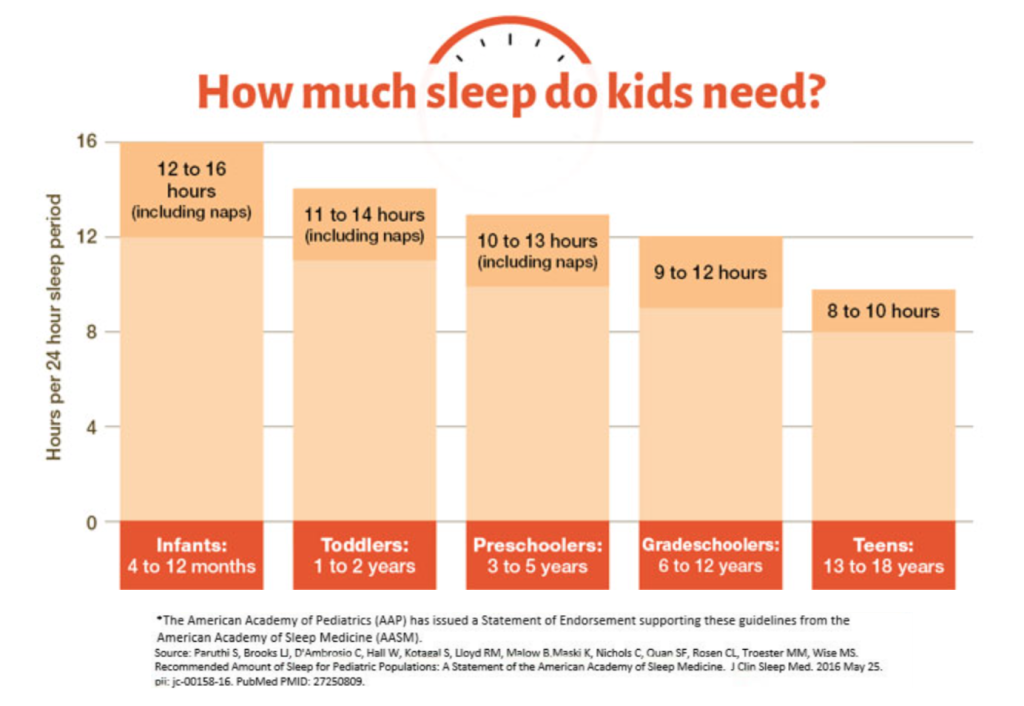
***Bonus Question – What are Baby Sleep Guidelines?*** – Check out the American Academy of Pediatrics Childhood Sleep Guidelines below. Notice anything?! That’s right, ages 0-4 months aren’t even included! So, chances are, whatever your baby is doing is normal! Of course check with your pediatrician if you’re unsure, but even the AAP is like Oh you have an infant that sleeps sometimes? And sometimes doesn’t? Yup, sounds right to us! 🙂
We’re just going to start at 4 months because 0-3 months is wild.
All of this said, while it’s expected that the first nights/weeks home with baby will include overnight waking, the awake times are generally short and peaceful. The “sleepy newborn” stage is real as your baby gets used to the world. Being ready with milk or formula when baby wakes will usually keep their time awake shorter, with less crying rom hunger as well.
My baby is super sleepy, should I wake-to-feed?
It makes sense that babies are pretty sleepy after being born- birth was really exciting for them too! Babies of healthy weight don’t usually need to be woken up to feed but it’s a great question to ask your team before leaving the hospital or birthing center. Babies that have jaundice may need to be woken to feed as milk/formula allows bilirubins (the cause of the yellow color) to pass through baby and if that’s a concern, your pediatrician will direct waking baby to feed. Also if babies are underweight when born, or have lost more weight than expected since birth they may need to eat more often.
It’s important to note that both of these instances are not uncommon and often very easily corrected and that early feeding decisions should be made with the child’s primary care physician.
So how do I wake baby to feed?
To wake baby, first loosen swaddle and clothes. If this does not work then undress baby down to a onesie. Changing babies diaper can also help waken them to feed. Turning on the light does not work. In fact, light will encourage newborns to close their eyes!
Anything Else I need to Know About Sleep?
Help! My baby seems to stop breathing for a long time! Is this normal?
A baby’s breathing patterns are not like an adults and they may experience periods of apnea, which means they are temporarily not breathing for several seconds. Check out our previous article, Newborn Breathing Patterns-What’s Normal, to find a good breakdown of normal newborn breathing patterns. However, as always, if you feel something is just not right, please notify your child’s pediatrician.
I know sleep deprivation is normal, but is there any way my partner and I can get more sleep?
Yes! You all can decide on a sleep schedule for yourselves by each taking a block of hours where you are “off.” For example, 2 parent is off from 9pm – 2am and the other is off from 2am – 7am. Better yet, give each other 2 or 3 entire 8 hour nights off. Resist the urge to watch Netflix during your off time, keep sleep as the priority for now.
But I’m breastfeeding and still have to get up, how can *I* get a block of sleep?
In the early weeks before pumped milk is an option, yes, the breastfeeding parent will need to nurse. And even when overnight bottles are available your body will still wake you because your breasts will be full. You can make this as easy as possible by having your partner bring baby to you, do all the diaper changing and soothing back to sleep. Your partner can also be on pump duty if you need to express milk; making sure the pump is within your reach and then bringing milk to the fridge. Ideally you will never have to get out of bed on your nights off. It’s not perfect but you’ll definitely get more sleep.
If overnight newborn care would help you through the first weeks home, Let Mommy Sleep’s certified night nannies and Registered Nurses are available the night you arrive home from the hospital, and on short notice. Contact us today.
Maternal Health Advocacy If We Can Do it You Can Do It!
Updated October 28, 2022: Maternal Health Advocacy: If We Can Do it, You Can Do It! details ways that any of us can stand up for sensible postpartum care. Below is the latest on national legislation, as well as groups you can support if you wish!
What’s Going on with Legislating Paid Leave?
Four weeks of paid family and medical leave is now part of the Build Back Better legislation currently in front of law makers. Maternal health advocacy has been a cause championed by many that is now becoming a reality. In addition to helping postpartum mothers heal and adjust to their new role, paid leave allows all family members to have better mental health, economic outcomes and long term benefits.
Paid leave can also be used for individuals to recover from a serious illness or provide care for another family member. The caregiver’s job will still be there after leave. This is an unfolding situation so we recommend following @paidleaveus on Instagram for the latest.
***
Maternal Health Advocacy in the Postpartum Phase
November 2020 – My team and I visited Capitol Hill to lobby about the importance of postpartum care, specifically in support of H.R. 34 – the 21st Century Cures Act, “Bringing Postpartum Depression Out of the Shadows.” This Resolution is all about the need to continue to recognize postpartum issues. Going hand in hand with this is having qualified professionals helping those struggling in the postpartum phase.
Like everyone who works in mother/baby care, we’ve known for years here at Let Mommy Sleep that early support and intervention just home from baby’s birth are the key to keeping mothers healthy, parents confident and babies safe. The data in support of even one 2 hour postpartum visit also shows cost effective benefits across the board.
These early days home with baby are when everyone is at their most vulnerable. By visiting parents just home from the hospital, Registered Nurses, Lactation Consultants and other trained providers head off issues before they become problems. Troubleshooting breastfeeding challenges before they snowball into an issue that makes a parent quit nursing is one example. Identifying postpartum depression versus baby blues before these emotions spiral into darkness is another. Lastly, we share evidence based safety and newborn care education to build confidence and support for new parents. Postpartum visits help parents see that not only are they “good enough” for their baby…they are amazing!
In a political climate that has become extreme, we remain a nonpartisan company that supports all families trying to do their best just as we did in 2014 with President Obama’s Summit for Working Families, as we will do on the Hill and as our night nurses continue to do in homes every night.
How You, yes YOU! Can Support Postpartum Health
If you would like to support maternal health, learn about active legislation in your state and speak up for families, here are 3 ways to get started:
March for Moms. They work every day educating about maternal death, and how it can be prevented.
Did you know diapers are NOT covered under state or federal child safety-net programs? Donate diapers or funds for diapers via the National Diaper Bank.
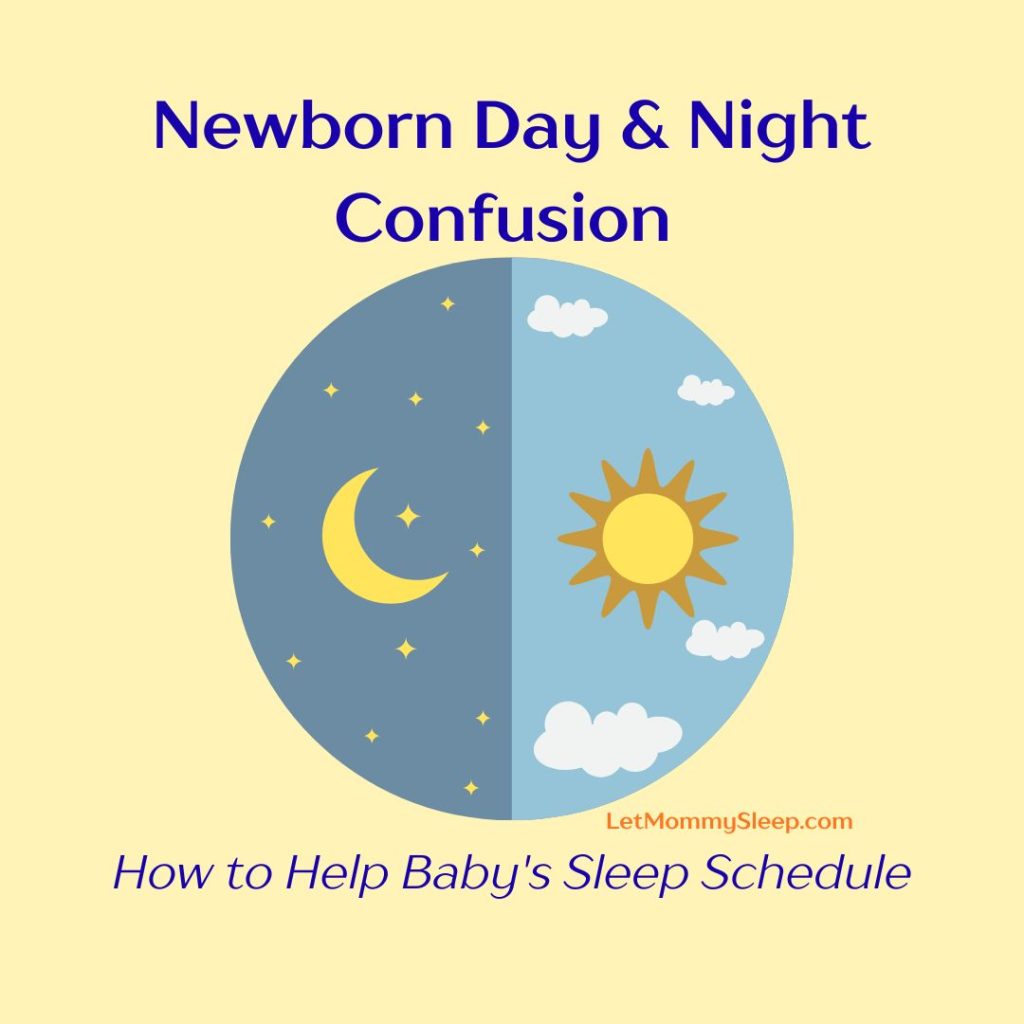
Newborns spend nine months in a dark womb with no day/night cycle. Day and night confusion is completely normal and not a sign anything is wrong. This guide covers both newborn day and night confusion in the early weeks and how to manage Daylight Saving Time sleep disruptions as baby grows. Here is how to gently shift the schedule:
1. Keep daytime bright and stimulating: open curtains, interact actively during feeds and give baby plenty of exposure to natural daylight
2. Keep nighttime calm and dark: minimal stimulation, use quiet voices and dim lights in the evening hours. Minimize blue light from screens as well.
3. Don’t wake a sleeping baby during the day to enforce a schedule in the first weeks. Gradual change is what will flip baby’s schedule.
4. Remember that we are not born knowing day from night, but most newborns naturally regulate within 6 to 8 weeks as their circadian rhythm develops.
Daylight Saving Time
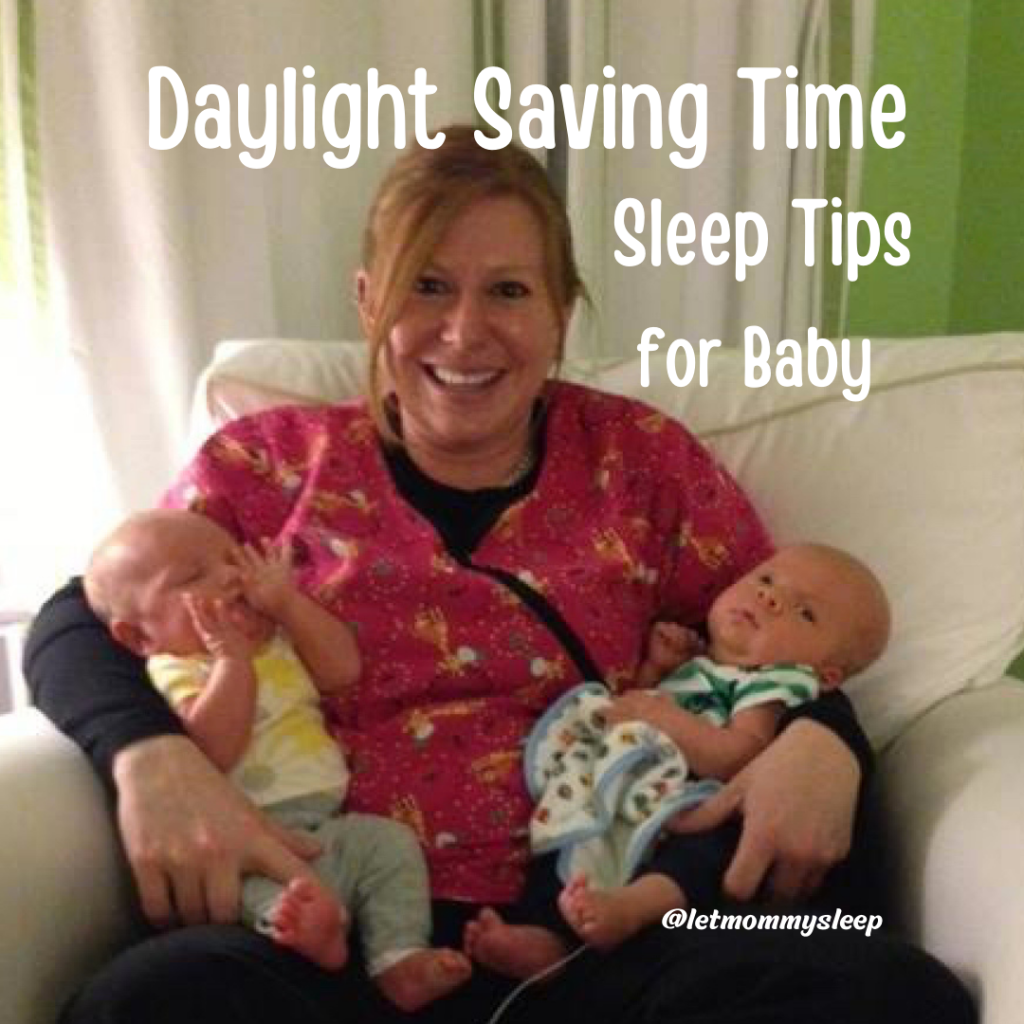
Daylight Saving Time (DST) is when clocks are moved forward (in the Spring) or backward by one hour (Autumn) to make better use of daylight. For parents of newborns, infants, or twins this one-hour shift can disrupt sleep schedules, feeding routines, and daily rhythms. But with a few simple strategies, you can make the transition smoother for both you and your baby. Our guide shares how to ease daylight saving sleep loss for newborns, infants and yourself.
Quick Tips to Ease Baby Sleep During DST
Adjust Bedtime Gradually: Move bedtime 10–15 minutes earlier each night in the week leading up to DST.
Shift Daily Activities: Adjust meals, naps, and playtime slightly earlier to support the new schedule.
Keep the Environment Dark: Use blackout curtains or shades in the evening to help your baby wind down naturally.
Even though clocks “fall back” in Autumn or “spring forward,” in Spring, your baby’s internal clock hasn’t adjusted. You might notice early-morning wake ups or fussiness for a few days or slight disruptions in nap times or bedtime routines. As our head night nurse Joy Becker, LPN says: Babies aren’t robots, and they don’t read sleep blogs! In other words, this too shall pass.
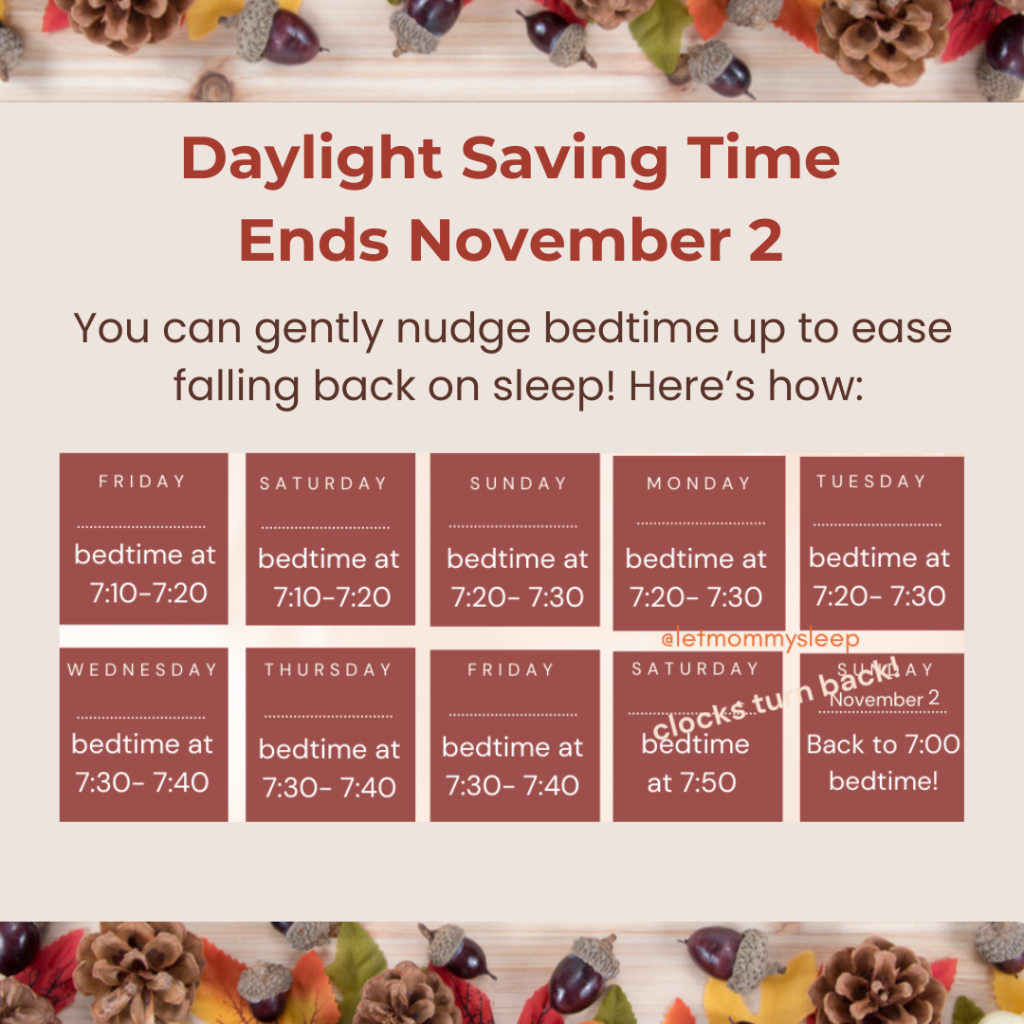
Step-by-Step Bedtime Adjustments for Autumn (End of DST)
Gradual changes work better than sudden ones. For a baby who typically goes to bed at 7:00 p.m., try the following in the 10–14 days leading up to DST:
Saturday–Monday: Bedtime 7:10–7:20 p.m.
Tuesday–Thursday: Bedtime 7:20–7:30 p.m.
Friday: Bedtime 7:40–7:50 p.m.
Saturday (DST day): Bedtime 8:00 p.m. (which will be 7:00 p.m. on the clock)
Keep a consistent bedtime routine: Bath, final feed, quiet time, and bonding. Predictable routines help babies adjust and develop healthy sleep habits.
Pro tip: Leave your baby alone if a nap seems long. They’re often making up the lost hour!
Step-by-Step Bedtime Adjustments for Spring (Start of DST)
For a baby who typically goes to bed at 7:00pm, try the following in the 10 to 14 days leading up to the spring time change:
Saturday–Monday: Bedtime 6:40–6:50pm
Tuesday–Thursday: Bedtime 6:30–6:40pm
Friday: Bedtime 6:10–6:20pm
Saturday (DST day): Bedtime 6:00pm (which will be 7:00pm on the clock)
Spring is actually harder for babies than Autumn because you’re asking them to go to sleep an hour earlier by the clock. So, start the gradual shift a full two weeks before the spring change rather than one. That extra time makes the transition noticeably smoother.”
Daylight Savings Sleep Tips for Babies
Ease Daylight Saving Sleep Loss: Don’t Forget Your Own Sleep
Sleep is crucial for parents too. Try these strategies:
Swap full nights of sleep with your partner when possible
Shift your bedtime and wake time 15 minutes at a time to match your baby’s new schedule
Avoid screen time before bed and create a dark, quiet sleep environment
Daylight Savings was introduced to make better use of natural daylight during World War I, in 1916, to conserve energy and fuel. But since it started, at least 45 states have considered or passed legislation to shift to stop changing the clocks. Key facts:
Energy Savings: Extending daylight hours may reduce electricity use (though results are mixed).
More Daylight for Activities: Longer evenings allow more outdoor time and boost recreational opportunities.
Safety Benefits: Some studies suggest reduced car accidents and crime rates in daylight hours.
Work & Agriculture Adjustments: Many find DST disruptive, especially in parenting and farming routines.
How do they choose the date for Daylight Savings?
Daylight Saving dates are set by law, they always fall on the second Sunday in March and the first Sunday in November. This is stated in the Energy Policy Act of 2005. The 2005 Act is an update of the original Uniform Time Act of 1966 that actually standardized daylight saving time for the US.
FAQs: Newborn Day Night Confusion and Daylight Saving Time
How do I fix newborn day and night confusion? A: Keep daytime bright and stimulating with natural light and active interaction during feeds. Keep nighttime calm, dark, and low-stimulation. Avoid screens in the evening as blue light suppresses melatonin. Don’t force a schedule in the first weeks, most newborns naturally regulate within 6 to 8 weeks as their circadian rhythm develops. Gradual gentle nudges work better than sudden schedule changes.
How do I flip a newborn’s sleep schedule? Shift bedtime and wake time by 10 to 15 minutes every few days rather than all at once. Keep daytime feeds more interactive and nighttime feeds quiet and low-stimulation so baby begins to associate darkness with sleep. Remember that light from screens simulates “daylight.” Most newborns flip naturally within 6 to 8 weeks. If it feels forced before then, it may be too early.
What happens during Spring Daylight Savings? In Spring, we turn clocks ahead 1 hour overnight. At 1am, clocks change to 2am. In Autumn we “fall back,” turning clocks to 1am when it turns 2am.
How long will my baby take to adjust to DST? Most infants adjust within 3–7 days, though some may take up to two weeks.
Can I start adjusting my baby’s schedule before DST? Yes! Gradual bedtime and wake-time shifts help prevent early-morning fussiness.
How do I help my own sleep during DST? Swap nights with your partner, shift your schedule gradually, and maintain a dark, quiet sleeping environment.
What if my baby refuses to sleep on the new schedule? Stick to predictable routines, use blackout curtains, and remember that short disruptions are normal. Newborns often set their own rhythms.
Key Takeaways
Gradual adjustments to bedtime, meals, and daily activities help babies transition smoothly.
Predictable routines, darkness, and gentle approaches work better than sudden schedule changes.
Protect your own sleep to maintain health, mood, and alertness.
Early wakeups, fussiness, and nap changes are normal during the first week after DST.
Regarding infant sleep, sleep training and plans are rarely perfect. If following the baby sleep schedule feels forced, it’s okay to just…stop. Newborns in particular are on their own schedule and that is perfectly normal. Flipped schedules and daylight saving time is a parenting reality that can go into the category of eventually solving themselves.
If DST or day/night confusion is making overnight parenting feel impossible, Let Mommy Sleep’s night nannies and Registered Nurses can step in, even for one or two nights, to help reset everyone’s schedule. Find your local team now.
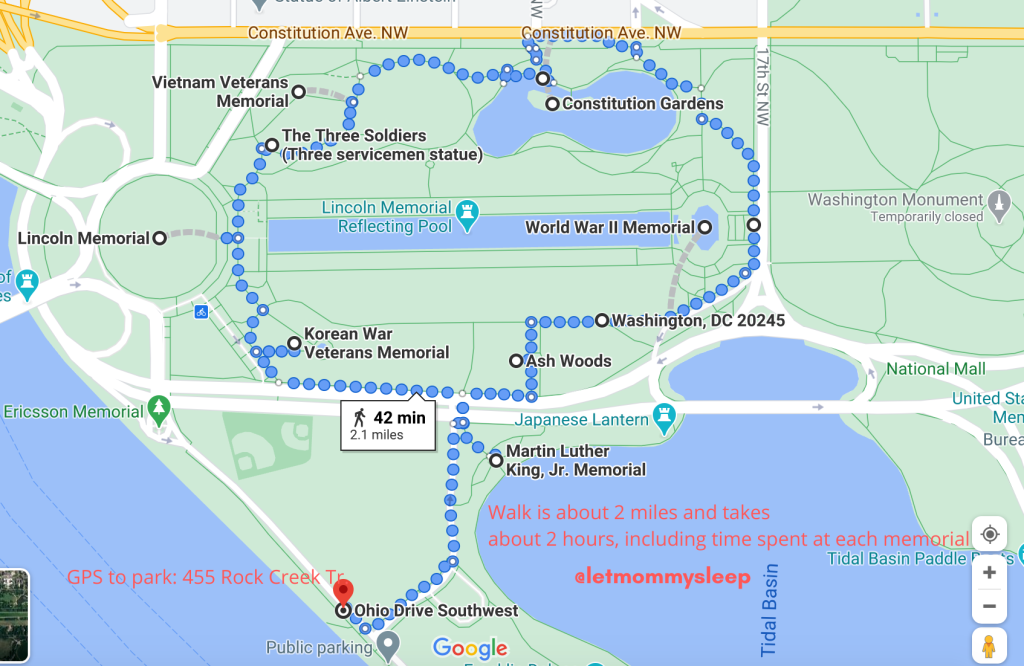
updated, April 2026 -With America’s 250th birthday celebrations this summer, the National Mall monuments are worth visiting more than ever. Here’s our family-friendly 2-mile walking tour of Washington DC’s outdoor memorials; perfect for families with babies, toddlers and kids of all ages. This walk takes about 2 hours and is 2 miles long, but your mileage may vary (literally!), depending on the time you take at each location or if you spend extra time in any of the wide open fields!
Here’s a family friendly route with free parking:
For your GPS, the easiest public parking is at: 455 Rock Creek Trail. There’s lots of spaces and you’ll be right next to the Potomac River, which is a fun start for the kids after being in the car.
Dr. Martin Luther King Memorial – Most people naturally think of the Stone of Hope statue when they think of this Memorial, but the Dr. Martin Luther King Memorial actually encompasses another 4 acres.
Korean War Veterans Memorial – The 19 stainless steel statues representing the service members who fought in the Korean War are a memorable part of this memorial.
Lincoln Memorial and the Reflecting Pool – No tour of the monuments is complete without an up close view of the iconic tribute to President Lincoln and the Reflecting Pool.
Vietnam Veterans Memorial. The Three Soldiers are right before The Wall, as is the Vietnam Women’s Memorial. Both are smaller but worth seeing for sure. If you’d like a little side trip, visit the Albert Einstein Memorial at 2101 Constitution Ave. It’s in the opposite direction, but only a 2 minute walk from The Wall. It’s very easy to get back to the original route.
Constitution Gardens – This is one of the lesser known park areas but is scenic 4 acre landscaped area on the Mall. It’s also known for its benches and shaded paths and little island on the park area, making it an ideal resting spot during the walk. The island is a Memorial to the 56 Signers of the Declaration of Independence.
World War II Memorial – Gentle reminder to little ones that this is an actual Memorial because it might be tempting to splash in the pools or run around.
Ash Woods, also known as the District of Columbia War Memorial to honor DC residents who served in World War I.
There are plenty of vendors and stores along your route, but you can also head back to the car for a picnic on the Potomac! Bonus that you’re bound to see lots of low flying helicopters and planes taking off and landing from National Airport.
What about the Washington Monument…shouldn’t that be in the DC Monument Walk for Families?
You may notice we haven’t included the Washington Monument. Don’t worry, you’ll be able to run to it from the WWII Memorial and you’ll see it very easily for most of the walk. As for restrooms, don’t worry there are plenty of public restrooms along the route and this is a 100% stroller friendly activity.
Planning for a new baby in the DC area? Let Mommy Sleep serves Washington DC, Maryland and Northern Virginia with overnight newborn care and postpartum support.