Alert! Amazon’s February Baby Sale is ON! Our team of baby care experts have included all the best deals on gear and products on Let Mommy Sleep’s Amazon Baby Registry. Rest assured, we didn’t just cut and paste what was on sale. We’ve only included only those newborn care items that we’ve used ourselves, or those that have received thousands of 5 star reviews from real parents and gear that you can use for years.
Amazon’s February Baby Sale is ON!
Amazon’s February Baby Sale is ON! – Proceeds Benefit Mission Sleep
After 15 years, Let Mommy Sleep’s goal remains unchanged: nurture newborns and their parents. And yes, sometimes this means highlighting the baby products our expert night nurses and doulas love. But even more than just a sponsored post, shopping in our Amazon store means you get excellent deals, while helping other families! Commissions from Amazon sales go to our 501c Mission Sleep which allows us to provide free newborn care to families who need it the most. Mission Sleep focuses on military and first responder families whose babies are born when one parent is serving us. The parent might be deployed, working night shift or on active duty. Mission Sleep has also expanded to include civilians experiencing maternal health crises.
Amazon’s February Baby Sale – Not Just Newborns
Whether you’re expecting newborn twins, have an infant and older kids or are a night doula yourself, this blog Amazon’s February Baby Sale is ON! has deals for you. We all know that the diapers and wipes don’t stop, and new gear might need to be replaced as we add new babies to the family! : ) This is a win/win: you’re prepared with the baby essentials you need while directly helping others.
All commissions from our Amazon sales benefit our 501c3 on-profit Mission Sleep. Mission Sleep provides free newborn care to families whose babies arrive when a parent is deployed, wounded or deceased.
updated August 1, 2025 – Feeling tearful or overwhelmed is common after giving birth, but if you notice these feelings lingering, it could be postpartum depression (PPD). You don’t have to navigate these feelings alone, and help is available once you know the difference between PPD vs. Baby Blues.
Key Takeaways for Knowing if it’s Postpartum Depression or Baby Blues
Tearfulness, feeling overwhelmed and anxiety are normal after giving birth and peaks around Day 5.
If symptoms like this that persist for more than 2 weeks, it’s time to check in with your doctor.
PPD is highly treatable with the right support.
Your partner or a trusted friend should learn the symptoms of PPD before baby arrives so they can look out for you.
Rule of thumb: if you’re having thoughts that scare you, it’s time to contact a medical professional.
What’s the Difference Between PPD and the Baby Blues?
Mild depression with tearfulness, irritability, appetite changes and fatigue are common after giving birth and typically peak around the fifth day postpartum. These normal feelings are called the Baby Blues. However, if the feelings linger beyond two weeks or begin to increase in severity it maybe postpartum depression (PPD). Other red flags of PPD include poor bonding with your baby, racing thoughts or overwhelming guilt.
Postpartum depression affects up to 16% of new mothers and can even impact partners. Recognizing the signs early is key and the good news is that postpartum mood disorders such as PPD are highly treatable with therapy and medication.
Rule of thumb: if you’re having thoughts that scare you, it’s time to contact a medical professional.
Symptoms of PPD vs. Baby Blues
The immediate postpartum phase brings profound hormonal and life changes. Most parents adapt and recover after about a week. And yes, PPD can also affect partners. If sadness persists beyond two weeks however, postpartum depression (PPD) may be the cause.
Q: What are the symptoms of Baby Blues? A: Baby Blues usually peak around day 4–5 after birth and last 1–2 weeks. Common signs include mood swings, tearfulness, irritability, anxiety, fatigue, trouble sleeping, appetite changes, and feeling overwhelmed. These feelings are temporary and a normal part of postpartum adjustment.
Q: What are the symptoms of postpartum depression (PPD)? A: Postpartum depression can begin anytime in the first year after birth and lasts longer than typical Baby Blues. Common symptoms include: persistent sadness, frequent crying, irritability, anxiety or obsessive fears, fatigue, sleep or appetite changes, poor concentration, feelings of guilt or worthlessness, loss of interest in activities or self-care, psychomotor agitation or slowing, somatic complaints (like headaches or heart palpitations), feeling overwhelmed, and difficulty bonding with the baby.
More Detailed Symptoms of PPD
If these symptoms persist beyond 7-14 days they are symptoms of PPD. Some of these feelings, like fatigue for example, are normal in the first 2 weeks, but continuing or worsening is not typical.
Persistent sadness
Frequent crying, even about little things
Poor concentration or indecisiveness
Difficulty remembering things
Feelings of worthlessness, inadequacy or guilt
Irritability, crankiness
Loss of interest in caring for oneself
Not feeling up to doing everyday tasks
Psychomotor agitation or retardation
Fatigue, loss of energy
Insomnia or hyperinsomnia
Significant decrease or increase in appetite
Anxiety manifested as bizarre thoughts and fears, such as obsessive thoughts of harm to the baby
Feeling overwhelmed
Somatic symptoms (headaches, chest pains, heart palpitations, numbness and hyperventilation)
Poor bonding with the baby (no attachment), lack of interest in the baby, family or activities
Loss of pleasure or interest in doing things one used to enjoy (including sex)
What if I think it’s PPD?
First off, postpartum depression is not a weakness, but an effect of the pregnancy. In fact, postpartum mood disorders are the most common medical complication of pregnancy. Once recognized, postpartum depression is treatable. In some cases, social support or therapy may be recommended and in others, medication is necessary to help mothers with PPD.
Q. What should I do if I think I have PPD? A. First contact your primary care physician, OB/GYN or midwife, or mental health provider. They can screen, diagnose and recommend treatment for PPD. The treatment plan might include: psychotherapy, medications safe for breastfeeding and support groups or peer programs. Severe cases may require hospital or residential care.
Q. Is there anything I can do to stop PPD before it starts?
A. We can’t fully prevent postpartum depression from happening but there are are evidence-based strategies to reduce the risk or severity. These are:
early identification of risk factors with mental health screening during pregnancy
therapy for high-risk individuals
receiving practical support with newborn and household care
getting healthy sleep and nutrition. If you’re considering hiring help, you can read What’s a Night Nanny?
having another trusted adult learn and understand the symptoms of PPD before your baby arrives. In other words, have your partner or someone else who knows you really well be on the look out for your mental health.
Even with these measures, some women may still develop PPD, so early recognition and professional intervention are essential. If you’re expecting and want to learn about common issues in the early days with baby, read Your First Week Home with Baby: Ultimate Q&A.
As a night doula or night nurse, you’re a vital support for families navigating the challenges of newborn care. Whether you’re assisting new parents with feeding schedules, soothing techniques or postpartum recovery, having the right tools at your fingertips is essential for providing exceptional support. That’s why we’ve curated this comprehensive list of Night Doula Essentials, the must-have items to keep you prepared, organized, and ready to handle any situation during overnight shifts. Best of all, you can find these recommended items on our Amazon storefront, and 100% of the proceeds from purchases support our nonprofit, Mission Sleep.
Night Doula Essentials – What Kind of Bag Should You Use?
Your bag is your command center. A spacious, multi-compartment tote keeps supplies organized and easy to grab during the night. Many doulas prefer a durable tote that can fit a laptop, snacks, first aid kit and extra clothing. Others love a backpack style for easier carrying. At Let Mommy Sleep, our staff commonly use these three tried-and-true options:
Multi-pocket backpackfor balance and hands-free carrying
Rolling carryall if you bring heavier gear or personal items.
Nightshift Essentials: For Baby and For You
Night shift work, especially overnight newborn care in the home, requires a balance of caring for baby while also staying attentive to your own well-being. The following items are practical, portable and proven to help night doulas provide seamless care.
First Aid Kit – While your focus is always the newborn, don’t forget about yourself. A small kit with band-aids, aspirin, lip balm and other basics is useful for long shifts. We also recommend keeping a bulb syringe in your kit—small and inexpensive, but invaluable if a newborn in your care is congested.
Extra Long Phone Charger – Never assume a family will have the right charger. Bring your own extra-long cord so you can keep your phone charged for emergencies or communication, even while holding the baby.
Skidded Socks or Slippers -These are non-negotiable at Let Mommy Sleep. Shoes should always be removed before entering a family’s home to reduce germs—especially important around vulnerable newborns. Non-slip socks or skidded slippers reduce fall risk when you’re holding the infant.
Disposable Masks – Always carry disposable masks in your bag. Families may request them, or you may need them for yourself if someone in the home isn’t feeling well. Keeping extras shows preparedness and professionalism.
Night Doula Essentials for the Home
Notebook & Pen – While apps are effective, we still love the intimacy of handwritten notes. A notebook allows you to record feeding times, diaper changes, and observations, especially for twins or complex schedules. Parents often treasure handwritten notes as keepsakes of their baby’s early days.
Hand Sanitizer & Wipes – Handwashing is always best, but you won’t always be near a sink. A small spray sanitizer and travel-size disinfecting wipes keep your hands and work area hygienic between washings.
Dimmable Flashlight or Clip-On Book Light -A dim, focused light helps with tasks like checking on the baby, checking a latch, mixing formula or recording notes without turning on bright overhead light. In addition to not disturbing baby, a small flashlight is a little safer than using a phone flashlight, which can be awkward when your hands are full.
Comfort & Preparedness Items
You will likely have some quiet time overnight and will want to eat and drink during your care time too. And sometimes the little details make a big difference. Here are some ideas to make the overnight shift more comfortable for you:
Water Bottle & Quiet Snacks: Keep your energy up during overnight shifts with low sugar foods like granola, fruit or yogurt. Keep hydrated to stay healthy and energized.
Light Sweater or Wrap: Homes can be cool at night—dress in quiet, layered clothing.
Small Personal Bag: Toothbrush, hair ties, lip balm or anything you need to feel comfortable.
Helpful Extras
Burp Cloths and Disposable Diapers: Always handy to have spares just in case.
Portable White Noise Machine or App: Useful if parents already use one for baby.
Latex-Free Gloves: Some doulas prefer these for cleanup or sensitive skin.
Quick FAQs About Night Doula Essentials
What should a night doula wear? Comfortable, quiet, layered clothing with non-slip socks or slippers. Avoid perfumes and noisy fabrics.
Do families provide supplies? Families provide baby care items including: diapers, wipes, clothing, milk or formula and swaddle blankets. Doulas should bring their own professional kit.
Why is a notebook important if I use an app? Notebooks allow for personalized, meaningful communication with parents, and are guaranteed never to run out of charge. Documentation in a notebook is especially helpful to parents of newborn twins who can take a quick glance at both baby’s feeding and sleep activities.
See more of our postpartum favorites, night nanny gear and baby registries on Amazon!
updated, July 15, 2025 – Our team of night nannies and baby nurses get lots of questions about how to help babies to sleep through the night! Just because a baby “should be” old enough to sleep 8 hour stretches, doesn’t mean that they will. This blog, Why Your Baby Wakes Overnight will help you understand why your infant still wakes, and how to help them get back to sleep peacefully.
Key Takeaways
Besides hunger, here are the most common reasons babies wake overnight and what you can do to help:
Illness or congestion (especially when lying flat)
Teething Pain
They’re uncomfortable; they have a full diaper, trapped gas or the temperature in the room is too cold or hot
For their whole life they’ve woken up every few hours and need a feed or pacifier to go back to sleep. It makes sense – and is perfectly normal- that they don’t magically know another way.
Why Your Baby Wakes Overnight
Q. Why does my baby wake through the night when I know he or she is not hungry?
A. There are typically 4 reasons for this:
Illness – when baby has an illness or discomfort such as congestion or ear infection; laying horizontally makes fluid in the inner ear or chest settle and makes getting comfortable very difficult for baby. Baby might also need their nasal passages cleared. Responding to baby quickly, for as long as baby needs is of course recommended.
Teething – Teething pain is one of the most common causes of overnight wakefulness. Comforting baby is again the way to go (of course!)
Discomfort – Go through this checklist: are they too hot/cold? Is their diaper wet or soiled? Could they have gas? Once you know the reason you can work quickly to help.
It’s their Routine– For healthy babies who’ve never slept through the night, frequent waking often happens because their circadian rhythm and sleep associations are still developing. They’re simply continuing the 3–4 hour cycle they’ve known since birth. Gradually spacing out nighttime feeds and offering more daytime calories can help their internal clock adjust.
It’s important to note that a normal part of newborn and infant development is that sometimes your baby might be healthy and well, but still awake or fussy with no noticeable reason. In these cases, you can always try one of the 12 Ways to Soothe Baby. If you ever feel something just isn’t right, you can also contact your pediatriican anytime.
Q. My baby used to sleep through the night when swaddled but now they don’t. Do I stop the swaddle?
A. When baby is rolling onto her stomach, the swaddle becomes a hazard. When baby is consistently “busting out” in the late 3rd month or month 4, he’s telling you he does not need the swaddle anymore. To eliminate the swaddle parents can simply go cold turkey or take a gradual step-down approach where we allow one arm out for several nights, then 2 arms and then eventually no swaddle at all. Learn all the safe swaddling info in How to Swaddle Like a Pro.
Q. How do I eliminate overnight feeds/the pacifier?
A. Anytime we are helping baby -and well, anyone really- learn a new way to do things we have two choices: cold turkey or gradual introduction. Cold turkey certainly cuts to the chase, but the gradual approach can be much more gentle and less jarring for baby.
For feeding this means that we can eliminate milk/formula altogether between certain hours or we can gradually wean the amount taken in during these hours. For nursing moms, gradual weaning is essential…it’s more gentle for baby and also gives mom’s body time to adjust. When it comes to the pacifier we can “cold turkey” it or gradually remove the pacifier after less and less time per pacifier “session”. For sleep training, it’s typically recommended to remover pacifier when baby stops sucking for a few moments, repeating this removal over and over until the pacifier is eventually not needed.
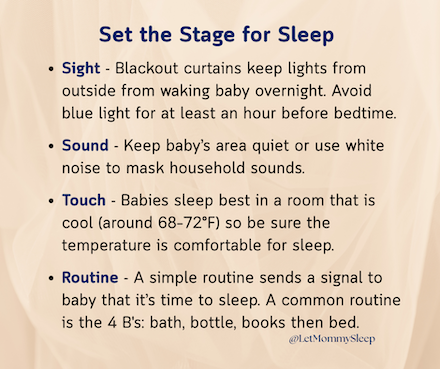
One last factor that shouldn’t be overlooked in helping a baby sleep through the night is a consistent, calm sleep environment.
Feel – Babies sleep best in a room that is cool (around 68–72°F) so be sure the temperature is comfortable for sleep. Also ensure baby is dressed properly.
Sound – Keep baby’s room quiet or use white noise to mask household sounds.
Sight – Blackout curtains signify it’s time for rest and also keep outside lights from waking baby overnight. Avoid blue light devices and stimulating play in the hour before bedtime, as this can interfere with melatonin production.
Routine – A simple routine like dimming the lights, changing into pajamas, and reading a short book or singing a lullaby sends a strong signal to baby that it’s time to wind down and sleep. A common routine is also the 4 B’s: bath, bottle, books then bed.
Consistency – Babies thrive on predictability. A consistent bedtime, similar environment, and familiar routine help regulate their body clocks and reduce night wakings over time.
Whether baby room shares with you, sleeps in a crib, uses a pacifier or does any number of other sleep behaviors, there are a LOT of right answers. Always check with your pediatrician before making major changes to feeding or sleep routines, especially for babies under 6 months or those with medical conditions. In general though, as long as baby is safe, it’s always okay to do what works to make a happy and peaceful family.
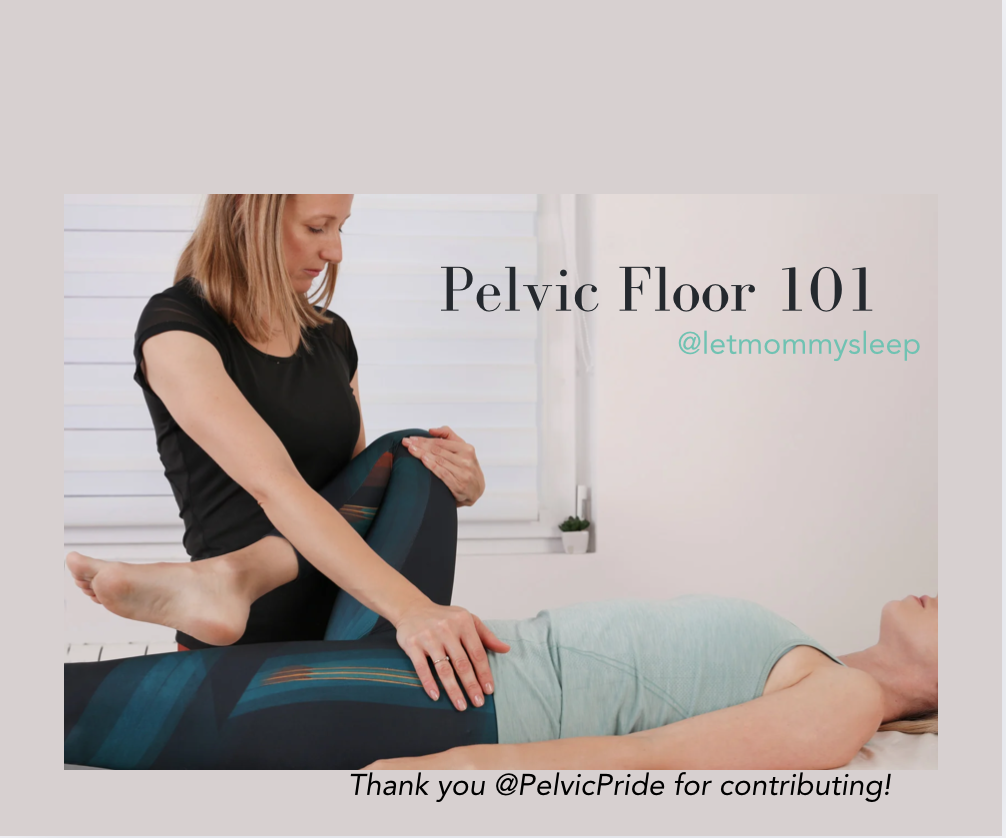
Pelvic floor therapy has gained more attention recently. There’s a growing understanding of its importance in women’s health, particularly around pregnancy, childbirth and aging. Historically, issues like incontinence or pelvic pain were underreported and under diagnosed. But with advances in medical research and honest conversations taking away the stigma of pelvic floor issues, we now have options and education to keep this vital area healthy! Pelvic Floor 101: Pregnancy and Postpartum has everything you need to know, and features the expert advice of our friends at Pelvic Pride in Baltimore, MD.
Remember that in seeking counsel, a pelvic floor therapist is a highly trained professional with the clinical designation of Doctor of Physical Therapy (DPT) or Occupational Therapist specializing in the pelvic floor. This is a doctoral degree involving extensive training in anatomy, physiology, and rehabilitation techniques. DPT’s have also completed clinical rotations in women’s health, orthopedics and more.
What is the Pelvic Floor?
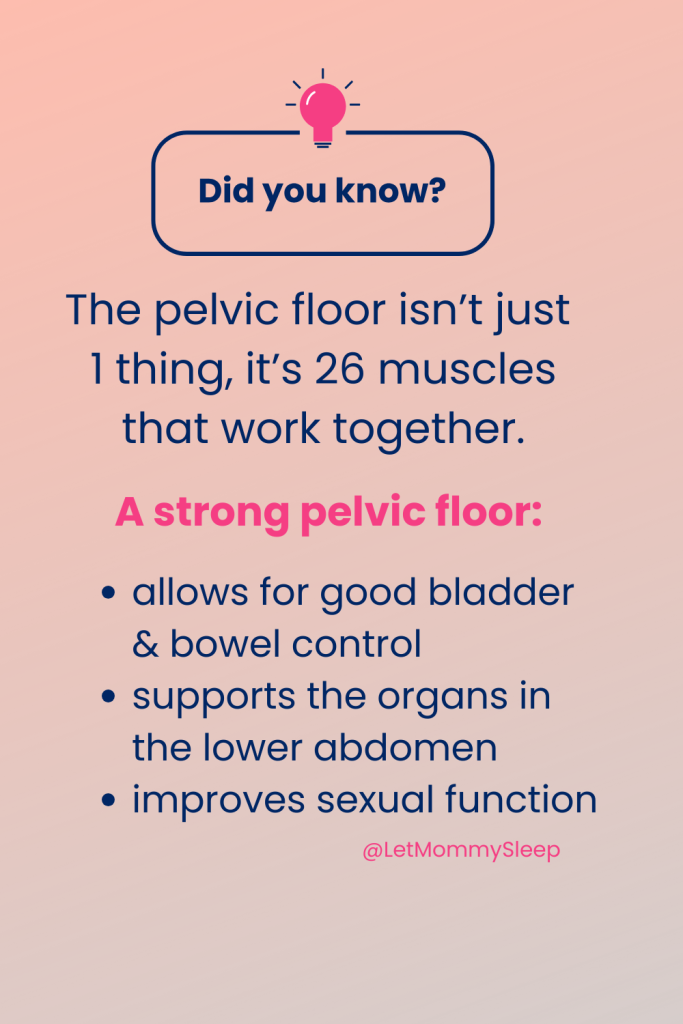
The pelvic floor is not just 1 thing- it is actually 26 muscles that work together. This team of muscles surround the urethra, vagina and anus that acts as a “hammock” of support for the bladder, uterus and rectum. (The prostate is also supported, but for this lesson we’re concentrating on women and people who don’t have a prostate). Like with all of our body parts, a strong properly functioning pelvic floor is important for overall well-being.
The main reasons to keep a strong pelvic floor are:
to maintain good bladder and bowel control; your pelvic floor muscles help your bladder and anus open and close.
support your internal organs; the pelvic floor is the structural support of all the organs in the lower abdomen: bladder, intestines and reproductive organs
improved sexual function; a strong pelvic floor alleviates pain/discomfort during sex, increases blood flow and allows for better orgasm control.
How can I help ensure a well functioning and healthy pelvic floor?
Pregnancy, labor and delivery and aging in general can affect the strength of the pelvic floor. Anyone can do pelvic floor exercises! But in the area of maternal health, there are specific exercises that are appropriate during pregnancy, and specific exercises during postpartum.
Your pelvic floor therapist and your own comfort can help you decide which exercises you’d like to do.
Pelvic Floor 101 During Pregnancy – 3 Exercises to Consider
Kegel Exercises – Perhaps the most well-known pelvic floor exercise is the Kegel Exercise or “Kegels.” Kegels involve tightening and then releasing the muscles in the pelvic floor to strengthen them. You can assure that you’re doing the exercise correctly by practicing a few during urination. Kegels use the same group of muscles we use to stop and start the flow of urine. Kegels can be done before, during and post pregnancy. They can be done in a seated position and when tolerated, can also done in bridge pose.
However! It’s important to know that while they’re well known, the success of Kegels depends on your personal physiology. As Joy Noble, Doctor of Physical Therapy says, It may be worth noting that Kegels are not for everyone as they can contribute to a tight pelvic floor, this is where it is ideal to see a pelvic therapist to assess the state of your pelvic floor.
Diaphragmatic Breathing – This deep breathing method engages the core muscles, including the pelvic floor, improves posture and core stability. Here’s how:
Sit or lie down in a comfortable position
Breathe in slowly through your nose, focusing on expanding your abdomen rather than your chest.
Exhale slowly and fully through your mouth, using your abdominal muscles to push the air out.
Repeat for several breaths
Pelvic Tilts: Tilting the pelvis forward (anterior tilt) and backward (posterior tilt) while lying on your back, sitting, or standing. The focus is on isolating the movement of the pelvis without involving the rest of the spine.
Why Pelvic Floor Health Matters Pelvic floor strength affects much more than bladder control. It supports your spine, posture and even breathing efficiency. A balanced pelvic floor also reduces lower back pain and can improve core strength and mobility in physical activity. While everyone can benefit from a healthy pelvic floor, new parents can especially benefit with recovery from childbirth faster and more comfortably.
Pelvic Floor 101: Pregnancy and Postpartum –Beyond the Basics
There are specific therapies for the postpartum phase as well. One well-tolerated exercise is called 360 Canister Breathing and engages your core while helping the pelvic floor. In addition to self-guided exercise, it’s recommended to include professional visits to a pelvic floor therapist. Here you can expect a specialized program based on your needs that may include Manual Therapy, where a physical therapist actually helps release tension and improve muscle function with you.
When to Seek Professional Help If you experience pain, pressure, leakage or a feeling of heaviness in your pelvis, it’s best to see a licensed pelvic floor physical therapist. They can determine whether your muscles are weak, tight or both because strengthening alone isn’t always the answer. For more guidance on postpartum healing and recovery
Quick Facts About Pelvic Floor Therapy • 26 muscles support your pelvic organs and control bladder/bowel function • DPTs and OTs with pelvic specialization are the qualified providers • Both pregnancy and menopause can weaken pelvic muscles • Strength and relaxation are equally important • Professional evaluation is recommended before starting exercises
Content reviewed with guidance from Joy Noble, DPT, Women’s Health and Pelvic Floor Specialist, Pelvic Pride Physical Therapy, Baltimore, MD. If you would like to learn more about postpartum recovery, visit Your First Week Home with Baby: Ultimate Q&A
{
“@context”: “https://schema.org”,
“@type”: [“MedicalWebPage”, “Article”, “FAQPage”],
“mainEntityOfPage”: {
“@type”: “WebPage”,
“@id”: “https://letmommysleep.com/blog/2024/11/18/pelvic-floor-101-pregnancy-and-postpartum/”
},
“headline”: “Pelvic Floor 101: Pregnancy and Postpartum”,
“description”: “Pelvic Floor 101 explains how the 26 muscles that support the bladder, uterus, and rectum work together, and why strengthening the pelvic floor during pregnancy and postpartum improves recovery, bladder control, and overall health. Includes expert input from Joy Noble, DPT, of Pelvic Pride Physical Therapy in Baltimore, MD.”,
“keywords”: [
“pelvic floor therapy”,
“postpartum recovery”,
“pregnancy exercise”,
“diaphragmatic breathing”,
“360 canister breathing”,
“pelvic health”,
“Kegels”
],
“datePublished”: “2025-11-03”,
“dateModified”: “2025-11-03”,
“author”: {
“@type”: “Person”,
“name”: “Let Mommy Sleep Editorial Team”,
“url”: “https://www.letmommysleep.com/lms/faq”
},
“reviewedBy”: {
“@type”: “Person”,
“name”: “Joy Noble, DPT”,
“jobTitle”: “Doctor of Physical Therapy, Women’s Health and Pelvic Floor Specialist”,
“affiliation”: {
“@type”: “Organization”,
“name”: “Pelvic Pride Physical Therapy”,
“address”: {
“@type”: “PostalAddress”,
“addressLocality”: “Baltimore”,
“addressRegion”: “MD”,
“addressCountry”: “US”
}
}
},
“publisher”: {
“@type”: “Organization”,
“name”: “Let Mommy Sleep”,
“url”: “https://www.letmommysleep.com”,
“logo”: {
“@type”: “ImageObject”,
“url”: “https://www.letmommysleep.com/logo.png”
}
},
“speakable”: {
“@type”: “SpeakableSpecification”,
“xpath”: [
“/html/head/title”,
“/html/body//h1”,
“/html/body//h2”
]
},
“breadcrumb”: {
“@type”: “BreadcrumbList”,
“itemListElement”: [
{
“@type”: “ListItem”,
“position”: 1,
“name”: “Home”,
“item”: “https://www.letmommysleep.com/”
},
{
“@type”: “ListItem”,
“position”: 2,
“name”: “Newborn & Postpartum Blog”,
“item”: “https://www.letmommysleep.com/blog/”
},
{
“@type”: “ListItem”,
“position”: 3,
“name”: “Pelvic Floor 101: Pregnancy and Postpartum”,
“item”: “https://letmommysleep.com/blog/2024/11/18/pelvic-floor-101-pregnancy-and-postpartum/”
}
]
},
“mainEntity”: [
{
“@type”: “Question”,
“name”: “What is the pelvic floor?”,
“acceptedAnswer”: {
“@type”: “Answer”,
“text”: “The pelvic floor is a group of 26 muscles that support the bladder, uterus, and rectum. These muscles work together to control bladder and bowel function, support internal organs, and enhance sexual health. A strong pelvic floor contributes to posture, stability, and overall well-being.”
}
},
{
“@type”: “Question”,
“name”: “Why is pelvic floor health important during and after pregnancy?”,
“acceptedAnswer”: {
“@type”: “Answer”,
“text”: “Pregnancy, childbirth, and aging can weaken pelvic floor muscles, leading to issues like incontinence or pelvic pain. Maintaining strength and flexibility in the pelvic floor supports recovery from childbirth, spinal stability, and bladder control.”
}
},
{
“@type”: “Question”,
“name”: “What exercises help strengthen the pelvic floor during pregnancy and postpartum?”,
“acceptedAnswer”: {
“@type”: “Answer”,
“text”: “Gentle exercises like Kegels, diaphragmatic breathing, 360° canister breathing, and pelvic tilts can help strengthen and coordinate the pelvic floor. A pelvic floor therapist can personalize exercises based on whether muscles are weak or overactive.”
}
},
{
“@type”: “Question”,
“name”: “When should someone see a pelvic floor therapist?”,
“acceptedAnswer”: {
“@type”: “Answer”,
“text”: “If you experience pelvic pain, pressure, leakage, or a feeling of heaviness, it’s best to consult a licensed pelvic floor physical therapist (DPT or OT specializing in pelvic health). These clinicians evaluate whether muscles are weak, tight, or imbalanced, and develop a tailored therapy plan.”
}
}
],
“about”: [
{
“@type”: “MedicalCondition”,
“name”: “Pelvic Floor Dysfunction”,
“url”: “https://medlineplus.gov/pelvicfloordisorders.html”,
“possibleTreatment”: {
“@type”: “MedicalTherapy”,
“name”: “Pelvic Floor Physical Therapy”
}
},
{
“@type”: “MedicalCondition”,
“name”: “Postpartum Recovery”,
“url”: “https://www.aap.org/”
}
],
“citation”: [
“American Academy of Pediatrics (AAP) – Postpartum Physical Recovery and Exercise Guidelines”,
“Pelvic Pride Physical Therapy, Baltimore, MD – Expert review by Joy Noble, DPT”
]
}