Blog


The role of the Registered Nurse or Newborn Care Provider is to feed, soothe, bathe, change & provide all other gentle care to baby through the night.

Home » Page 5

CPSC Ban and Recall of Inclined Sleepers


Last updated May 1, 2025– The CPSC Ban and Recall of Inclined Sleepers began in 2022 but many unsafe sleep surfaces are still sold for newborns and infants are still for sale. Here is a breakdown of what products are unsafe and why.

Key Takeaways:

  • Inclined Infant Sleepers which do not meet federal safety standards are still sold. Products made outside the US willingly sell unsafe products until the US steps in. Even then the order to stop selling infant sleepers is ignored.
  • Many products are still sold on secondary markets such as Facebook Marketplace, TJ Maxx or via consignment shops.
  • Infant deaths from CPSC data were not caused by parent misuse of the products.
  • With the Trump Administration gutting health and safety agencies, new safety data will not be available.
CPSC Ban and Recall of Inclined Sleepers

Beginning in mid 2022, any product intended or marketed for infant sleep must meet a federal safety standard.  This sweeping change was the culmination of years of recalls, complaints, and government investigations into unsafe infant products such as inclined sleepers, rockers, nappers, and pillows.

CPSC Ban on Inclined Sleepers – A Quick History

In January 2023, the Consumer Product Safety Commission and Fisher-Price re-announced the Recall of Rock ‘n Play Sleepers. The announcement originally happened in 2019 and soon extended to other brands of newborn and infant items.

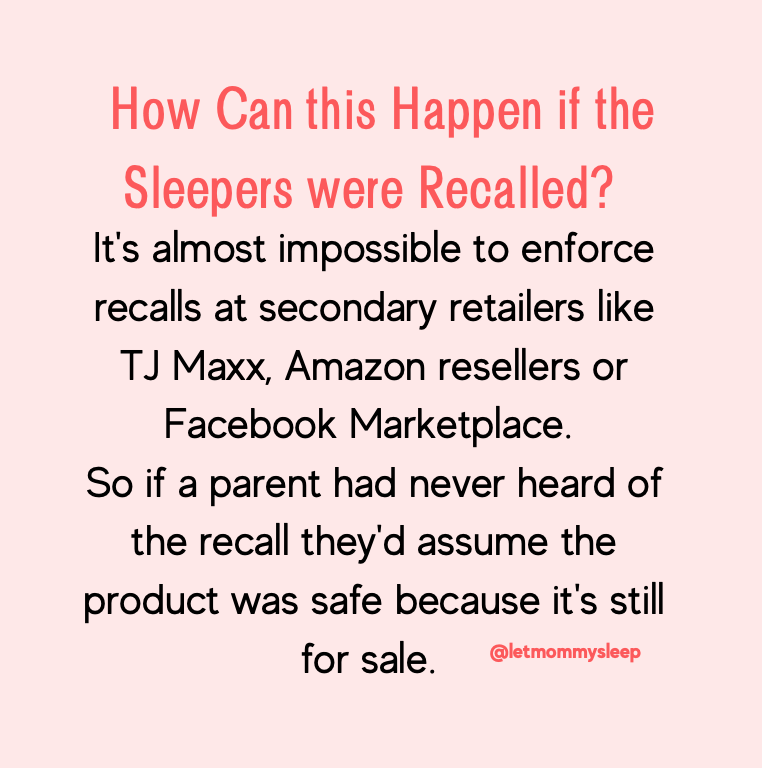
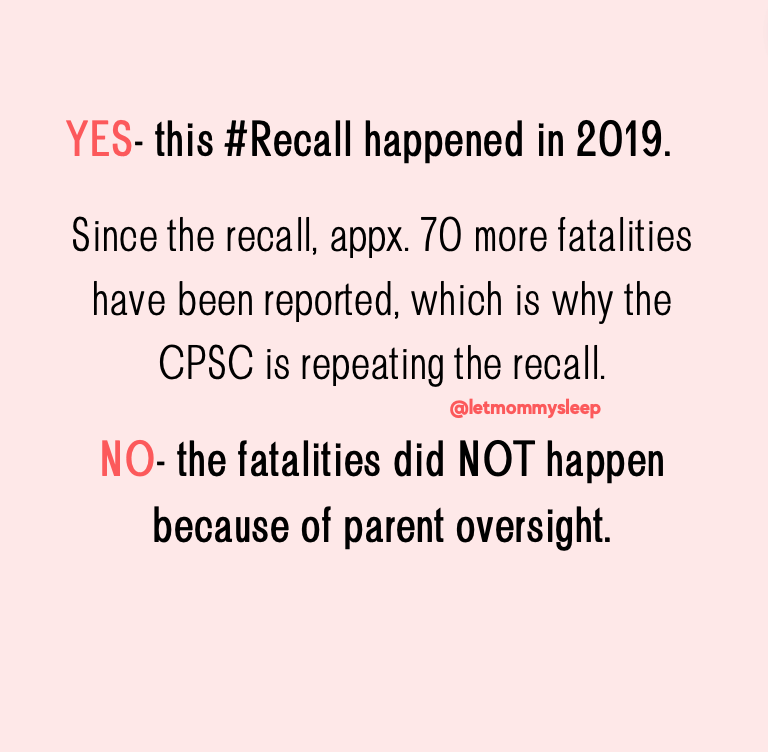
Since the 2019 recall, approximately 70 more fatalities have been reported. How could this happen?

  1. It’s almost impossible to enforce recalls at secondary retailers like TJ Maxx, Amazon resellers or Facebook Marketplace. Seeing these items for sale, it’s fair that parents would assume the problem was fixed, or for a different product.
  2. People who didn’t have babies in 2019, were unaware of sleepers being pulled from stores.
  3. Some products re-branded. In one instance, the manufacturer Baby Delight continued to sell its Nestle Nook. They simply changed the name.

Whatever the reason, it is crucial to know that while the CPSC cannot confirm the circumstances of every single fatality, the recalls happened because products marketed as “infant sleepers” are inherently unsafe.
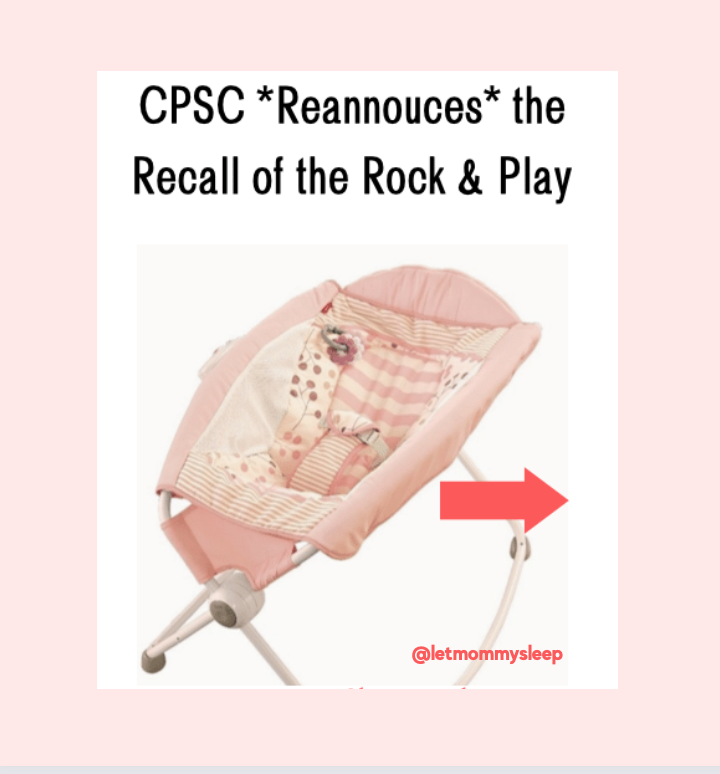
On June 7, 2021, Fisher-Price was finally made to answer for keeping the RocknPlay on the market. A bi-partisan House Oversight Committee asked company officials how the products could remain on the market, after not only ignoring safety warnings, but also knowing that infant deaths occurred as a direct result of using their product. Additionally, Rep. Michael Cloud (R-Tex.) pointed out, Fisher-Price only consulted with “one doctor with a checkered past before marketing the Rock ’n Play.”

These findings resulted in the ban on products being marketed as infant sleepers.

CPSC Ban and Recall of Inclined Sleepers – Now What?

  • Incline sleepers like the RocknPlay are banned for sale as sleep devices. They have been since 2019. 
  • There are options to get more sleep without these devices though.
  • Consumer Reports explains why it’s okay for baby to fall asleep in a car seat but not a sleeper, below:

To learn how these products came to market and stayed there for 10 years, see the continuing must-read Consumer Reports research

Rachel Rabkin Peachman, Deputy of Special Projects at Consumer Reports answers your questions.

Why are sleepers being banned now, specifically? Did parents not follow product directions?

The Consumer Product Safety Commission has warned against using infant inclined sleepers, and the agency has voted in favor of banning the entire category because the products increase the risk of infant suffocation and death- -NOT because the sleepers were misused by caregivers. Infant inclined sleepers have been linked to deaths even when the products were used according to the company’s instructions—and even in cases where the baby was buckled into the restraint system and did not roll over.

The products are inherently unsafe for infants due to their design:

  1. First, the products go against the safe sleep recommendations from the American Academy of Pediatrics, which state that babies should be put to bed alone, unrestrained, on their backs, on a firm flat surface that is free of soft padding. Inclined sleepers like the Rock ‘n Play Sleeper are not flat, they have restraints, and they have padded sidewalls.
  2. Second, babies heads are heavy in proportion to their body size and neck strength, and the product’s incline enables their heads to slump forward—often chin to chest or chin to shoulder—which compresses the trachea and blocks airflow. The lack of oxygen can lead to suffocation.
  3. Third, the shape of many inclined sleepers enables babies to roll over earlier than they would typically on a flat surface (see below). And once they roll over in an inclined sleeper, they typically end up with their faces pressed against the soft sidewalls of the sleeper or pressed against the padded headrest of the sleeper, both of which can block airflow to the nose and mouth. Infants don’t have the strength or coordination to turn themselves around and move into a safe position that allows them to breathe.

We will continue to share and update infant health and safety evidence via our website. To learn more about safe sleep for babies, please visit 10 Steps to Safe Sleep for Baby.
Measles: What Expecting & New Parents Need to Know

Measles: What Expecting & New Parents Need to Know was last updated: October 18, 2025
Author: Laura Hegarty-Moore, RN, MPH, CIC

Laura Hegarty-Moore is an Infection Preventionist at Baystate Health, a Registered Nurse, mother of two, longtime Let Mommy Sleep contributor and a member of our Advisory Board serving as Public Health Advisor since 2020.With measles cases on the rise in the United States, and infants under six months being especially vulnerable, Laura answers the most common questions parents ask about measles, vaccines and prevention.

For the most current guidance, visit the CDC Measles Information Page: https://www.cdc.gov/measles

What Is Measles

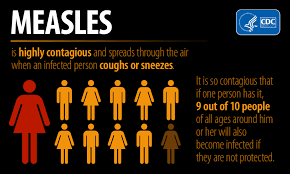
Let’s start at the beginning. Measles is one of the most contagious diseases known. It spreads through the air and can linger in a room for up to two hours after an infected person leaves. In fact, as the CDC says, if one person has it, up to 9 out of 10 people nearby will become infected if they are not protected. It can be serious or even fatal, especially for children under five years old.

But it is easily preventable through vaccination. The single best protection against measles is vaccination.

What Does It Mean to Be “Up to Date” on the Measles Vaccine

Being up to date means having two doses of the MMR (Measles, Mumps, Rubella) vaccine.

  • One dose is 93% effective
  • Two doses are 97% effective

If you are fully vaccinated, you are very well protected. Failure to vaccinate remains the biggest reason measles continues to spread.

Snippet Answer: To be “up to date” for measles, you need two documented doses of the MMR vaccine, typically given during childhood.

Do Adults Need a Measles Booster

In most cases, no booster is needed if you have had two MMR doses or were born before 1957.

Exception: If you received the inactivated measles vaccine between 1963 and 1967, ask your doctor whether you need a booster. Most people received the live vaccine during that time, but confirming your record helps conserve doses for children who have not yet been vaccinated.

Getting an extra MMR dose poses minimal risk but is usually unnecessary.

Can You Still Get Measles if You’re Vaccinated

Breakthrough cases are possible but rare. Vaccinated individuals are 35 times less likely to get measles than those unvaccinated. When they do occur, symptoms are typically mild and less contagious.

Snippet Answer: Yes, it is possible to get measles after vaccination, but the illness is usually mild, and vaccinated individuals are far less likely to spread it.

Should I Wear a Mask to Prevent Measles

Masking is not an effective prevention strategy against measles.

Reasons include:

  • The MMR vaccine is highly effective and long-lasting.
  • The measles virus is airborne and extremely contagious, infecting 12–18 people per case on average.
  • You can contract it by being in a room up to two hours after an infected person leaves.
  • The virus can survive on surfaces, so a mask alone cannot prevent infection.

However, if you are sick or have been exposed, you should wear a mask to help reduce spread.

Snippet Answer: Masks do not effectively prevent measles infection. Vaccination is the only reliable protection.

International Travel and Measles

Since routine vaccination began in 1963, U.S. measles cases have dropped by over 99%.
Still, travelers returning from other countries can bring measles back, potentially triggering outbreaks.

At-risk groups include:

  • Babies too young for vaccination (under 12 months)
  • Immunocompromised individuals
  • Older adults with weakened immunity

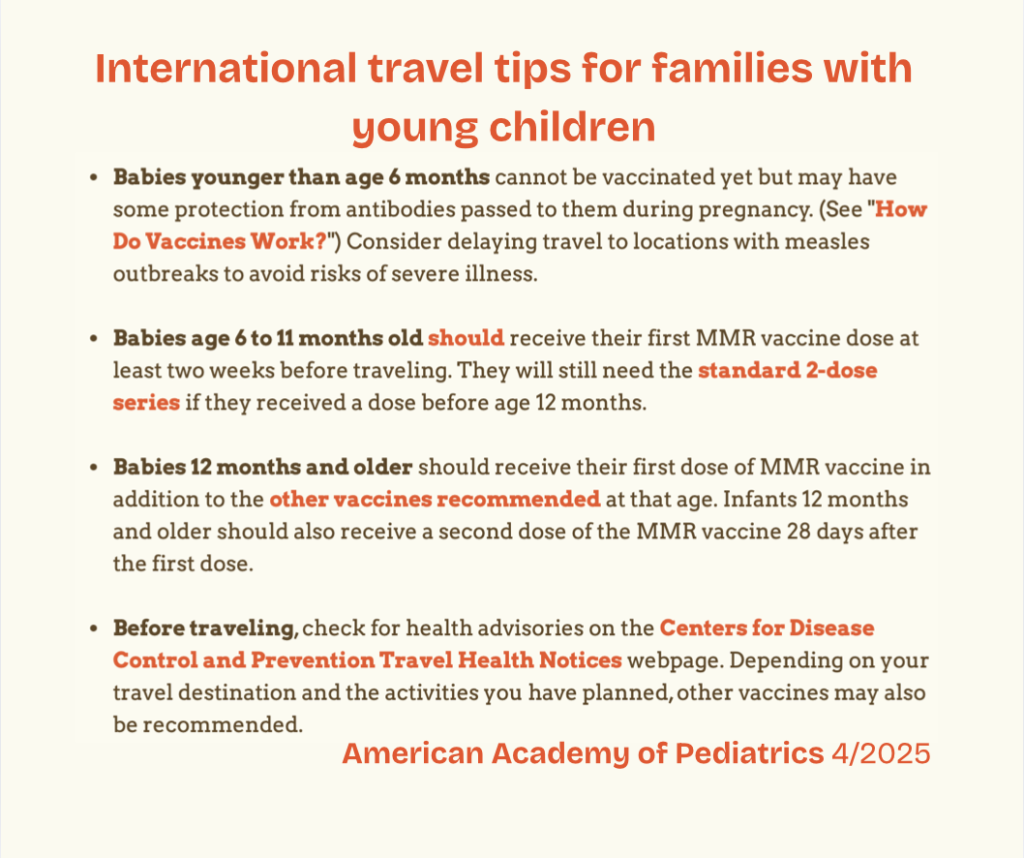
If you plan to travel internationally, check your MMR vaccination status. The CDC recommends that infants 6–11 months old receive one early MMR dose before international travel. For details, visit: https://www.cdc.gov/measles/travelers.html

Measles: What Expecting & New Parents Need to Know: A Message from Let Mommy Sleep

At Let Mommy Sleep, evidence-based care and newborn safety come first. All night nannies, night nurses and postpartum doulas are vaccinated for MMR (Measles, Mumps and Rubella) to protect infants who are too young to receive the vaccine.

Additionally, our caregivers follow strict hygiene and illness-prevention protocols in every family home:

  • Handwashing upon arrival and before or after caring for baby, bottles or pump parts.
  • Shoes removed upon entering the home.
  • Masking available upon request or if anyone feels unwell.
  • Surfaces cleaned and sanitized throughout the night.
  • Open communication if a caregiver or family member feels unwell, so safety decisions can be made together.

We understand some folks have big feelings about vaccines. Our mission is to continue to provide safe, compassionate and evidence-based education on the subject of immunizations, in addition to any other newborn and postpartum care questions you may have.

For more information on measles and vaccine safety, visit:

If you would like to learn more about the standards of our night doulas please visit Introducing the National NAPS Registry for Night Doulas or contact us anytime.

Measles: What Expecting & New Parents Need to Know

Essential Guide to Baby Bottles

There are a few pros and cons to choosing what and how many baby bottles to use, especially if you’re having twins or higher order multiples. The amount of bottles, sizes and weight, environmental concerns, compatibility with a pump and budget are all considerations when deciding which bottles to use. Don’t worry, our essential guide to baby bottles breaks it all down below.

Guide to Baby Bottles – How Many?

Newborns and infants eat at least every 3–4 hours in the first few months. And twins, because they’re usually born at lower birth weights, typically eat every 2 hours. Newborns and infants also clusterfeed, meaning they nurse or bottle feed more frequently than usual over a short period to keep up with their rapid growth.

So in the early weeks, your baby will have 8-12 feeds per 24 hours in the early stages. (Newborn twins will have 16-24 feeds in 24 hours!)

Therefore, if you’re expecting a single baby and planning to bottle feed, we recommend having 12 bottles because:

  • You’ll avoid constant washing and sterilizing.
  • You can run all of the bottles through the dishwasher at the same time once per day.
  • Having a few spares helps ensure you won’t be caught having to clean and prepare a bottles while your baby is crying from hunger.
  • If a bottle gets lost or damaged you’ll be prepared with extras.

What Size Bottle and Nipple?

Newborn tummies are tiny! This blog, How big is a newborn’s stomach? will show you exactly what you can expect in the early days. Even a small bottle holds more than a newborn can take in at one time. So there are 2 ways to go when deciding what size baby bottles to purchase:

  1. Purchase bottles for lifetime use: Buying bottles that can hold up to 8 ounces is a smart economic and space saving choice, because you’ll buy them once and use them for the next few years, until your baby doesn’t use a bottle anymore.
  2. Purchasing different size bottles to use as your baby grows: smaller bottles might be useful at first, as they take up less space and are lighter. You might also be less likely to waste formula if preparing it in a smaller bottle. Also if you’re pumping milk, the smaller bottles may be what comes with the pump set already.

In the early newborn phase, when the babies consume less than 2 ounces, formula feeding parents may opt to use pre-mixed formula that comes in 2 ounce bottles.  You may even be sent home with some from the hospital.  Note that nipples that fit these special bottles may need to be purchased separately.

Nipple Size and Flow

While each brand of bottle has nipples that come with them, you’ll want to purchase a variety of nipples with increasing flow rates. The nipples will be labeled with the rates of 1, 2, 3 or 4. Level 1 is the slowest and appropriate for newborns. As they grow and feed more efficiently, infants will work their way up to Level 4, the fastest flow that allows more fluid through at one time.  Some brands will label their nipples as extra slow, slow, medium or fast. In this case, all newborns start with extra slow and eventually move up. 

There is no specific chart or timefame for babies to move up in speed of the nipple, you can follow your baby’s lead here. For example, if they seem agitated with what used to be a peaceful feed, they might be telling you they are bigger now and frustrated with such a slow feed. You can try moving up to next size nipple to see if this makes feeding sessions easier.

Let Mommy Sleep's essential guide to baby bottles

Guide to Baby Bottles: Plastic, Silicone or Glass?

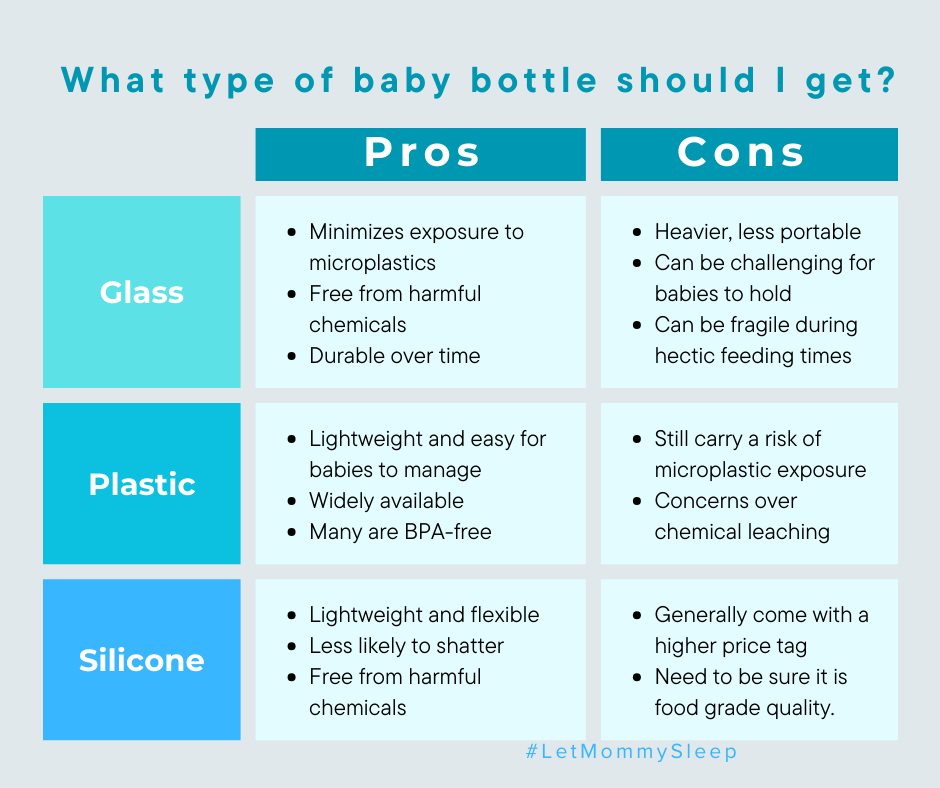
Glass bottles minimize exposure to microplastics, as they are free from harmful chemicals and durable over time. However, they are heavier and may pose a challenge once your babies are ready to hold their bottles independently. Additionally, the weight and fragility of glass bottles can be a concern during hectic feeding times.

Plastic bottles, on the other hand, are lightweight and easier for babies to manage when they start holding their bottles. Many plastic bottles are now BPA-free, which addresses some health concerns, but they still carry the risk of microplastic exposure.

Silicone bottles offer a middle ground, as they are lightweight, less likely to shatter, and free from harmful chemicals, though they may come with a higher price tag.

Ultimately, the best choice depends on your family’s priorities and lifestyle. You may even find it helpful to have a mix of bottle types—glass bottles for at-home use and lightweight bottles for travel. And remember you can always pivot or refer back to this guide to baby bottles anytime!

Pros and cons guide to baby bottles

Nipple Material – What About Microplastics?

When considering bottle materials, don’t forget to check what the nipple is made of. Plastic nipples leach microplastics

Silicone is durable, heat-resistant and free from BPA, PVC, and phthalates. While silicone nipples do not contain microplastics, it’s essential to note that some studies suggest silicone may release trace amounts of siloxanes when exposed to high heat. It’s not a huge amount but enough to stay away from scalding temperatures…which you would do anyway!

Rubber – If you’re seeking alternatives entirely free from synthetic materials, natural rubber nipples are an option. However, they can wear out faster and may cause allergies in some babies.

What are the best baby bottles for twins?

The best baby bottles for twins are the ones that reduce feeding time, minimize colic, and make cleanup fast, because parents of multiples need efficiency above all. While there’s no single “best” brand, bottles designed for easy latch, anti-gas features and quick prep tend to work best for twin families.

Top-rated bottles for twins include:

  • Dr. Brown’s Options+ Anti-Colic Bottles – Excellent for babies with gas or reflux; includes venting system that mimics breastfeeding flow.
  • Philips Avent Natural Response Bottles – Designed to release milk only when the baby actively drinks, helping twins transition between breast and bottle.
  • MAM Easy Start Anti-Colic Bottles – Self-sterilizing in the microwave by using steam. This is an ideal shortcut for twin households managing double the washing.

Tips for parents of twins:

  • Label or color-code bottles to keep track of each baby’s bottle. It’s normal for feeding time to take 30-45 minutes with bottles being picked up and put down often.
  • Check flow rates regularly, your twins might progress to faster flow speeds at different paces.
  • Remember that twins are usually born preemie size, so even the tiniest bottle might hold more than they can take in per feed.

When choosing bottles for twins, prioritize anti-colic features, ease of cleaning, and compatibility with your feeding routine. What works for one baby might not for the other, so try a small set first before buying in bulk. If you’re expecting twins, So You’re Having Twins! Proven Support and Fun Facts could be helpful.

Water: Why Water Matters When Prepping Baby Formula

When mixing baby formula, water is the foundation for safe, nutritious feeding. When you’re mixing concentrated liquid or powdered formula, you must follow the instructions exactly. If your tap water’s quality is uncertain, especially for homes on well water, the Mayo Clinic recommends boiling it for one minute, then letting it cool before measuring. Using too much or too little water isn’t a trivial mistake: too much dilutes nutrients, too little may stress your baby’s digestion. Bottom line: the right water and the right amount, makes your formula both safe and effective.

What If I’m Pumping? And What Else Should I Know?

If you’re feeding pumped milk, it makes sense to purchase bottles that are the same brand as the breastpump. Using brand-compatible bottles means the milk goes straight from the breast to the storage bottle. So no need to worry about spillage or extra steps of cleaning a new bottle. Spectra and Medela are well known brands of breast pump and breastmilk storage solutions.

“Anti-colic bottles” contain vents or valves that allow air to escape from the bottle during feeding. This helps reduce the amount of air a baby ingests while feeding, therefore minimizing gas and fussiness due to bloating. There are no health downsides to anti-colic bottles. The only negative is that there are a few more parts to clean and sterilize. So parents will want to be sure they have enough bottles to get them through to washing times.  

Nurses Note: It’s important to note that “colic” is a normal developmental phase for newborns, not related to gas or feeding. The term “colic” is sometimes used interchangeable with “fussy” but parents should not expect anti-colic bottles to eliminate the normal phase of colic which is typically 3 hours of crying/3 days per week.

Get ready for baby with more tips in Your First Week Home with Baby: Ultimate Q&A

Postpartum and New Parent Support in Boise, Idaho

updated October 10, 2025 – From the moment you learn you’re pregnant to those first months after your newborn arrives, you might have a few questions! Or need a little help. That’s all normal, so our certified doulas and night nanny team made this list for you. Bookmark Postpartum and New Parent Support in Boise, Idaho to be prepared for the arrival of your baby or twins.

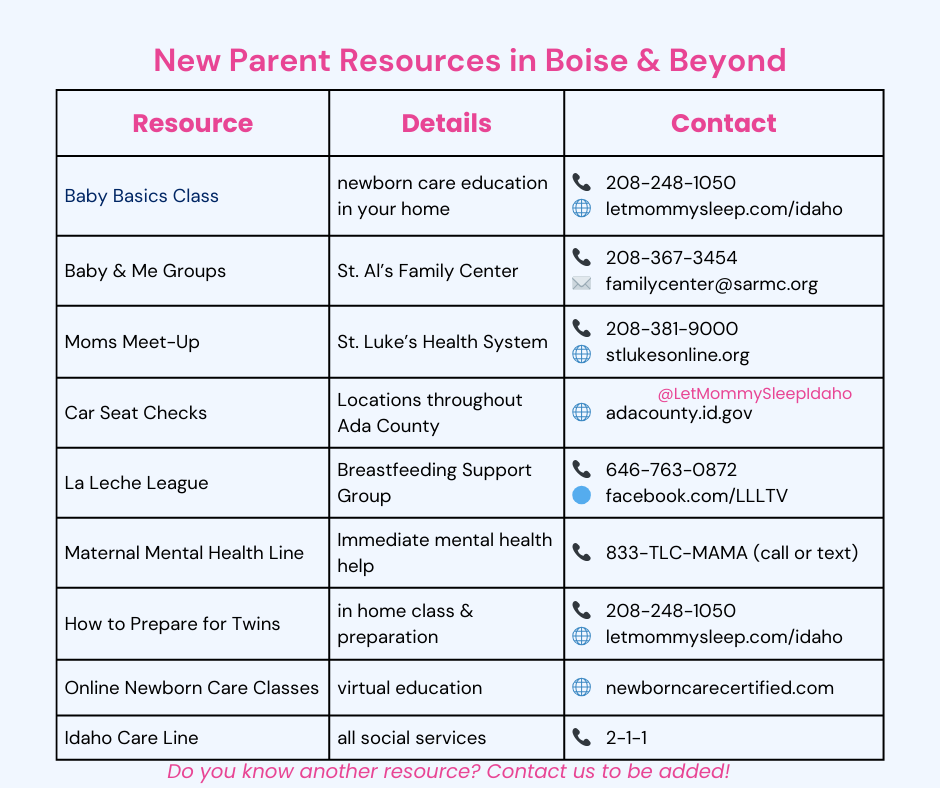
Let Mommy Sleep's newborn and postpartum and new parent support in Boise, Idaho

Where Can I Find Support Locally?

In-Home Baby Basics Class

Let Mommy Sleep Idaho brings certified newborn care experts to your home. Learn swaddling, safe sleep, first aid, infant feeding & soothing, and get on-call after your baby arrives.

Contact: 208-248-1050 | letmommysleep.com/idaho

Baby & Me Support Groups

St. Alphonsus Family Center (Boise) hosts weekly in-person groups for new parents and infants. Great for bonding, peer support, and meeting local families.

Contact: 208-367-3454 | familycenter@sarmc.org

Car Seat Checks & Installation

Ada County Paramedics offers free car seat inspections and installations at multiple locations across Boise, Meridian, Nampa, and beyond.

See: adacounty.id.gov or call your local fire or paramedic station.

La Leche League Treasure Valley

A local breastfeeding support network offering virtual and in-person meetings, practical tips, troubleshooting help, and community for nursing parents.

Contact: 646-763-0872 | facebook.com/LLLTV

So You’re Having Twins Class

Parents expecting multiples have special needs. Let Mommy Sleep Idaho offers a twin-specific class to help with rhythm alignment, feeding strategies, and home organization for two.

Contact: 208-248-1050 | letmommysleep.com/idaho | So You’re Having Twins! Proven Support and Fun Facts

Parents of Multiples Meetup

Connect with other moms and dads of twins or triplets through the Treasure Valley Parents of Multiples Facebook group and local meet-ups. Treasure Valley Parents of Multiples Facebook

Online Newborn & Twin Care Classes

If leaving home is tough early on, explore digital classes on newborn care, sleep, feeding, and organization through NewbornCareCertified.com.

Idaho CareLine (2-1-1)

Dial 2-1-1 from Idaho to access a statewide database of health, social, and human services, community clinics, mental health programs and more.

Postpartum and New Parent Support in Boise, Idaho

Postpartum and New Parent Support in Boise, Idaho – More About Local Services

  • Baby Basics Classes – You and as many friends and family as you like can learn newborn and infant care from a Certified Newborn Care Provider or Registered Nurse. Class happens in your home, and then we stay on-call to answer your questions after baby arrives. In addition to answers to your baby care questions, you’ll learn so much more. Swaddling, Safe Sleep, First Aide and Safety, “what’s normal” for infant sleep, feeding and soothing are included.
  • Baby Twins Class – For parents expecting twins, Let Mommy Sleep Idaho offers newborn care classes specifically for you! For example, safe sleep with 2, newborn care and home organization tricks to make life with twins a little easier. We’ll also help you get the twins on the same schedule. This results in feeding and sleeping at the same time! And best of all, your insurance might cover this!
  • Online Newborn Care Classes – Is it hard to leave the house? That’s okay, these online classes in twin care, newborn care and home organization to prep for your baby are available! In fact, they can be more helpful because you keep the info forever.

Car Seats and Parent Meet Ups in Boise, Meridian, Eagle and Nampa

  • Car Seat Installation – Did you know that 9 out of 10 car seats are used incorrectly? For that reason, Ada County Paramedics offers free infant car seat inspection and installation. They have 6 locations in Boise, Nampa, Meridian and beyond. Schedule a car seat inspection or installation.
  • Baby and Me Group – Every Tuesday from 10-11am, the St. Alphonsus Family Center hosts a FREE support group for all parents and their babies. This is a great way to meet families while also having fun with your baby. No registration necessary! For more info, call 208-367-3454 or visit St. Al’s online.
  • St. Lukes Moms Meet UpYou can get together with other new moms to talk about the joys and challenges of motherhood. While the group is casual, there are different specialized topics each week. Therefore, the group is facilitated by an RN or Health Educator. You can fins a group near you in Nampa, Boise and Meridian.
  • Boise Mom Meet Ups – Facebook is your friend for finding parents in your local area! Boise Area Mommy Meet Up and
Postpartum and New Parent Support in Boise, Idaho means baby care of newborns and twins

Parent Resources for After Baby Arrives Breastfeeding

Breastfeeding Support and Encouragement Meetings– Bring your baby on any Tuesday from 11-12noon at the St. Alphonsus Family Center. Meetings happen every week. This is another FREE in-person get together that requires no registration, so if you’re looking for lactation support for your newborn, infant or twins you can just show up!

Liberty Medical Park Building 
900 N. Liberty Street, Suite 204
Boise, ID 83704

  • La Leche League of Treasure Valley, ID-The local facebook page for LLL Treasure Valley can help you troubleshoot any challenges as well as provide fellowship and nursing support. In person and virtual meetings are posted here. Additionally, evidence-based newborn, infant and toddler feeding information is right on their regional website, lllutah.org.

Postpartum and New Parent Support in Boise, Idaho – Mental Health and State Resources

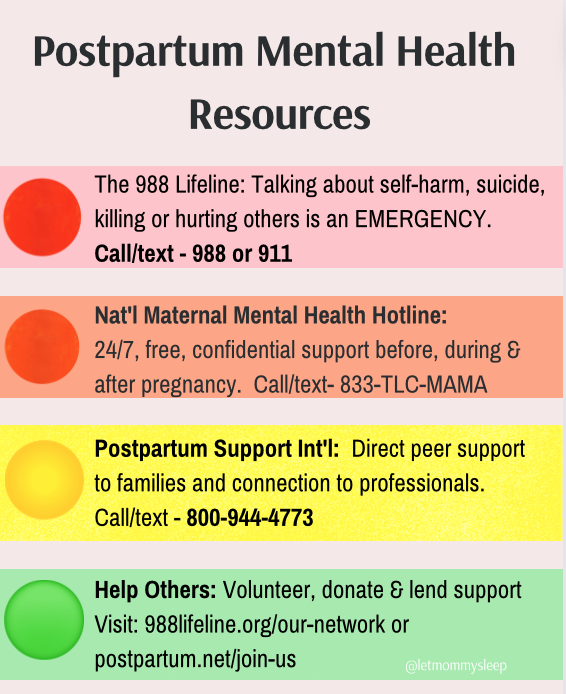
  • Postpartum Support International, Idaho chapter- Visit psichapters.com/id/ or you can call/text 800-944-4773. The mission of PSI Idaho is for you to have access to perinatal support, therefore receiving mental health counseling, providers, education, and resources. This improves overall well-being of new moms, dads and families. PPD vs. Baby Blues: Know the Difference
  • 2-1-1 Idaho CareLine – Idaho’s comprehensive database of programs that offer free or low-cost health and human services or social services. Resources such as community clinics and health insurance are in this database, so it’s a great one to bookmark.
  • Idaho Maternal & Child Health – Idaho’s Maternal and Child Health (MCH) Program is committed to improving the health and well-being of mothers, infants, and children. They have a special focus on newborn screenings in addition to helping families with children who have special health care needs.
  • National Maternal Mental Health Line – Call or text 833-TLC-MAMA. This Hotline is staffed with professional counselors who provide immediate, real-time support, information, and resources for postpartum mental health issues.

Overnight Newborn Care – Payment Options

Night nanny care is not covered by insurance but coverage of postpartum visiting is becoming more common. Contact your insurance provider to see what options you have. How to Get Insurance to Cover my Night Nanny or Doula can help and there are also options to pay over time in Finance Night Nanny and Night Doula Care Now

Whatever type of new parent support in Boise you need, our team is here. Our night nannies, nurses and postpartum doulas can answer any questions. And whether you’re pregnant or are in the postpartum phase, we’re here for you. If you’re outside of Idaho, the resources listed below can help with maternal and overall mental health.

Nationwide Postpartum Mental Health Resources