
How big is a newborn’s stomach?
Updated June 2025 – One of the challenges of being a new parent is that newborns and infants seem to be eating constantly, and yet we worry they’re not getting enough! Newborn breastfeeding and bottle feeding is frequent because our babies can only take in small amounts at a time. This blog answers the question… How big is a newborn’s stomach?
Key Takeaways: How Big Is a Newborn’s Stomach?
- Newborns have tiny stomachs so they eat very small amounts but very frequently (8–12 times per 24 hours) in the first days after birth.
- Breastfeeding works on supply and demand, so time at the breast, feeding or not, helps establish strong milk supply.
- Bottle‑fed newborns require small, slow feeds, sometimes up to 45 minutes.
- Checking how many wet and soiled diapers your newborn has each day is a way to monitor how much your baby is eating.
- It’s never wrong to contact your pediatrician if you’re worried about infant feeding.
Small, frequent feeds, sometimes up to 12 feeds per 24 hour period, are the norm in baby’s first weeks. If it feels like, All I’m doing is nursing/feeding! then you’re doing everything right. For breastfeeding moms, milk typically “comes in” on about day four or five after baby’s birth but the fact is that colostrum and milk are already being received before then.
Remember, baby only drinks a cherry-sized amount at each feed. Also skin to skin contact with baby not only stimulates interest in feeding, but helps both baby and parents in so many other healthy ways! And if you want to increase milk supply, it’s important to note that breastfeeding works on supply and demand, so time at the breast is never wasted.
As our postpartum doula and night nannies like to say: if it seems like the newborn feeding schedule is that you’re always feeding your newborn, you’re doing it right!
While there are teams of experts in newborn care, your baby is the real expert in how much to eat! Here’s the volume of an average newborn’s stomach so you can feel prepared for just how little and how frequently babies eat.
How big is a newborn’s stomach? – a Visual
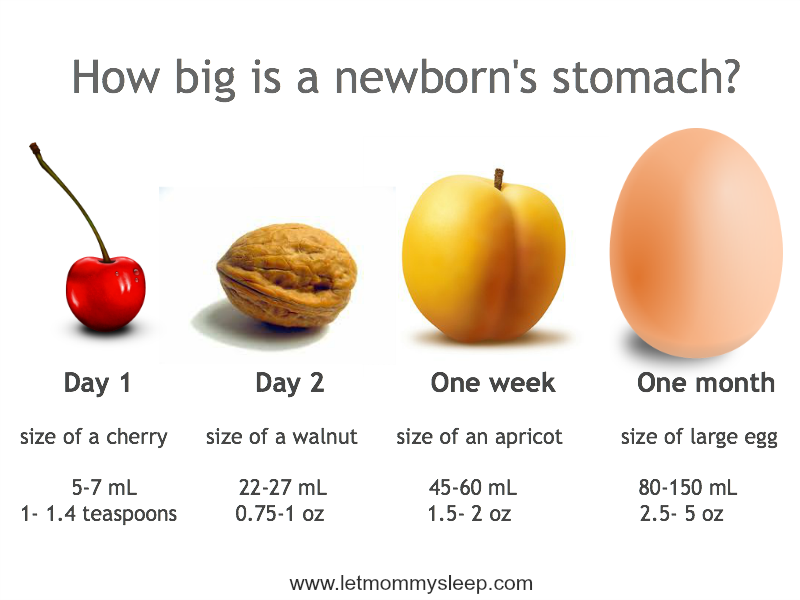
Newborn Feeding: Milk and Formula FAQ’s
- Breastfeeding: One particular piece of advice to remember if you’re nursing is that milk doesn’t “come in” right away. It may seem like baby is not getting enough to eat but skin to skin contact and sucking are what helps milk to come in. Remember, breastmilk works on supply and demand so it makes sense that your milk supply might be less than what your newborn needs at first. The supply will catch up as your baby keeps demanding! Of course ask your pediatrician or lactation counselor if you’re worried. If you have other questions about early breast or bottle feeding, read Your First Week Home for more info.
- Bottle feeding: For bottle feeding families, remember that the speed of the bottle’s nipple and amount of formula will affect how much your newborn takes in. Don’t be tempted to have baby drain the pre-made hospital bottles from the hospital. They contain WAY TOO MUCH formula for a newborn. It’s easy to overfeed from a bottle because baby can’t naturally start and stop the flow. So even though our urge might be to feed, feed, feed and not waste any formula, refer to the chart above to give baby the correct amount of food.
- Sleep: Conventional wisdom still tells us to tank baby up to sleep. This can be true for older babies but as our postpartum doula and night nanny team tell parents, overfeeding does not help newborns sleep soundly. In fact, feeding too much usually causes unnecessary spit up and gastric discomfort. It’s perfectly normal for newborns to eat every 2 and then stretch to every 3 hours in their first weeks.
- The Pediatrician: Take comfort in knowing that in addition to the doctors and nurses, your pediatrician will visit while baby is in the hospital or birthing center. You’ll also visit the ped’s office again when baby is between 3 and 5 days old. The hospital won’t allow discharge unless they’re completely confident that your family is healthy and well. You have a whole team looking out for baby.
How long can formula sit out?
After formula has been prepared, it can sit at room temperature for an hour. Once baby has fed from a bottle do not save, but discard after use. Remember, when in doubt throw it out.
How long can breast milk sit out? How do I store breastmilk?
A covered container of human breast milk can sit out at room temperature for six to eight hours. It is best to store breast-milk in the fridge, and to not re-heat once it has been warmed. Preferably, human milk should be refrigerated or chilled right after it is expressed and La Leche League offers these guidelines for breastmilk storage:
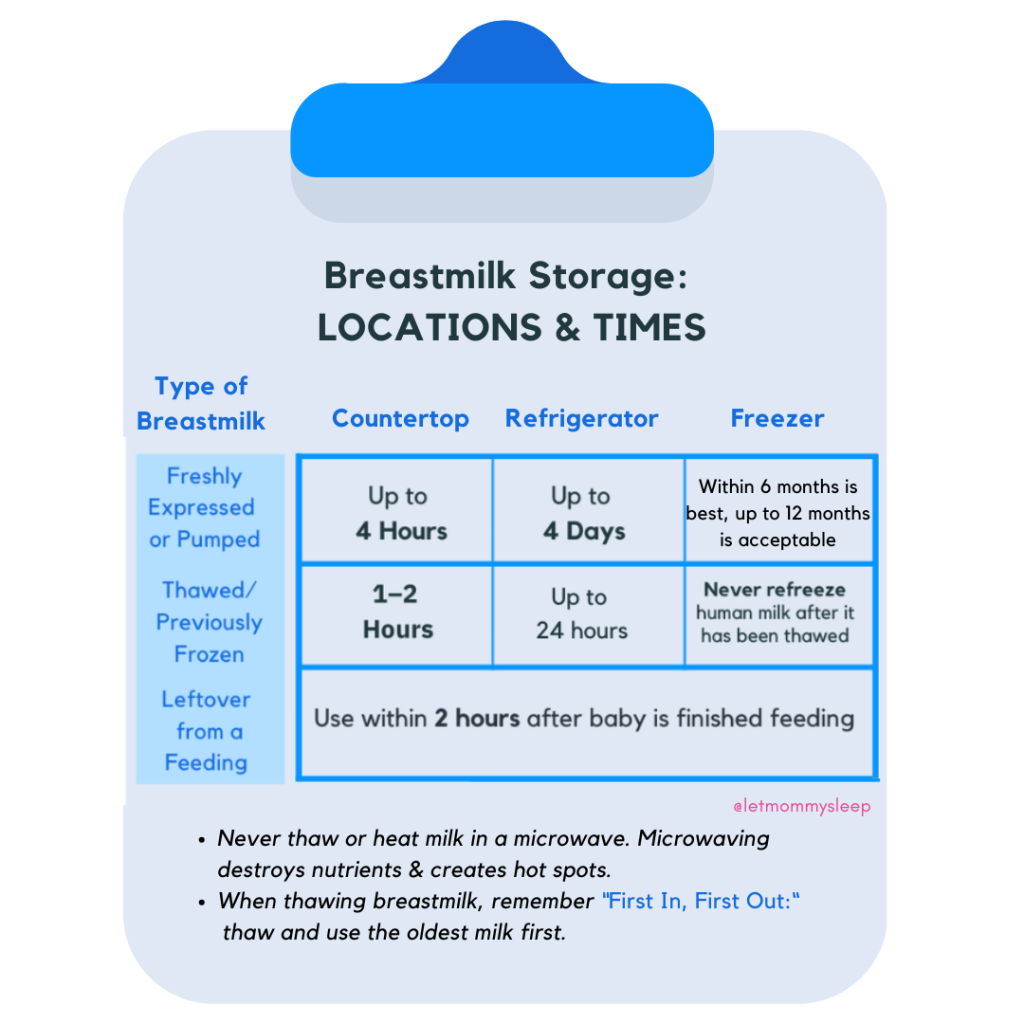
What is Pace Feeding?
If you’re bottle-feeding your baby, consider using a technique called “pace feeding.” This involves holding the baby in an upright position, using a slow-flow nipple, and allowing the baby to control the flow of milk. It helps prevent overfeeding and supports the development of healthy eating habits.
Pace feeding also aids in digestion. By allowing the baby to take breaks and control the flow of milk, it reduces the likelihood of the baby gulping air, which can lead to gas and discomfort. It also gives the digestive system time to process the milk properly.
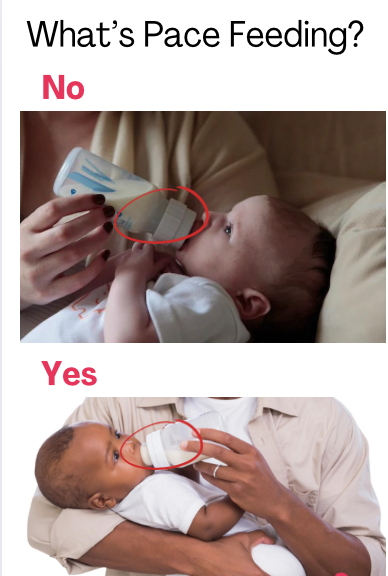
How do I warm a bottle?
- If you are warming a bottle that has breast milk use a bottle warmer, or boil water, then pour water in a bowl or cup and place bottle in hot water.
- If you are warming a formula bottle, use a bottle warmer or fill a small pot with warm water and place the bottle in that water. This is wonderful at night because it keeps water at the correct temperature making it super easy to make the perfect bottle.
Can I microwave the bottle?
No. Microwaving does not evenly warm a bottle leaving hotspots in the milk that can burn baby.
When should I burp baby?
Newborns have an immature digestive system and need help when eating. Part of this is helping baby burp and working out any air/gas bubbles that snuck in while feeding. Make sure to burp throughout feedings and afterwards. Try to hold baby upright and pat on their back. It also helps to hold over shoulder and pat on their back, always supporting their head and neck.
How big is a newborn’s stomach? – Wet and Soiled Diapers
It might be hard to know how much baby is consuming during each feeding session. That’s okay though because you’ll always be able to monitor how much is coming out. All babies are different, but tracking the amount of wet and soiled diapers each day for the first week is another way to monitor that baby is feeding well. You can also always drop in to your pediatrician for a weight check. As Jessica Simpson, SLP and IBCLC in Loudoun County VA likes to say: “The wets match the day of life!”
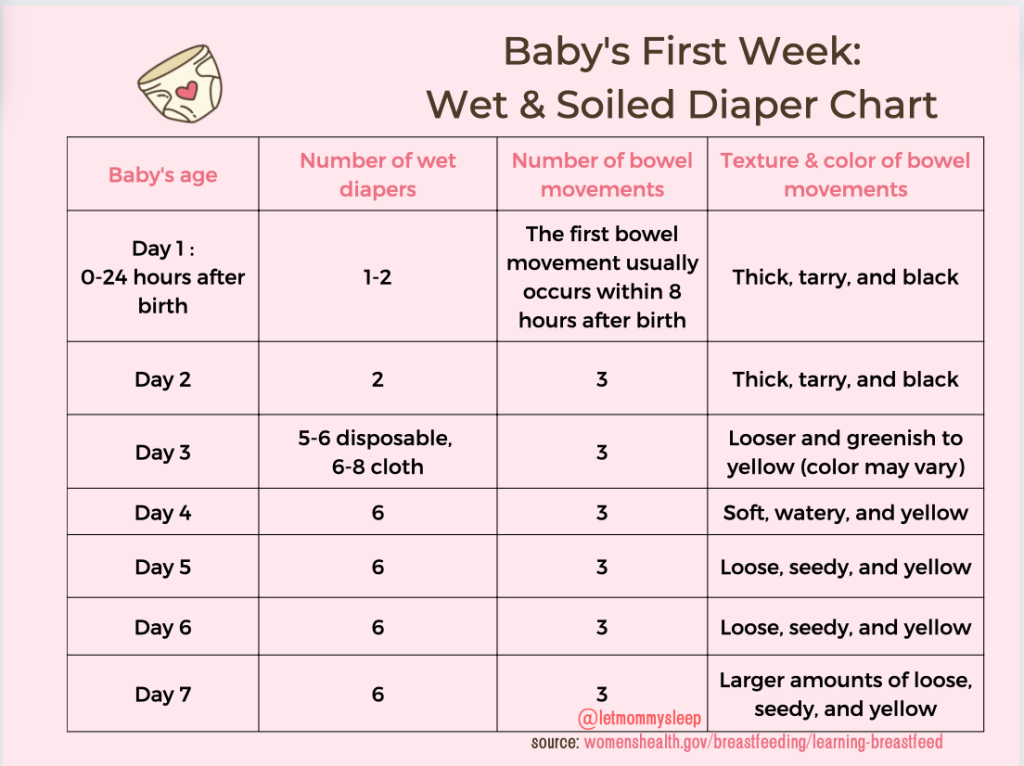
Birth weight, prematurity, congestion or growth spurts can all contribute to feeding behavior for baby at any given time. And all of these things are normal. On the whole, weight gain, diaper output and baby appearing satisfied and content after feeding are all the infants way of telling you they’re happy no matter how big their stomach is. By following your newborn’s lead and contacting the pediatrician with any concerns, you can ensure your baby is eating enough.
When to Call Your Pediatrician About Newborn Feeding
It’s never wrong to contact your baby’s primary care physician if you have questions or worries about baby’s feeding but here are a few quick things to be mindful of:
- Baby has fewer wet diapers than expected for their age
- Baby seems consistently unsatisfied after feeds
- Baby is not back to birth weight by day 10-14
- You’re concerned about your own milk supply or baby’s latch
Overnight, our registered nurses and newborn care specialists monitor feeding patterns, diaper output, and sleep cues so you can rest with confidence. Let Mommy Sleep serves families in 26 territories. Find your local Let Mommy Sleep team here.