
Infant Sleep Schedule for a 7-9 Month Old
This 7–9 month sleep schedule is based on evidence-based practice and the guidance of pediatric sleep professionals.
Why Do We Have a Special Infant Sleep Schedule for a 7-9 Month Old?
A seven month old’s schedule is almost the same as the routine for a 6-7 month old. There’s one big difference though – in months 7 and 8, full term babies typically drop that third daytime nap that happens in the 4:00 hour. You can expect some inconsistency while that later nap disappears; sometimes it will happen, sometimes it won’t. But don’t let this inconsistency bother you, it’s an indication that their wake windows are lengthening and their nighttime sleep is consolidating.
Infant Sleep Schedule for a 7-9 Month Old
Once your pediatrician confirms your baby is developmentally ready, you can explore gentle sleep training methods—our Ultimate Guide to Baby Sleep Training provides step-by-step support.
Infant Sleep Schedule for a 7-9 Month Old – Customize for your Baby
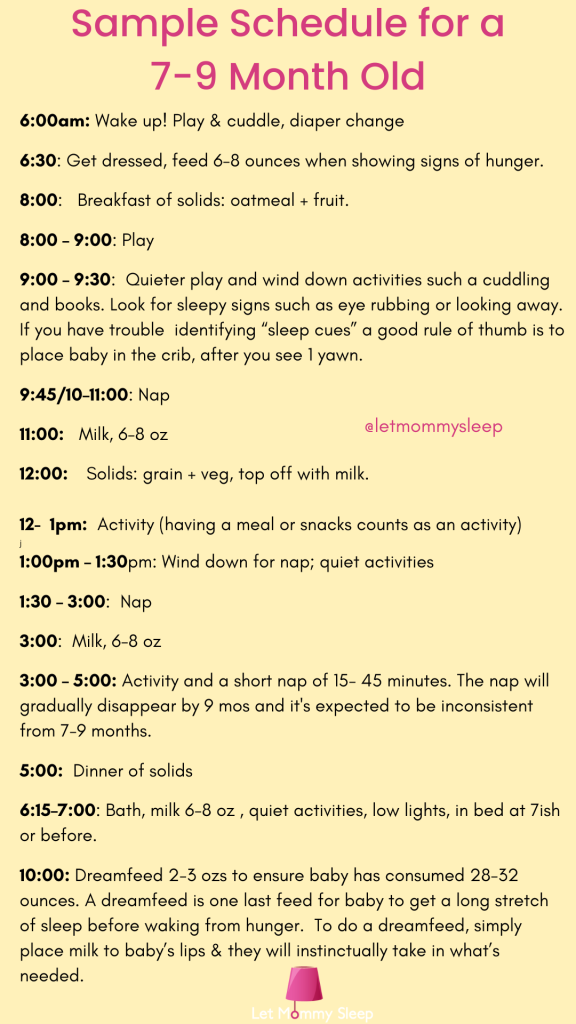
Here’s what a typical day might look like for 7–9 month old baby. You can cut and paste to edit and adjust based on your baby’s cues and your family’s routine.
6:00am: Wake up! Play & cuddle, diaper change
6:30: Get dressed, feed 6-8 ounces when showing signs of hunger.
8:00: Breakfast of solids: oatmeal + fruit.
8:00 – 9:00: Play
9:00 – 9:30: Quieter play and wind down activities such a cuddling and books. Look for sleepy signs such as eye rubbing or looking away. If you have trouble identifying “sleep cues” a good rule of thumb is to place baby in the crib, after you see 1 yawn.
9:45/10–11:00: Nap
11:00: Milk, 6-8 oz
12:00noon: Solids: grain + veg, top off with milk.
12noon-1pm: Activity (having a meal or snacks counts as an activity)
1:00pm – 1:30pm: Wind down for nap; quiet activities
1:30 – 3:00: Nap
3:00: Milk, 6-8 oz
3:00 – 5:00: Activity and a short nap of 15- 45 minutes. The nap will gradually disappear by 9 mos and it’s expected to be inconsistent from 7-9 months.
5:00: Dinner of solids
6:15–7:00: Bath, milk 6-8 oz , quiet activities, low lights, in bed at 7ish or before.
10:00: Dreamfeed 2-3 oz’s to ensure baby has consumed 28-32 ounces. A dreamfeed is one last feed for baby to get a long stretch of sleep before waking from hunger. To do a dreamfeed, simply place milk to baby’s lips & they will instinctually take in what’s needed. Learn why this works in What is a Dreamfeed?
More Sample Schedules:
7-9 Month Old Infant FAQ’s
How many naps should a 7–9 month old take?
Most babies transition from 3 naps per day down to 2 between months 7-9. The late afternoon nap which usually starts around 4:00 p.m. gradually drops off as babies stay awake longer between naps and consolidate their nighttime sleep.
How long should naps be for a 7–9 month old?
Each nap typically lasts 1 to 1.5 hours. The morning and early afternoon naps are fairly consistent while the brief catnap in the 4pm hour may still happen occasionally during the transition to 2 naps.
What time should a 7–9 month old go to bed?
Most full term babies have a natural bedtime between 6:30 and 7:30 p.m. Expect this to vary however, depending on the length of the last nap and total daytime sleep. On days that infants don’t take the third nap, you can expect bedtime to be a little earlier than usual.
How much total sleep does a 7–9 month old need in 24 hours?
On average, 14 hours of total sleep in a 24-hour period; 11–12 hours overnight and then 2–3 hours total during the day. Every baby is different and the activities that happened during the day can also influence sleep, so a little more or less can still be normal.
When should I start sleep training my 7–9 month old?
If your pediatrician agrees your baby is ready, gentle sleep training can begin at 7 months old. At this age, babies can often self-soothe and link sleep cycles more easily. For guidance, see our Ultimate Guide to Baby Sleep Training.
Should I keep doing a dreamfeed at this age?
If your baby is only taking 1-2 ounces during the dreamfeed, or refusing altogether, that’s an indicator that you don’t need to do offer a dreamfeed anymore. Some 7 month old babies still benefit from a small dreamfeed between 9:30–10:30 p.m. to help them sleep longer stretches, but will drop it as their calorie intake during the day increases.
What if my baby still wakes up at night?
Night wakings are still common! Growth spurts, teething or developmental leaps can disrupt sleep temporarily. Stay consistent with your routine and comfort your baby as needed. You can research sleep training or discuss it with your pediatrician.
Our sleep schedules have been written under the direction of Registered Nurses and using the excellent advice from one of the original sleep coaches, The Baby Whisperer, Tracey Hogg, RNMH. If you’d like to learn more about infant sleep, we also recommend The Good Sleeper, by Dr. Janet Krone Kennedy. This research-based book teaches the basics of sleep science and provides tools to solve sleep problems. (not sponsored, just love this book).
And as always, the above is just an example and there are a lot of right answers when it comes to parenting and sleep. Always follow your pediatrician’s guidance; this information is for general educational purposes and not a substitute for medical advice. We don’t push for any specific sleep training methods, but do practice evidence-based care using the 10 Steps to Safe Sleep for Baby