Baby Sleep Schedule for a 10-11 Month Old
By 10 months, your baby’s sleep habits are beginning to feel more predictable and you might be considering helping baby sleep through the night . Here’s how to set up a flexible, evidence-based schedule that supports consistent naps and long stretches of nighttime sleep. Baby Sleep Schedule for a 10-11 Month Old provides a sample to get started.
Baby Sleep Schedule for a 10-11 Month Old
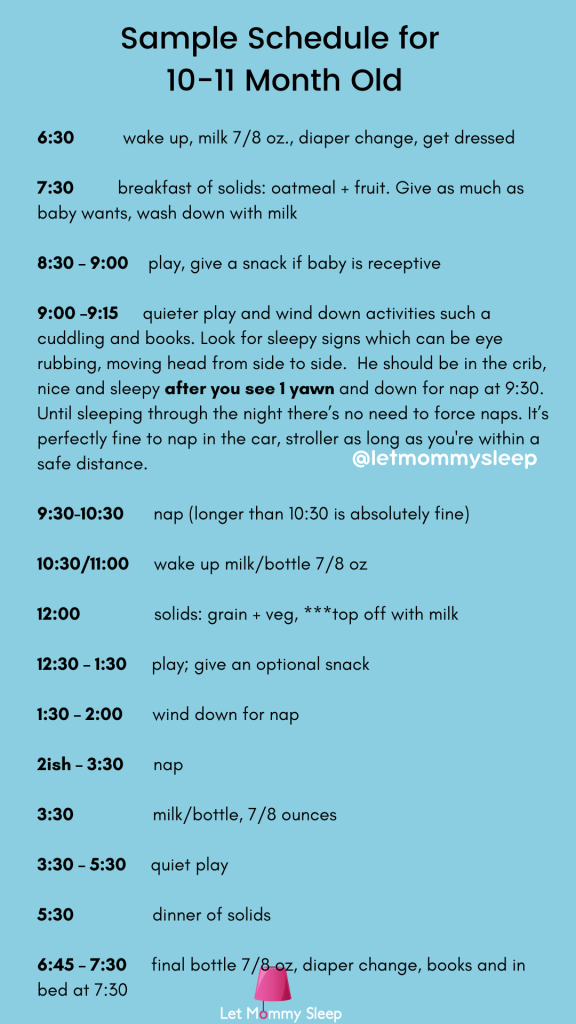
Sample Sleep Schedule for a 10-11 Month Old
Here’s what a typical day looks like for a 10-11 month old baby. You can also customize this schedule to reflect your own daily routine. For example, if baby wakes at 7:00a, simply note that and adjust this schedule forward 1/2 hour.
This is a sample schedule. Your baby’s exact timing will vary. Scroll down for our FAQ on adjusting this schedule for your baby’s specific wake time and nap patterns.
| Time | Activity | Details & Notes |
|---|---|---|
| 6:30 AM | Wake up, diaper change, bottle | 7–8 oz milk or formula |
| 7:30 AM | Optional feed | 6–8 oz if baby shows hunger cues |
| 8:00 AM | Breakfast | Solids + milk; oatmeal with fruit is great — milk mixed into food counts toward the 28–32 oz total goal |
| 8:30–9:00 AM | Playtime | Light activity, floor play, songs |
| 9:00–9:15 AM | Wind-down | Quiet play, cuddles, books — watch for sleepy cues like yawning or rubbing eyes |
| 9:30–10:30 AM | Morning nap | 1-hour nap; sleeping past 10 AM is fine |
| 10:30/11:00 AM | Wake & bottle | 7–8 oz milk or formula |
| 12:00 PM | Lunch | Solids + milk or formula as a drink |
| 12:30–1:30 PM | Playtime | Active play or outdoor stroll |
| 1:30–2:00 PM | Wind-down | Dim lights, read, cuddle |
| 2:00–3:30 PM | Afternoon nap | 1–1.5 hour nap |
| 3:30 PM | Bottle | 7–8 oz milk or formula |
| 3:30–5:30 PM | Playtime | Low-key play; stay home if sleep training for consistency |
| 5:30 PM | Dinner | Solids + milk or formula |
| 6:45–7:30 PM | Bedtime routine | Bath, bottle (final 6–8 oz), quiet play, lights dim — in bed by 7:30 PM |
Notes:
- Total daily milk intake for most full-term 10-11 month olds: 28–32 ounces
- Most babies this age take 2 naps per day, lasting 1–1.5 hours each.
- Adjust the start time forward or backward based on when your baby naturally wakes.
- Bedtime can shift earlier if the second nap is short or skipped.
Once you get the pediatrician’s approval and you are sure baby is not waking overnight due to hunger, you can begin sleep training. If you want to help your baby sleep through the night, you can find step-by-step sleep training instructions in the Ultimate Guide to Baby Sleep Training.
FAQ: Baby Sleep Schedule for 10–11 Month Olds
How many naps should a 10–11 month old take?
Most babies take two naps per day at this age, one in the mid morning and one in the early afternoon. 10am and 2pm are fairly common but by no means the norm for every baby. By 11 months, some babies may begin resisting the morning nap, signaling the eventual transition to one nap per day closer to 12–14 months.
How long should naps be at 10–11 months?
Each nap typically lasts 1 to 1.5 hours, for a total of 2.5–3 hours of daytime sleep. If one nap runs long, the other may naturally shorten. Nap times can also be affected but what activities you and baby are doing during the day.
What time should a 10–11 month old go to bed?
A consistent bedtime between 6:30 and 7:30 p.m. works well for most babies. An earlier bedtime may be needed if naps were short or skipped that day.
How much total sleep does a 10–11 month old need in 24 hours?
On average, babies this age sleep about 13–14 hours total; 11–12 hours overnight plus 2–3 hours during the day. Every baby’s sleep need varies slightly depending on growth, temperament and activity level.
Why does my 10–11 month old suddenly fight sleep?
It can be caused by new mobility like cruising or walking, separation anxiety or teething. Stay consistent with your bedtime routine, and it usually passes within 2–3 weeks.
Can I start sleep training at 10 months old?
Yes, if your pediatrician has ruled out medical issues and confirmed your baby is ready. Many families use gentle methods like the Slingshot approach, which allows you to stay near your baby while they learn to fall asleep independently.
Should I still do a dreamfeed at 10 months?
Once babies consistently consume 28–32 ounces between the time they wake and bedtime ad can sleep 8-10 hours without needing to feed, a dreamfeed is not needed. If your baby is 10 months old and still only drinks small amounts during daytime feeds, talk to your pediatrician before stopping a dreamfeed.
What if my baby still wakes up at night?
Night wakings can still happen due to teething, growth spurts, developmental leaps or simply because baby has never done it any other way. Offer reassurance without full playtime or bright lights, so baby understands it’s still nighttime and time for sleep.
Things to remember:
- This is just an example. It’s fine if your schedule differs; the goal is to have defined eating times to set the stage for long sleep overnight.
- Visit Infant Sleep Schedule for a 7-9 Month Old if you’re baby isn’t quite 10 months yet.
- While your baby is getting more mobile, Infant Safe Sleep guidelines are still important for babies age 0-1 year old. Review them in 10 Steps to Safe Sleep for Baby
- This information is for general educational purposes and not a substitute for medical advice. Always follow your pediatrician’s guidance about your baby’s individual feeding and sleep needs.
Still up every few hours despite a solid schedule? A Let Mommy Sleep night nanny or newborn care specialist can help implement sleep routines overnight while you rest. Find your local team.