You’ve been to Target to look at toys, decided if you’re going to be an “elf on the shelf” family and started cooking traditional holiday foods. Here are 12 Holiday Activities to Do with Baby to keep the holidays going that you may not have thought of!
1) Make a Child-Sized Holiday Light Display! All you need is a large box and some LED lights that can’t get too hot! diyjoy.com calls this a Cave of Stars! We love this because it’s a great activity for siblings to do together and you probably have all the items on hand already!
Cave of Stars via diyjoy.com
2) Read holiday themed board books: Whatever holiday you celebrate, there is a board book about it! And the holidays are the perfect time to learn about other cultural traditions too! Babies are never too young for books or learning about the world!
3) Drive or stroll around to view decorations and lights: Babies love to look at lights! Whether you go to an organized festival of lights or simply stroll or drive around your neighborhood, the light show will fascinate baby! Many towns have holiday light shows where you never leave the car too. Let baby experience the magic of lights BONUS: time your ride for an hour or so before bedtime for an easy wind-down!
4) Sing holiday songs to your baby: Baby doesn’t care that you’re not a finalist on The Voice. Belt out some traditional tunes. If baby is old enough, add some instruments and shakers and have baby play along.
5) Buy special holiday or winter themed pajamas: Get cute and cozy with seasonal pj’s for your little one. Bonus points if the whole family has matching pajamas!
6) Create a keepsake such as a plate or ornament: Commemorate this special milestone by capture his/her little handprint or footprint on a plate or ornament. Many paint-your-own pottery places offer these in studio or buy a take-home kit at a craft store, baby store, or online.
7) Use edible finger-paints to make a holiday craft: Crafts and holidays go hand in hand, but many of the materials on the market are not safe when digested. We are huge fans of natural, edible fingerpaints which contain ingredients that are baby-safe, organic, vegan and have no wheat, sugar, or preservatives. Plus, they are made with real fruits and vegetables!
8) Create a holiday themed sensory table/tub: Place wrapping paper, bows, a soft snowman in a big tub, and let baby touch, rub, shake, and play with the items to build tactile development and fine motor skills.
9) Make a holiday felt board: Make or buy a felt Christmas Tree, Snowman, Menorah, or other holiday themed feltboard, and baby can safely “decorate the tree” or “light” some candles. There are a lot of fun options on Amazon! Bonus: Play, sing, and talk to baby using a holiday-themed puppet!
10) Have an indoor snowball fight! That’s right…a bucket of plush white “snowballs” can’t hurt anyone or anything in the house. At less than $20 this fun toy is a great investment in laughs and memories for years to come.
11) Start the tradition of giving: Even though baby is too young for an American Express card, give special gifts in baby’s honor to friends and family members. Teach your infant the joy of giving.
12) Facetime/Zoom relatives and friends that are far away. Looking at pictures on Facebook is nice, but those who are far away really want to see baby in action. Set up a computer date and share some special conversation!
Four Month Sleep Regression Explained-reviewed by Pam Jones, RN, 25+ year postpartum nurse and sleep coach, updated 8/16/2025.
The 4-Month Sleep Regression Explained in 30 Seconds
Newborns only go through 2 stages of sleep, but at 4 months old begin maturing into the 4 stages of sleep that we keep for the rest of our lives. The two new stages include lighter sleep. The 2 new stages mean more frequent night wakings and shorter naps. This is because for the first time in baby’s whole life, it’s easier for them to get woken up and they don’t yet know how to get themselves back to sleep.
During this time, many parents report that naps that used to be consistent suddenly shrink from 90 to 30 minutes, or that their baby starts being wide awake every 2 hours again. These changes can seem like baby’s sleep is taking a step backward, but they’re actually signs that your infant’s sleep cycles are maturing.
It’s a normal progression that happens before your baby is able to sleep longer stretches overnight. It can be frustrating but knowing why and when it’s happening, and being prepared to ease the transition can help. Sticking to consistent routines, using soothing techniques like a pacifier and trying to let your baby fall asleep independently can all help with the transition to more mature sleep.
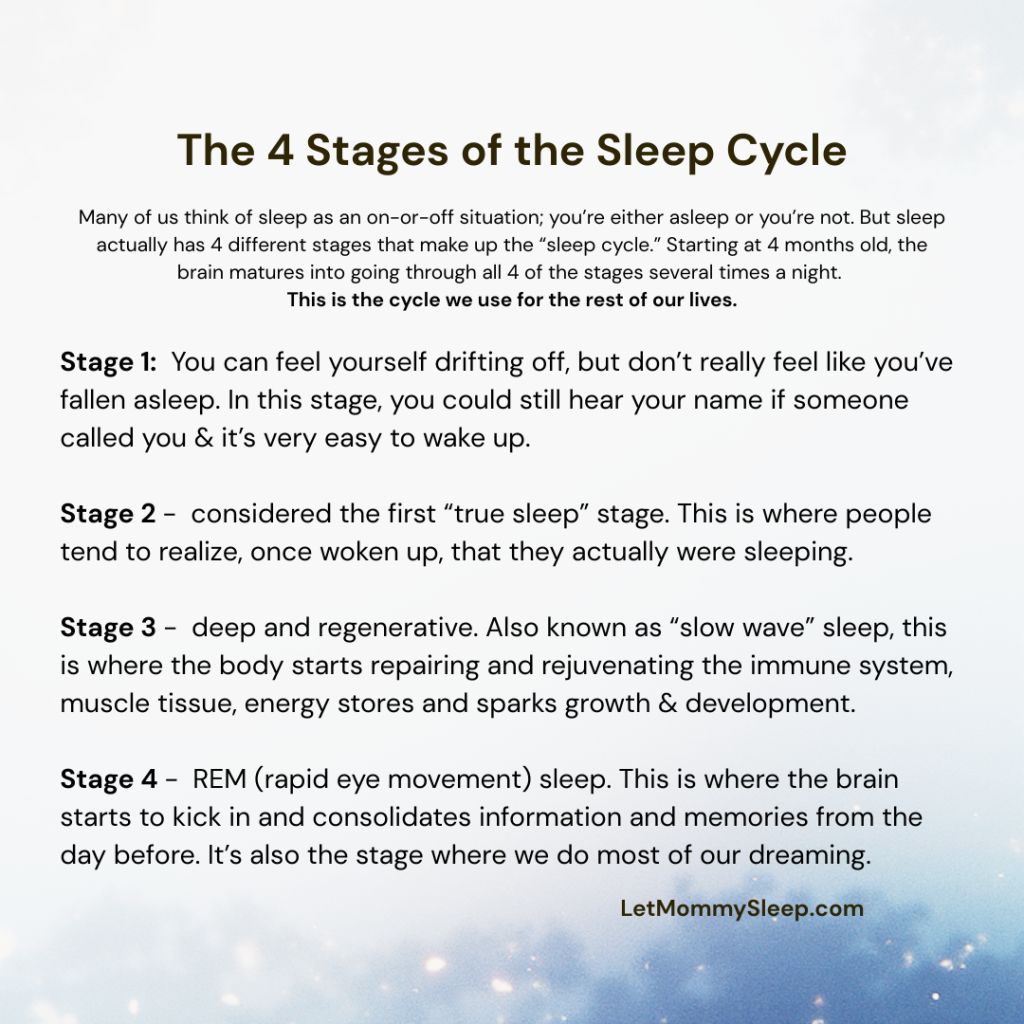
The 4 Stages of the Sleep Cycle
In order to understand how your full-term baby is developing with regard to sleep around four month’s old, we first need talk about sleep in general.
Many of us just think of sleep as an on-or-off situation. You’re either asleep or you’re not. But sleep actually has a number of different stages that make up the “sleep cycle.” Starting at 4 months old, the brain matures into going through all 4 of the stages several times a night and this is the cycle we use for the rest of our lives.
Stage 1 is that initial stage we’re all familiar with where you can just feel yourself drifting off, but don’t really feel like you’ve fallen asleep. In this stage, you could still hear your name if someone called you and it’s very easy to wake up.
Stage 2, considered the first “true sleep” stage. This is where people tend to realize, once woken up, that they actually were sleeping.
Stage 3 is deep and regenerative. Also known as “slow wave” sleep, this is where the body starts repairing and rejuvenating the immune system, muscles tissue, energy stores, and sparks growth and development.
Stage 4 is REM (rapid eye movement) sleep. This is where the brain starts to kick in and consolidates information and memories from the day before. It’s also the stage where we do most of our dreaming.
Once we’ve gone through all of the stages, we either wake up, or come close to waking up, and then start over again until morning.
Sleep from Newborn to 4 Month’s Old
Newborn babies only have 2 stages of sleep; stage 3 and REM. They spend about half their sleep in each stage. At around the third or fourth month, there’s a reorganization of sleep, as they embrace the 4-stage met.hod of sleep described above. And as the AAP notes, babies don’t have regular sleep cycles until about 4 months of age
When the change to the 4 stage method of sleep takes place, baby moves from 50% REM sleep to 25%, in order to make room for those first two stages. Although REM sleep is light, it’s not as light as the 2 new stages of sleep they’re getting used to. With more time spent in lighter sleep, there’s more of a chance that baby will wake up.
Waking up is absolutely natural, and we continue to wake up three, four, five times a night into adulthood. As adults however, we’re able to recognize that we’re in bed and safe and we go back to sleep. This usually happens so quickly that we don’t even remember in the morning.
For a four-month old infant though, these types of wake-ups are something they’ve never experienced before in their whole life! So it makes sense that they need our help to get back to sleep. Whether they’re usually rocked back to sleep, need a pacifier or just need reassurance, your baby most likely will not go back to sleep without your help, and a normal bedtime routine includes your help at this point. (Mayo Clinic)
The Four Month Sleep Regression Explained
How to Get through the Four Month Sleep Regression
Other contributor to infant’s waking up more often overnight, is that their “normal” is facilitating sleep with a pacifier, by being rocked or by being breastfed. Let me say this part in all caps though: getting baby to sleep these ways are ALL NECESSARY, NORMAL AND NOT “BAD HABITS.”
To get through the 4 month sleep regression, or any sleep disturbances you can:
Use a pacifier – At 4 months, more time is spent in light sleep with higher probability of waking up. If you’re baby is used to a pacifier, be ready to replace the paci multiple times per night since they’re still too small to do it.
Keep the room dark – Newborns and infants are not afraid of the dark. They are however, responsive to light. Light tells our brains that it’s time for activity and alertness, and the brain secretes hormones accordingly, so we want to keep the sleep area darkened, eliminating sunlight and possible flashes of light during naps and bedtime.
…and use white noise – The other nemesis of sleep is noise. With more time spent in lighter sleep, noises can startle baby awake so white noise is a great addition to your nursery.
Instill a bedtime routine – Bedtime routines should be about 20 – 30 minutes long, and baby should go into their crib while they’re still awake. Feeding should happen first, with whatever calm activity baby likes second and then a diaper change and PJs at the end.
Sleeping through the Night and the Four Month Sleep Regression
If your goal is sleep training after 4 months, when the pediatrician agrees it’s appropriate for baby to sleep long stretches, you’ll need to instill a new part of the bedtime routine to replace the milk = sleep association. Here’s what that means:
Offer breast or bottle when your baby wakes for the day and after naps. Babies are naturally hungry then of course, and feeding while they’re most alert gives their bodies plenty of time to digest before the next sleep.
Include a feed at the start of the 20-30 minute bedtime routine. This way the bottle isn’t the last step before sleep and baby will not be using milk as their tool to getting to sleep. Feeding at the beginning of the wind down routine also guarantees you a diaper change, and a clean diaper right before baby goes down for the night.
If baby always falls asleep while feeding, they’ll associate bottle or breast with sleep, making it harder to learn how to fall asleep on their own.
Note: With newborns, you can’t prevent them from nodding off at the breast or bottle and that’s okay. RN Heidi explains this in The NoClock Nursing Method As babies get older, they naturally stay awake for feeds, which makes this routine possible.
Four month old infants typically go about two hours between snoozes, with bedtime between 7 and 8 at night. Once babies graduate from the four month sleep progression, they follow the sleep patterns they’ll have for the rest of their lives…four stages repeated multiple times a night! Of course, you may have to sleep train to fully help them sleep through the night if that’s something you want to do, the Ultimate Guide to Baby Sleep Training has step by step instructions.
Four Month Sleep Regression FAQ’s
1. How long does the 4-month sleep regression last? Most babies experience this sleep disruption for 2 to 6 weeks. Once they adjust to their new sleep cycles nighttime sleep and naps gradually improve.
2. Is sleep training safe at 4 months? Gentle sleep training can begin around 4 months for full-term, healthy babies but always check with your pediatrician first as babies’ developmental and physical readiness varies. Start by focusing on consistent routines that gradually wean feeding overnight rather than a “cry it out” method.
3. Can teething cause sleep regression? Teething doesn’t cause an entirely new regression, but discomfort can worsen existing sleep challenges and cause waking overnight.
4. Should I feed my baby during night wakings at 4 months? Many 4-month-olds still need 1–2 nighttime feeds, depending on weight and feeding history. With your pediatrician’s approval you can gradually lessening the amount taken at each feed to pave the way for falling back asleep independently.
5. When should I call my pediatrician about sleep issues? If your baby’s sleep suddenly changes along with poor feeding, weight loss, or signs of illness, check in with your pediatrician. Persistent sleep problems beyond 6 weeks may indicate another issue worth evaluating.
This article was written with input and review from Pam Jones, RN. Pam has provided traveling in-home newborn and postpartum care for families since 2009. She has been a Registered Nurse for 25 years and is also a Sleep Consultant and Author of Raising Confident Parents: Secrets from Baby Nurses and Parents about Pregnancy, Infant Care, and Achieving Sweet Dreams.This article is for educational purposes only and does not replace medical advice. Always consult your pediatrician if you have concerns about your baby’s sleep.
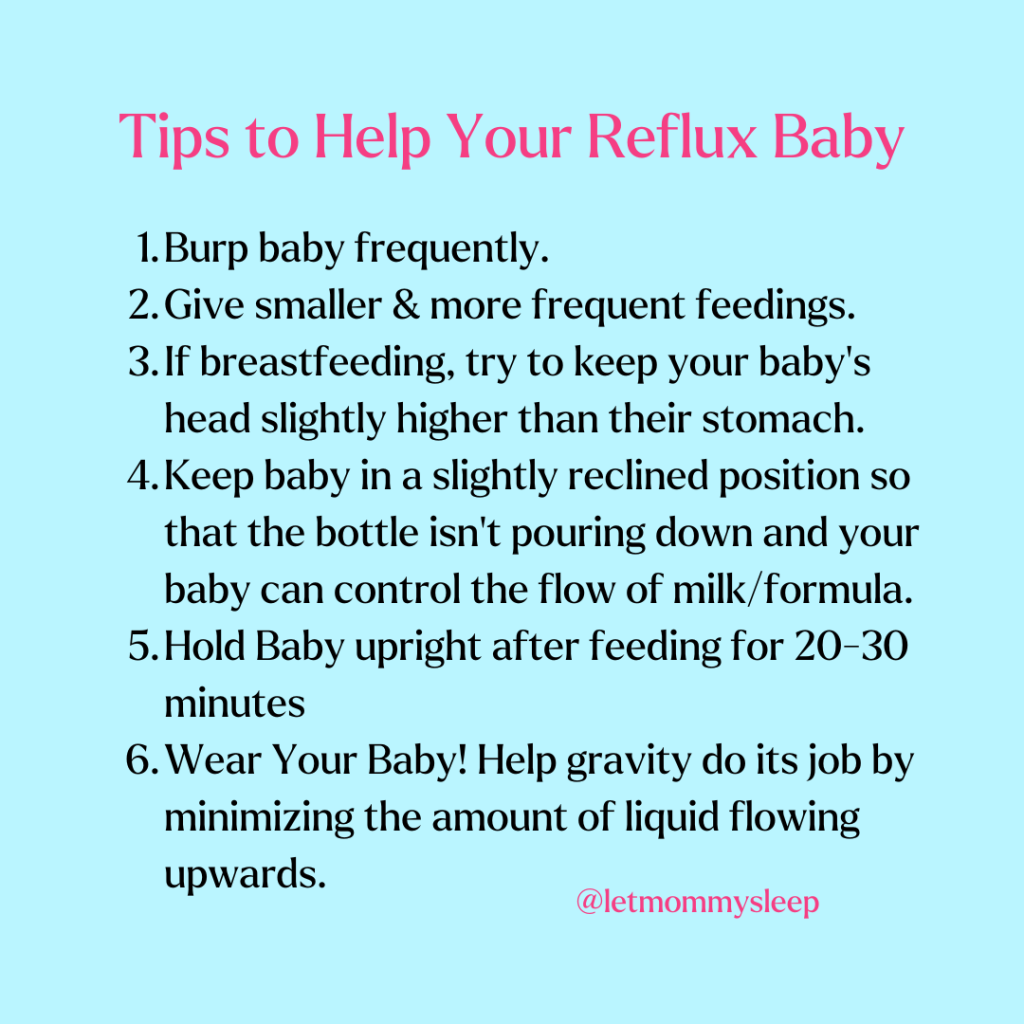
updated, December 1, 2025 – To help newborns and infants with reflux, we need to first understand what reflux is and then find comfort techniques. Our team of night nannies presents advice to help here, with 6 Easy Tips to Help Your Reflux Baby.
While the only true remedy for reflux is time, there are some techniques to help keep your baby comfortable during and after feeding. Let’s take all the reflux questions one by one:
What is reflux?
Reflux is a backward flow of the contents of the stomach into the esophagus that causes heartburn. It is one of the most common conditions newborns face and is often caused by the esophageal sphincter valve not being fully developed. This causes milk to come back up the esophagus through the throat and causes baby to spit up and vomit. When the contents of the stomach come back up, it is usually mixed with some stomach acid, which creates a burning sensation.
How can I reduce my baby’s reflux?
Keep your baby upright during and after feedings for 20-30 minutes, burp frequently, offer smaller, more frequent meals and use paced feeding. Wearing your baby in an upright carrier also helps gravity keep stomach contents down, reducing discomfort and spitting up.
Why is burping important for reflux babies?
Burping removes air swallowed during feeding, which can push milk back into the esophagus. Frequent burping keeps the stomach less pressured and helps your baby feed more comfortably.
How do smaller, more frequent feeds help reflux?
A full stomach can increase pressure on the esophageal sphincter, forcing milk back up. Feeding smaller amounts more often reduces this pressure, prevents overfeeding, and helps your baby digest milk more comfortably.
What is paced feeding and how does it help reflux?
For bottle-fed babies, paced feeding lets the baby control milk flow. Hold the bottle slightly reclined, let them pull the nipple in and take breaks as needed. This prevents overfeeding and reduces air intake, keeping reflux and discomfort minimal.
Here’s how to pace-feed:
Keep baby in a slightly reclined position so that the bottle isn’t pouring down and your baby can control the flow of milk/formula.
Let baby pull the nipple into his mouth. Once latched, keep the bottle just above horizontal.
Continue feeding this way. This allows baby to control the flow of milk better without taking in air. This also helps your baby to feed at their own pace, which keeps them more comfortable.
As Jordan Stubblefield, CLC says, It’s not so much air intake, as it is pacing the baby! Pace feeding helps to not overfeed by allowing baby to take breaks when they want, and following babies cues.
What should I do to reduce reflux if I’m breastfeeding?
If you’re breastfeeding, La Leche League recommends trying to have baby nurse at one breast only at each feeding. This avoids two strong milk ejections, therefore reducing overfeeding and excess swallowing of air. Also, leading sources in breastfeeding including LLL and KellyMom agree that in general spicy foods do not contribute to infant reflux.
Can wearing my baby reduce reflux?
Yes, upright baby carriers help gravity keep stomach contents down. Being snugly carried also helps babies relax their muscles, reducing tension and making feeding and digestion more comfortable.
Are preemies or twins more prone to reflux?
Premature babies and twins often have immature digestive systems, which increases reflux risk. The same feeding and comfort strategies work, but extra attention may be needed to keep them comfortable. Additonally, preemies who have spent time in the NICU may have other issues compounding digestive challenges.
Does gripe water help reflux?
There is no evidence that gripe water helps babies with reflux. However, some babies have trouble digesting lactose in milk which can lead to bloating, gas and discomfort and some medications can help under the direction of a physician.
The only cure for reflux is time, as newborns and infant systems may need a few months to fully develop. However we have more tips on keeping baby comfortable at 10 Ways to Calm a Fussy Baby. And you can always ask our team of night nurses and postpartum doulas any questions onReddit.
Update, February 14, 2022 – As of February 8th, the CDC and AAP have expanded infant, toddler and early childhood development milestones. See the new guidance here.
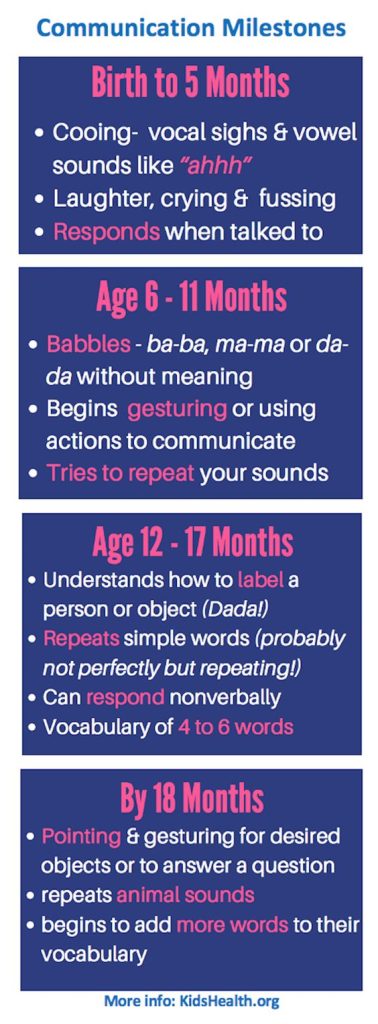
Infant speech milestones and communication progress varies from child to child, but there are general guidelines parents can use to gauge their own baby’s development. In this blog, Baby Talk: Infant & Toddler Speech Milestones, parents can find a quick guide of communication milestones for babies age newborn to 18 months old.
As always, you know your child best so if you ever feel that baby isn’t reaching their milestones on time or that there’s something wrong, don’t hesitate to contact your pediatrician. For a full breakdown of milestones, this chart from the American Academy of Pediatric Dentistry is very helpful!
Birth to 5 Months Old
Cooing, vocal sighs and vowel sounds such as “ahhh”
Laughter, crying (obviously!) and fussing sounds
6 -11 Months Old
Begins gesturing or using actions to try to communicate
Babbles without meaning (to us, not to baby!) and attempts to say mama and dada
12- 17 months Old
Understands how to label objects and people. Mom is actually “Mama” or Dad is actually “Dada”
Repeats simple words
Has a vocabulary of 4-6 words
Can respond non verbally
By 18 Months Old
Is adding more sounds, like animal sounds, to their repertoire
Is adding more vocabulary words
Pointing and gesturing, is able to communicate answers to simple questions like “Are you hungry?”
Again, there is a wide range of typical behavior in babies and toddlers. For example, sometimes newborns with older siblings reach milestones later than their peers because the older kids “speak” for their younger sibling. In other cases the child may start communicating earlier than expected because they are exposed to older family members or peers modeling speech to them all day! And of course twins and higher order multiples may even develop their own language which becomes part of their everyday communication.
Either way we hope this info is helpful and if you have more questions, you can visit our Parent Resource Center for evidence-based support.
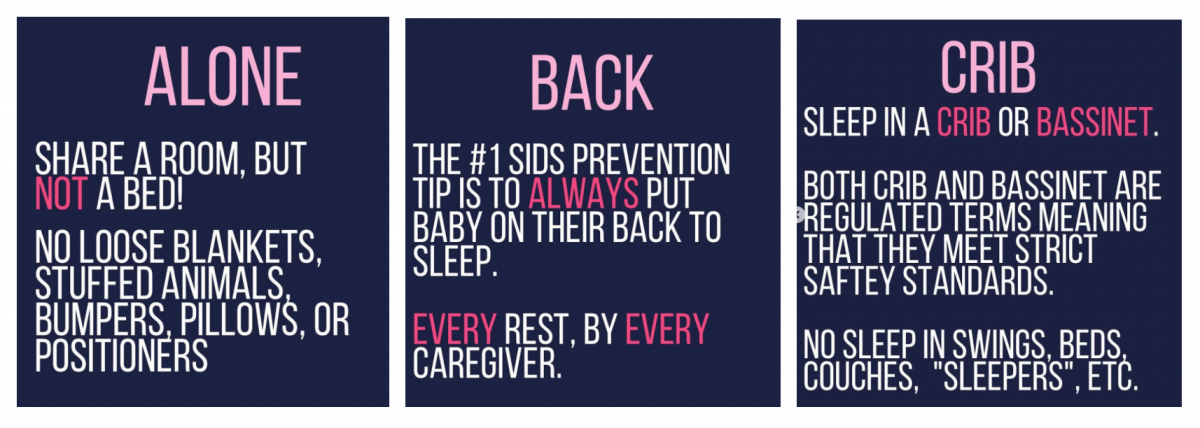
Since the Back to Sleep campaign began in 1994, it has become widely known that babies sleeping on their backs instead of their bellies helps reduce the risk of Sudden Infant Death Syndrome (SIDS). ABC’s of Safe Sleep is an easy way to remember how to help newborns and infants sleep safely.
An example of what a safe sleep environment looks like can be seen here on the National Institute of Health’s website. A good summary however is to also remember the ABC’s of Safe Sleep: Alone, Back, Crib. Let’s break down each of the ABC’s:
Alone
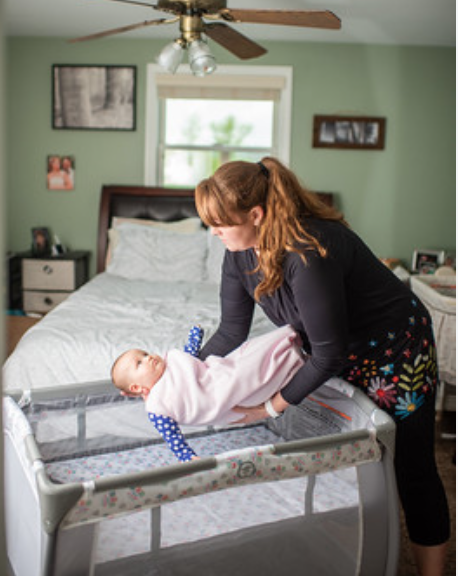
It’s recommended that baby share a room but not a bed with parents for the first year of life.
No toys, pillows, blankets, crib bumpers or other loose items should be in baby’s crib.
Once baby is rolling over or taking off their swaddle blanket, it’s time to remove the swaddle blanket, or exchange it for a sleep suit that will keep baby warm.
Back
Put baby to sleep on their back, also called the supine position, for sleep.
If baby falls asleep in a carseat or stroller, it’s okay to stay there for short stretches. Place the carseat in an area where you can observe, or ideally put baby in the crib.
Crib
The terms “crib” and “bassinet” are regulated terms meaning that in order for a product to use those terms they must meet strict safety standards. Baby should not sleep in products called infant swings, beds, sleepers, napper or couch.
A crib with a flat, firm mattress should be used
Use a properly fitted sheet on the mattress.
And one last tip -as NationwideChildrens.org reminds us the “S” in ABC’S can stand for smoking…newborns “exposed to smoking, either while in the womb or after birth, have a higher risk of SIDS than infants who have not been exposed.”