Essential Guide to Baby Bottles
There are a few pros and cons to choosing what and how many baby bottles to use, especially if you’re having twins or higher order multiples. The amount of bottles, sizes and weight, environmental concerns, compatibility with a pump and budget are all considerations when deciding which bottles to use. Don’t worry, our essential guide to baby bottles breaks it all down below.
Guide to Baby Bottles – How Many?
Newborns and infants eat at least every 3–4 hours in the first few months. And twins, because they’re usually born at lower birth weights, typically eat every 2 hours. Newborns and infants also clusterfeed, meaning they nurse or bottle feed more frequently than usual over a short period to keep up with their rapid growth.
So in the early weeks, your baby will have 8-12 feeds per 24 hours in the early stages. (Newborn twins will have 16-24 feeds in 24 hours!)
Therefore, if you’re expecting a single baby and planning to bottle feed, we recommend having 12 bottles because:
- You’ll avoid constant washing and sterilizing.
- You can run all of the bottles through the dishwasher at the same time once per day.
- Having a few spares helps ensure you won’t be caught having to clean and prepare a bottles while your baby is crying from hunger.
- If a bottle gets lost or damaged you’ll be prepared with extras.
What Size Bottle and Nipple?
Newborn tummies are tiny! This blog, How big is a newborn’s stomach? will show you exactly what you can expect in the early days. Even a small bottle holds more than a newborn can take in at one time. So there are 2 ways to go when deciding what size baby bottles to purchase:
- Purchase bottles for lifetime use: Buying bottles that can hold up to 8 ounces is a smart economic and space saving choice, because you’ll buy them once and use them for the next few years, until your baby doesn’t use a bottle anymore.
- Purchasing different size bottles to use as your baby grows: smaller bottles might be useful at first, as they take up less space and are lighter. You might also be less likely to waste formula if preparing it in a smaller bottle. Also if you’re pumping milk, the smaller bottles may be what comes with the pump set already.
In the early newborn phase, when the babies consume less than 2 ounces, formula feeding parents may opt to use pre-mixed formula that comes in 2 ounce bottles. You may even be sent home with some from the hospital. Note that nipples that fit these special bottles may need to be purchased separately.
Nipple Size and Flow
While each brand of bottle has nipples that come with them, you’ll want to purchase a variety of nipples with increasing flow rates. The nipples will be labeled with the rates of 1, 2, 3 or 4. Level 1 is the slowest and appropriate for newborns. As they grow and feed more efficiently, infants will work their way up to Level 4, the fastest flow that allows more fluid through at one time. Some brands will label their nipples as extra slow, slow, medium or fast. In this case, all newborns start with extra slow and eventually move up.
There is no specific chart or timefame for babies to move up in speed of the nipple, you can follow your baby’s lead here. For example, if they seem agitated with what used to be a peaceful feed, they might be telling you they are bigger now and frustrated with such a slow feed. You can try moving up to next size nipple to see if this makes feeding sessions easier.

Guide to Baby Bottles: Plastic, Silicone or Glass?
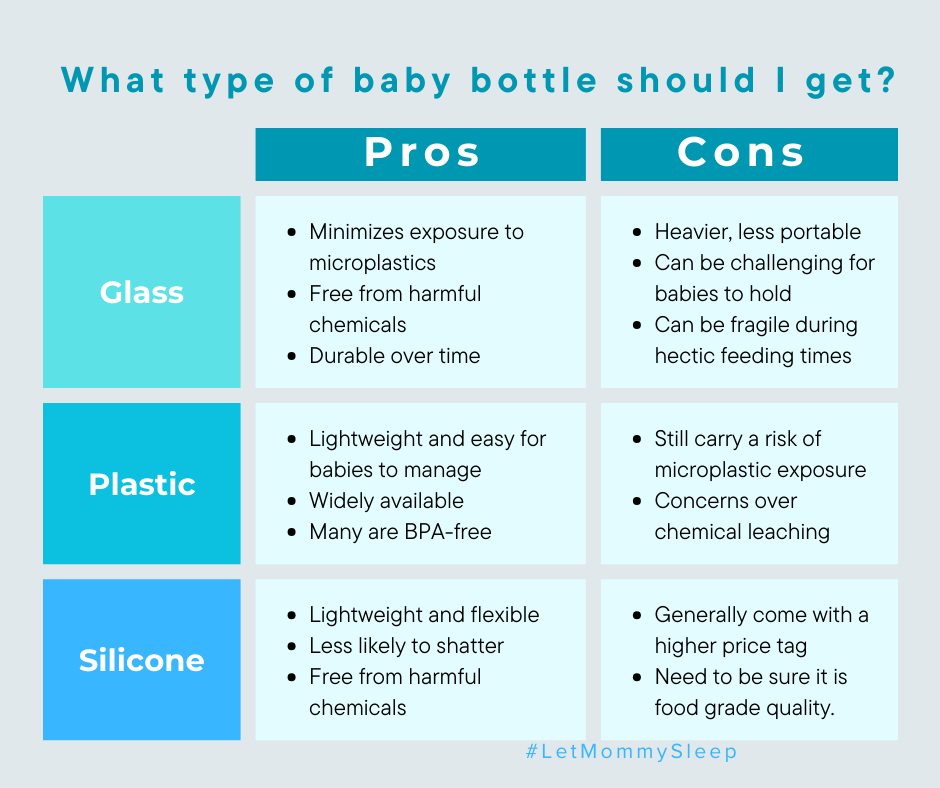
Glass bottles minimize exposure to microplastics, as they are free from harmful chemicals and durable over time. However, they are heavier and may pose a challenge once your babies are ready to hold their bottles independently. Additionally, the weight and fragility of glass bottles can be a concern during hectic feeding times.
Plastic bottles, on the other hand, are lightweight and easier for babies to manage when they start holding their bottles. Many plastic bottles are now BPA-free, which addresses some health concerns, but they still carry the risk of microplastic exposure.
Silicone bottles offer a middle ground, as they are lightweight, less likely to shatter, and free from harmful chemicals, though they may come with a higher price tag.
Ultimately, the best choice depends on your family’s priorities and lifestyle. You may even find it helpful to have a mix of bottle types—glass bottles for at-home use and lightweight bottles for travel. And remember you can always pivot or refer back to this guide to baby bottles anytime!
Nipple Material – What About Microplastics?
When considering bottle materials, don’t forget to check what the nipple is made of. Plastic nipples leach microplastics
Silicone is durable, heat-resistant and free from BPA, PVC, and phthalates. While silicone nipples do not contain microplastics, it’s essential to note that some studies suggest silicone may release trace amounts of siloxanes when exposed to high heat. It’s not a huge amount but enough to stay away from scalding temperatures…which you would do anyway!
Rubber – If you’re seeking alternatives entirely free from synthetic materials, natural rubber nipples are an option. However, they can wear out faster and may cause allergies in some babies.
What are the best baby bottles for twins?
The best baby bottles for twins are the ones that reduce feeding time, minimize colic, and make cleanup fast, because parents of multiples need efficiency above all. While there’s no single “best” brand, bottles designed for easy latch, anti-gas features and quick prep tend to work best for twin families.
Top-rated bottles for twins include:
- Dr. Brown’s Options+ Anti-Colic Bottles – Excellent for babies with gas or reflux; includes venting system that mimics breastfeeding flow.
- Philips Avent Natural Response Bottles – Designed to release milk only when the baby actively drinks, helping twins transition between breast and bottle.
- MAM Easy Start Anti-Colic Bottles – Self-sterilizing in the microwave by using steam. This is an ideal shortcut for twin households managing double the washing.
Tips for parents of twins:
- Label or color-code bottles to keep track of each baby’s bottle. It’s normal for feeding time to take 30-45 minutes with bottles being picked up and put down often.
- Check flow rates regularly, your twins might progress to faster flow speeds at different paces.
- Remember that twins are usually born preemie size, so even the tiniest bottle might hold more than they can take in per feed.
When choosing bottles for twins, prioritize anti-colic features, ease of cleaning, and compatibility with your feeding routine. What works for one baby might not for the other, so try a small set first before buying in bulk. If you’re expecting twins, So You’re Having Twins! Proven Support and Fun Facts could be helpful.
Water: Why Water Matters When Prepping Baby Formula
When mixing baby formula, water is the foundation for safe, nutritious feeding. When you’re mixing concentrated liquid or powdered formula, you must follow the instructions exactly. If your tap water’s quality is uncertain, especially for homes on well water, the Mayo Clinic recommends boiling it for one minute, then letting it cool before measuring. Using too much or too little water isn’t a trivial mistake: too much dilutes nutrients, too little may stress your baby’s digestion. Bottom line: the right water and the right amount, makes your formula both safe and effective.
What If I’m Pumping? And What Else Should I Know?
If you’re feeding pumped milk, it makes sense to purchase bottles that are the same brand as the breastpump. Using brand-compatible bottles means the milk goes straight from the breast to the storage bottle. So no need to worry about spillage or extra steps of cleaning a new bottle. Spectra and Medela are well known brands of breast pump and breastmilk storage solutions.
“Anti-colic bottles” contain vents or valves that allow air to escape from the bottle during feeding. This helps reduce the amount of air a baby ingests while feeding, therefore minimizing gas and fussiness due to bloating. There are no health downsides to anti-colic bottles. The only negative is that there are a few more parts to clean and sterilize. So parents will want to be sure they have enough bottles to get them through to washing times.
Nurses Note: It’s important to note that “colic” is a normal developmental phase for newborns, not related to gas or feeding. The term “colic” is sometimes used interchangeable with “fussy” but parents should not expect anti-colic bottles to eliminate the normal phase of colic which is typically 3 hours of crying/3 days per week. – Cathy Ennis, RN
Get ready for baby with more tips in Your First Week Home with Baby: Ultimate Q&A