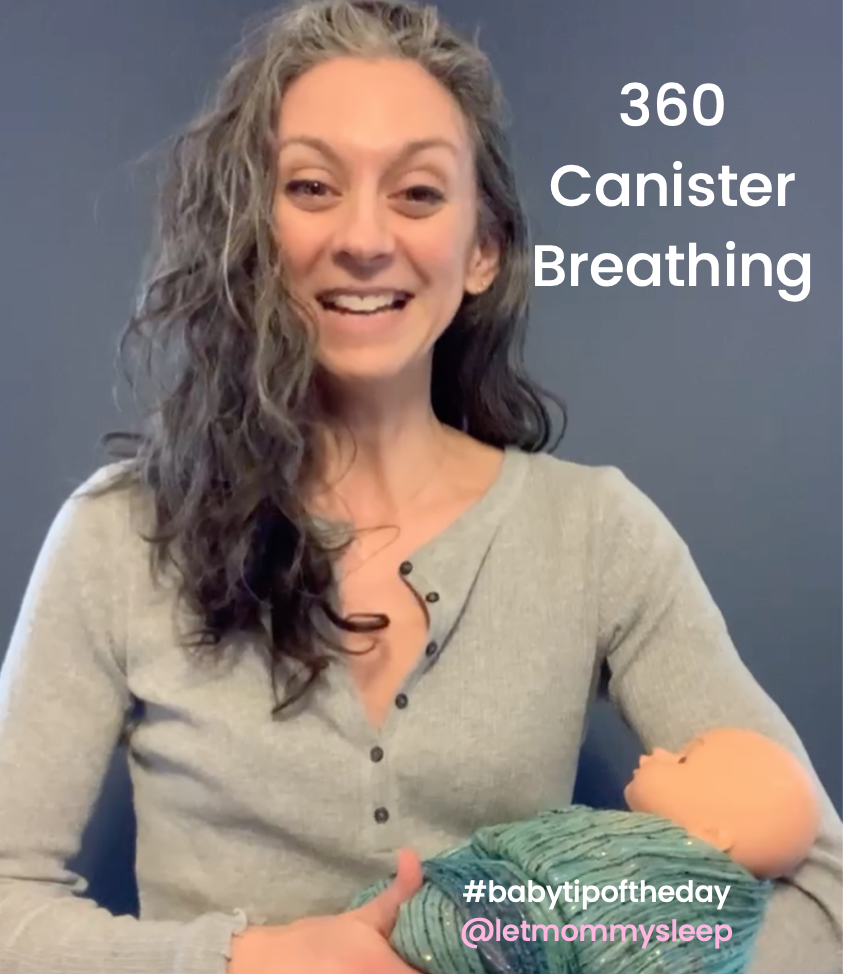
360 Canister Breathing
Diastasis recti is a very common result of pregnancy and birth. It means that the space between your left and right belly muscles has widened, and instead of being flat, the belly now sticks out. While it is rarely serious, it is connected to overall postpartum health. Core exercises like 360 canister breathing can help strengthen the abdomen and eliminate or minimize diastasis recti.
Diastasis Recti and the Pelvic Floor: How They Work Together
Pregnancy puts so much pressure on the belly that sometimes the muscles in front can’t keep their shape. “Diastasis” means separation, and “recti” refers to your abdominal muscles, the rectus abdominis. While not dangerous in most cases, this “postpartum pooch” can cause back pain, pelvic instability or hernia risk. It also can make parents feel uncomfortable or self conscious.
That’s where the pelvic floor comes in. According to the American Physical Therapy Association (APTA) and pelvic health specialists, the core and pelvic floor function as a single unit. When one is weak or overly tense, the other often compensates. Strengthening the deep core muscles through breath-based exercises like 360 Canister Breathing not only supports abdominal healing but also restores the coordination of the diaphragm, pelvic floor and deep abdominals by helping them work together again, restoring balance, core strength, and pressure control.
For more information on maintaining a healthy pelvic floor, visit Pelvic Floor 101: Pregnancy and Postpartum.
What’s 360 Canister Breathing?
By using what we call 360 canister breathing, you can strengthen your pelvic floor. It is named 360 breathing because the goal is for the ribs and torso expand in a 360 degree direction. This means that we’re not just breathing into our chest or our belly, but also expanding into our sides and back.
Here’s How to Do It
- On your inhale, expand the belly, ribcage, and pelvic floor evenly.
- On your slow exhale, “shhh” your baby by gently lifting the pelvic floor (like a Kegel), drawing your ribs in, and pulling your abdomen in and up.
- The “shhh” isn’t just for baby — it helps engage your deep core muscles more fully, amplifying the benefit.
If you find yourself shushing for 15 minutes, that’s a solid core workout and a calming one for your newborn, too.
Why This Matters
When performed regularly, 360 breathing helps:
- Reconnect your core and pelvic floor after pregnancy
- Reduce pressure that worsens diastasis
- Improve posture and stability
- Support gentle, natural healing during postpartum recovery
You can even integrate this exercise while feeding, soothing, or rocking your baby. Small, consistent practice adds up to a stronger, more stable foundation.
Postpartum mental health is also important in your recovery. If you’d like to learn more about it, please read PPD vs. Baby Blues: Know the Difference. Postpartum recovery takes consistent effort and consistent rest. Let Mommy Sleep’s overnight newborn care gives you the energy to show up for your recovery during the day. Find your local team.
This info was written and reviewed by Kendra Fitzgerald – PCES, TBMM-CES, CPT, and CYT. Co-founder of Devoted Mamas, Kendra is a pregnancy & postpartum corrective exercise specialist and mom of two boys.
Categories
- Baby & Family Activities
- Corporate Care & Partners
- COVID19 Archive
- En Espanol
- Expert Guides
- Hiring a Night Nanny
- Infant Safety
- Infant Sleep Hub
- Newborn Care
- Postpartum Health
- Twins & Multiples
- Work as a Night Doula
- zPost Archives