Your First Night Home: Newborn Diapering and Bathing
Newborns should have at least one wet diaper per day of life in the first week: one on day one, two on day two, and so on up to 6 or more by day 6. After the first week, 6 to 10 wet diapers per day is normal. Here is everything you need to know about newborn diapering and bathing.
updated April 2026 – Your First Night Home: Newborn Diapering and Bathing includes our night nanny and doula team’s answers to FAQ’s about clothing, bathing and circumcision care when transitioning your newborn from hospital to home.
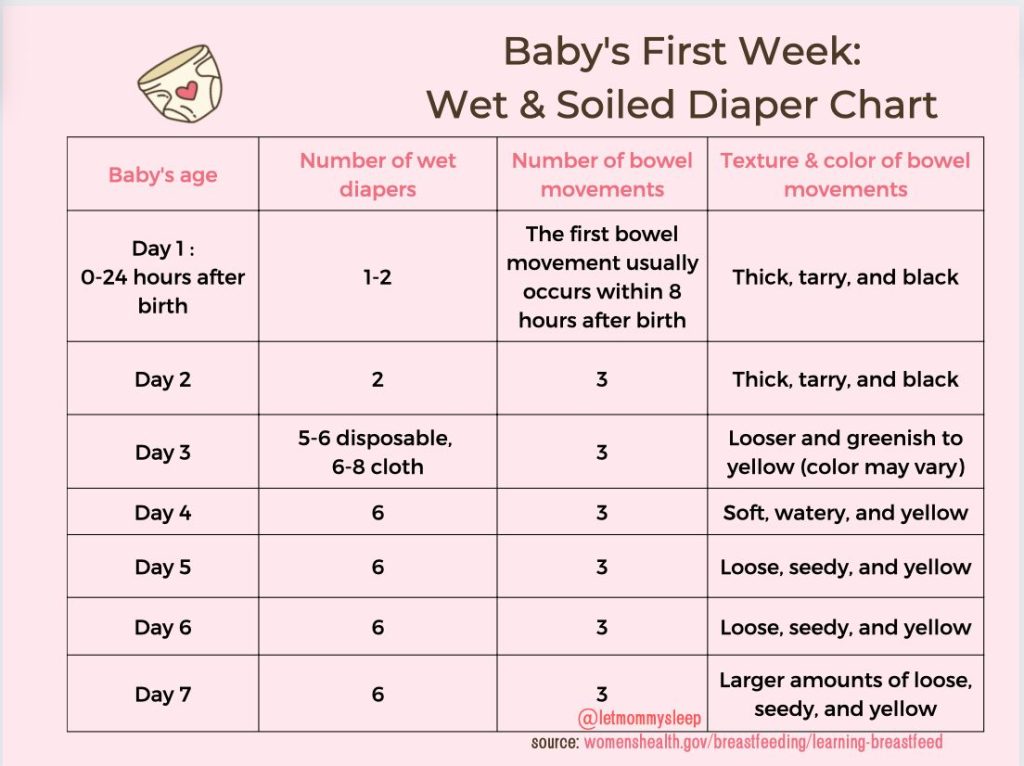
Newborn Diaper Chart: What to Expect in the First Week
Day 1 (0–24 hours after birth) Wet diapers: 1–2 Bowel movements: First BM usually occurs within 8 hours of birth Texture and color: Thick, tarry, and black (meconium)
Day 2 Wet diapers: 2 Bowel movements: 3 Texture and color: Thick, tarry, and black (meconium)
Day 3 Wet diapers: 5–6 with disposable diapers, 6–8 with cloth diapers Bowel movements: 3 Texture and color: Looser and greenish to yellow — color may vary
Day 4 Wet diapers: 6 Bowel movements: 3 Texture and color: Soft, watery, and yellow
Day 5 Wet diapers: 6 Bowel movements: 3 Texture and color: Loose, seedy, and yellow
Day 6 Wet diapers: 6 Bowel movements: 3 Texture and color: Loose, seedy, and yellow
Day 7 Wet diapers: 6 Bowel movements: 3 Texture and color: Larger amounts of loose, seedy, and yellow
Your First Night Home: Newborn Diapering and Bathing
Bathing FAQs
Should I bathe my baby every day?
Babies don’t need to be fully bathed everyday. Their skin is sensitive and can dry out a lot faster than adults. It’s best to give baby a sponge bath their first week or two. Making sure to get in their rolls and in between their fingers and toes. You would be surprised how much lint collects in fingers and toes! Once your newborn’s umbilical stump has fallen out and heals up, it’s okay to give baby a full bath. Babies do not need to be bathed more than 3 times a week.
What temperature should my baby’s bath water be?
Newborns and infants should be bathed in warm water, not too hot. Test the water with your wrist, not your hand. Also, babies’ bodies lose heat quicker than adults so keep bath time brief to avoid chills.
What kind of soap should I use on my baby?
Warm water is just fine for bathing newborns. If you do use soaps, lotions or oils be sure they are non-toxic and infant safe so baby’s skin does not dry out or become irritated. Avoid a scented soap or bubble bath.
What time of day should I bathe my Newborn?
There is no wrong answer to what time of day is best to bathe your baby but giving a bath as part of the bedtime routine can be a soothing way to wind down for sleep. There’s a reason why we often hear that babies enjoy “bath, bottle, books and then bed.”

Diapering FAQs
How often do I change my baby’s diaper?
It is best to change baby’s diaper every time you feed your newborn. Try to change your baby before feeding them. If you change their diaper immediately after feeding, they might spit up because laying horizontal can cause distress.
How do I care for my newborn son’s circumcision?
If your male baby was circumcised, you were probably instructed to use petroleum jelly and gauze at each diaper change. When bathing, stick to sponge baths only and use unscented soap and warm water. If you notice any continuous bleeding, trouble urinating, fever, or swelling, call your pediatrician immediately. The circumcision should heal in about seven to ten days.
Can I use baby wipes on a newborn?
Many doctors and newborn care professionals suggest using warm water and a clean washcloth to wipe at each diaper change. Others say it is fine to use disposable wipes on newborns, as long as they are the unscented type. The important thing is to be sure that baby is completely dry before putting on diaper creams or vaseline. It is also fine to let your baby go diaper-free for 10-20 minutes (or longer if you’re okay with it) to allow the diaper area to stay dry.
Should I Cloth Diaper?
Cloth diapers are less expensive than disposables and have less environmental impact but many families feel that disposable diapers win on convenience. Read our roundup of Cloth and Hybrid Diapers to learn if cloth diapering is right for your family.
How do I prevent diaper rash?
- Frequent Diaper Changes: When possible, change diapers as soon as they become wet or soiled. Aim to change a newborn’s diaper every 2-3 hours. Avoid allowing baby to sit in the wet diaper whenever possible.
- Avoid Harsh Soaps or Wipes with Alcohol
- Keep the diaper area dry: allow the skin to dry before applying cream. Also give baby time without the diaper on when they’re dry
- Use diaper cream: After the skin is fully dry, use a diaper cream containing zinc oxide. Petroleum jelly can be used too, the important part is that the cream or jelly creates a barrier to protect the skin.
- Try to avoid friction: keep the diaper a little loose
How Do I Know if My Baby is Eating Enough?
Your newborn will usually nurse/feed 8 to 12 times per day. It can be hard to know exactly how much is being taken in during each feeding session. But that’s okay because you’ll always be able to tell how much is coming out! You’ll see plenty of wet and soiled diapers once you arrive home with your newborn on day 3 or 4 of baby’s life. If you want to be sure baby is eating enough, read How big is a newborn’s stomach?
Every baby is different of course but the wet and soiled diaper chart can help assure parents that baby is feeding well. You’ll also be visiting the pediatrician during this first week home and baby’s weight will be checked. As our newborn care specialist Shiro says, weight gain is the other sure sign that your newborn is eating enough!
If you’d like to know more about what to expect in the first days home with your newborn, read Your First Week Home with Baby: Ultimate Q&A. And if our night nanny team can help you feel confident and healthy during the first nights with your newborn, please contact us anytime.