
Spit-Up, Reflux and GERD in Newborns
Spit-up, reflux and GERD (Gastroesophageal Reflux Disease) are all part of the same spectrum of digestive development in newborns. In most cases, these issues are signs of an immature digestive system, and they resolve with time; milk simply flows back up before the stomach valve fully strengthens. However, when that backflow becomes frequent or uncomfortable, it’s called reflux. And when reflux starts to interfere with feeding, growth or sleep, doctors may diagnose GERD. Understanding the difference between Spit-Up, Reflux and GERD in Newborns helps parents know what’s normal and when it’s time to check in with the pediatrician.

Spit up: Common and Harmless
Spit up in newborns is common and usually harmless. It happens because the valve that keeps milk in the stomach (the lower esophageal sphincter) isn’t fully developed yet. Until that muscle matures, milk can flow back up easily, especially if your baby’s tummy is full or they’re laid flat.
Normal spit-up can happen when baby is otherwise calm and comfortable and even when baby is gaining weight and feeding well. Spit-ups can look dramatic but are only a teaspoon or two of milk. Spit up usually improves on its own by 9–12 months.
You Can Help Minimize Spit up By:
- Feed in a semi-upright position
- burp midway and after feeding
- hold baby upright for about 20–30 minutes afterward
- delaying tummy time or play until the stomach settles
- make sure baby isn’t moved, bounced or laid down too soon after eating
If you’re bottle feeding, night doulas recommend pace feeding to try to minimize the effects of reflux. Pace feeding means holding baby in a semi-upright position and keeping the bottle horizontal. This allows babies to feed at a slower, more controlled pace, minimizing the amount of air swallowed and potential discomfort from being overfed.
When to Call the Pediatrician
Spit up should not cause pain, distress, or weight loss. Contact your pediatrician if your baby:
- Is not gaining weight or begins refusing feeds.
- Has spit up that is green, yellow, or blood-streaked.
- Coughs, chokes, or pauses in breathing during feeds.
- Cries in pain or arches their back during or after eating.
- Produces forceful or projectile spit up.
These symptoms may signal something more serious, such as GERD, pyloric stenosis, when the muscular valve connecting the stomach to the small intestine becomes narrowed, or an infection.
Reflux and GERD
What is Reflux?
Reflux is the backward flow of stomach contents into the esophagus. It’s very common in newborns and occurs because the esophageal sphincter muscle is still developing.
When this backflow causes pain, frequent spit-up, or feeding issues, it may be classified as GERD. The difference between reflux and GERD is that GERD interferes with feeding, growth or comfort.
Reflux can appear with visible spit-up or as silent reflux, when milk and stomach acid flow up the esophagus but don’t reach the mouth. Silent reflux can still cause pain and irritability due to the acid’s burning effect.
How Long Does Reflux Last?
Reflux typically begins when baby is about 2 to 3 weeks old. It often peaks and has the worst symptoms between 4 and 5 months of age and resolves between 9 and 12 months of age.
Reflux almost always improves naturally as the esophagus matures, usually resolving within the first year. In the meantime, pediatricians may recommend medication to reduce stomach acid and ease discomfort. However, time and growth are the only true cures.
What about Twins & Preemies?
Reflux and GERD are more common in twins and premature infants because their digestive systems are immature and underdeveloped, compared to full term babies. Learn more twin facts in So You’re Having Twins! Proven Support and Fun Facts.
When Reflux Makes Nights Impossible
Caring for a reflux baby overnight is one of the most exhausting experiences new parents face. The frequent feeds, the careful positioning and the monitoring adds up fast, especially when you’re already sleep deprived from birth recovery.
A night nanny experienced with reflux babies handles the overnight care so you can sleep. They keep baby upright after feeds, monitor for distress, track patterns using the LMS Live app, and know when something warrants waking you. Parents wake up rested. Baby is safe and monitored all night.
Find your local Let Mommy Sleep team
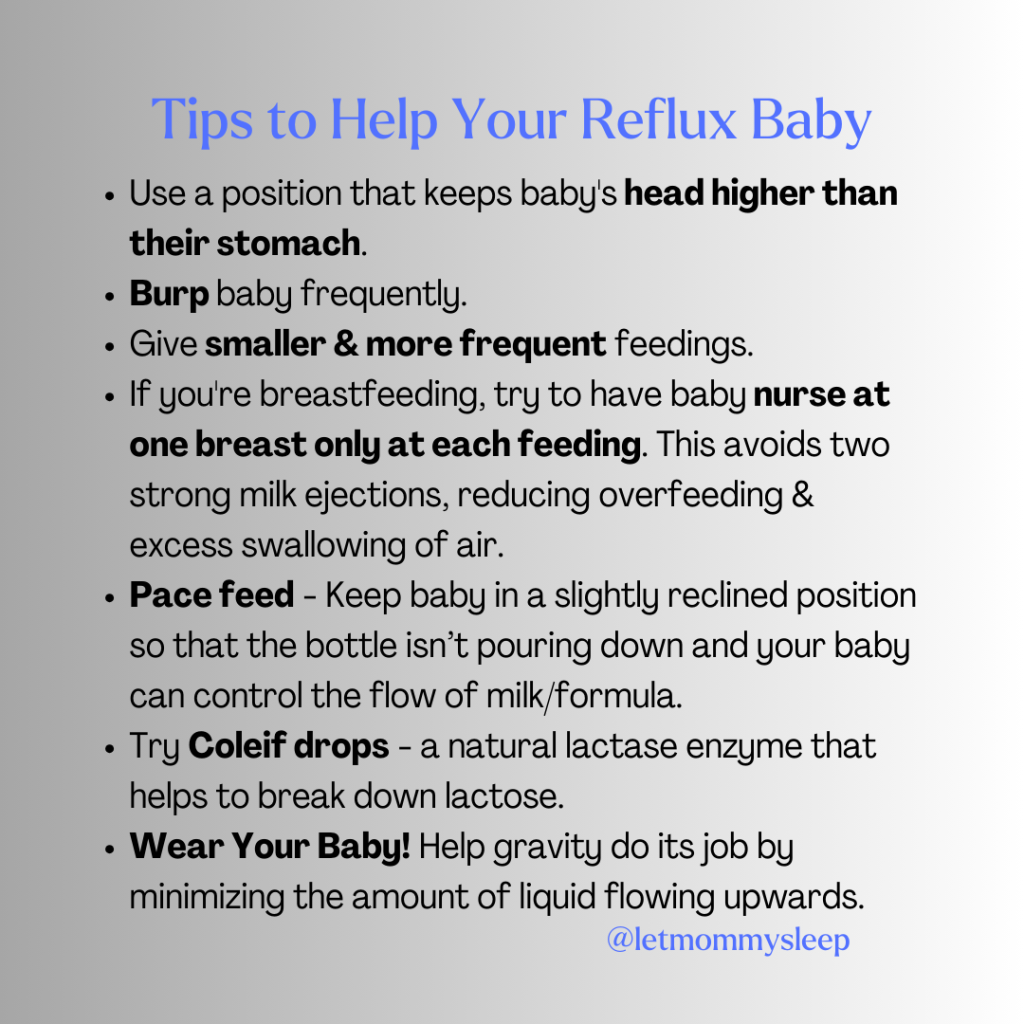
How to Soothe a Baby with Reflux
While the only true remedy for reflux is time, there are some techniques to help keep your baby comfortable during and after feeding. You can read more in 6 Easy Tips to Help Your Reflux Baby
- Keep baby elevated while feeding.Gravity helps milk stay in the stomach. Avoid positions where the baby might slide down, which can increase abdominal pressure.
- Burp frequently.
Release swallowed air midway and after each feed to reduce gas and pressure. - Offer smaller, more frequent feeds.
Overfilling the stomach can cause discomfort and increase reflux episodes. - Ensure proper bottle angle.
If bottle-feeding, keep the nipple fully filled with milk to prevent swallowing excess air. - Hold baby upright after feeding.
Maintain an upright hold for at least 30 minutes after each feeding to allow digestion to begin.
Some families use over-the-counter remedies such as gripe water, but these should only be used under the guidance of a pediatrician.
| Condition | What It Looks Like | Baby’s Reaction | When to Call the Doctor |
|---|---|---|---|
| Spit Up | Gentle dribble, often after burping | Calm, comfortable | Normal if baby gains weight |
| Vomiting | Forceful, with muscle contractions and pressure | May look distressed or tired | If persistent, green/yellow or blood-tinged |
| Reflux/GERD | Frequent spit-up or none (silent reflux) | Cries, arches back, refuses feeds | If discomfort interferes with eating or sleep |
Key Takeaway
Spitting up is part of normal development for most babies and almost always resolves on its own. Reflux and GERD, while uncomfortable, are temporary and manageable. Supportive feeding positions, frequent burping, and smaller, more frequent meals are the best ways to help your baby stay comfortable.
You Don’t Have to Do Reflux Nights Alone
If your baby’s reflux is making overnight hours feel unmanageable, Let Mommy Sleep has newborn care specialists and registered nurses experienced with reflux, GERD, and colic. We serve families across 26 territories nationwide. Find care in your area.
If your baby shows signs of pain, weight loss, or persistent vomiting, talk with your pediatrician to rule out other causes and ensure your little one gets the right care. If you’d like to learn more about common infant health issues, visit Your First Week Home with Baby: Ultimate Q&A.