How to Offer a Bottle to A Breastfed Baby
“I will be returning back to work soon, and my breastfed baby refuses to take a bottle of breastmilk or formula. Help!” Amy Black, IBCLC, answers this common question with practical strategies for introducing a bottle to a breastfed baby.
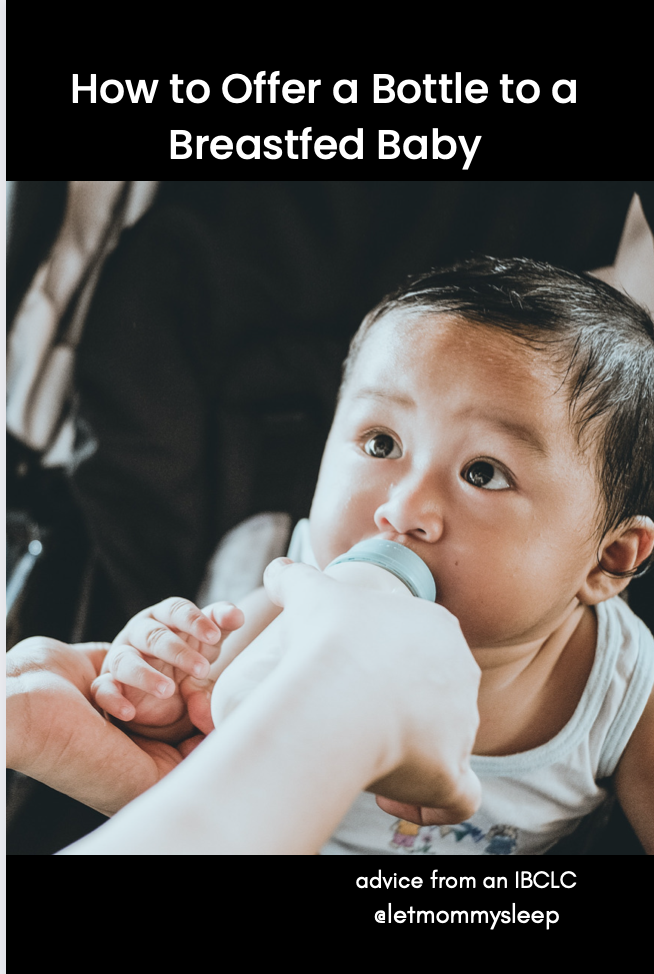
How to Offer a Bottle to a Breastfed Baby
Many parents worry when their breastfed baby refuses a bottle, especially before returning to work or leaving the baby with another caregiver. With the right timing, technique and patience, your baby can make the transition.
Here are a few basics:
- Babies are smart and know where milk comes from. If mom is nearby, your baby may refuse the bottle. Sometimes it helps if another caregiver tries while mom leaves the room—or even the house.
- Experts recommend waiting until breastfeeding is well established, usually after 4 weeks, before introducing a bottle. This protects your milk supply and prevents nipple confusion.
- La Leche League suggests pumping once a day after a feeding when your breasts still feel slightly full. Remember, you’re pumping “leftovers” so don’t expect a large amount.
Why Won’t My Breastfed Baby Take a Bottle?
Refusal is often less about the bottle itself and more about comfort and habit. Babies are used to breastfeeding, the warmth of mom’s body, and the familiar nursing position. A bottle can feel foreign at first. Refusal may also happen if the baby is too hungry, overtired, or if the flow of the nipple feels unnatural.
How Do I Get My Baby to Take a Bottle When I Go Back to Work?
Try these strategies to ease the transition:
- Offer the bottle when baby is calm, not starving or fussy. A slightly sleepy baby is often more willing to try.
- Have someone other than mom do the feeding, ideally in a different room than the usual nursing spot.
- Encourage baby to open wide by gently touching their lips with the nipple. Let them draw it in instead of pushing it in.
- Hold baby upright and keep the bottle horizontal, which mimics breastfeeding and slows the flow.
- Stop when baby shows signs of being done—pushing out the nipple, turning their head, or falling asleep. Don’t force the last drops.
- Warm both the milk and the nipple so the experience feels familiar.
What Is Paced Bottle Feeding and Why Is It Best for Breastfed Babies?
If your breastfed baby struggles with the bottle, paced bottle feeding is the most recommended method. This technique mimics breastfeeding by slowing the flow of milk and letting the baby control the pace.
Here’s how it works:
- Baby is held upright during the feed, similar to nursing.
- The bottle is kept at a horizontal angle so milk only fills the nipple halfway.
- The slower flow allows for natural breaks, prevents overeating, and reduces gas or reflux.
By avoiding overfeeding, paced feeding helps mom maintain her milk supply while pumping at work. It’s also less overwhelming for the baby and more like breastfeeding.
What If My Baby Still Refuses the Bottle
Every baby is different. Some adjust quickly, while others need repeated practice. If your baby resists, try different bottle nipples with slower or faster flows, experiment with temperatures, or let the baby play with the bottle outside of feeding times to get familiar with it.
Consistency is key. Keep practicing once a day, and stay patient. Over time, most babies learn to take the bottle when needed.
Quick Takeaways for Parents
- Introduce a bottle only after breastfeeding is established (about 4 weeks).
- Offer the bottle when baby is calm and not too hungry.
- Let someone other than mom feed, ideally in a new location.
- Use paced bottle feeding to mimic breastfeeding and protect milk supply.
- Be patient—bottle feeding is a learned skill for babies.
Need to know what bottles work best for you and your baby? Check out the Essential Guide to Baby Bottles.
Categories
- Baby & Family Activities
- Corporate Care & Partners
- COVID19 Archive
- En Espanol
- Expert Guides
- Hiring a Night Nanny
- Infant Safety
- Infant Sleep Hub
- Newborn Care
- Postpartum Health
- Twins & Multiples
- Work as a Night Doula
- zPost Archives