The State of Newborn Care Policy Paper
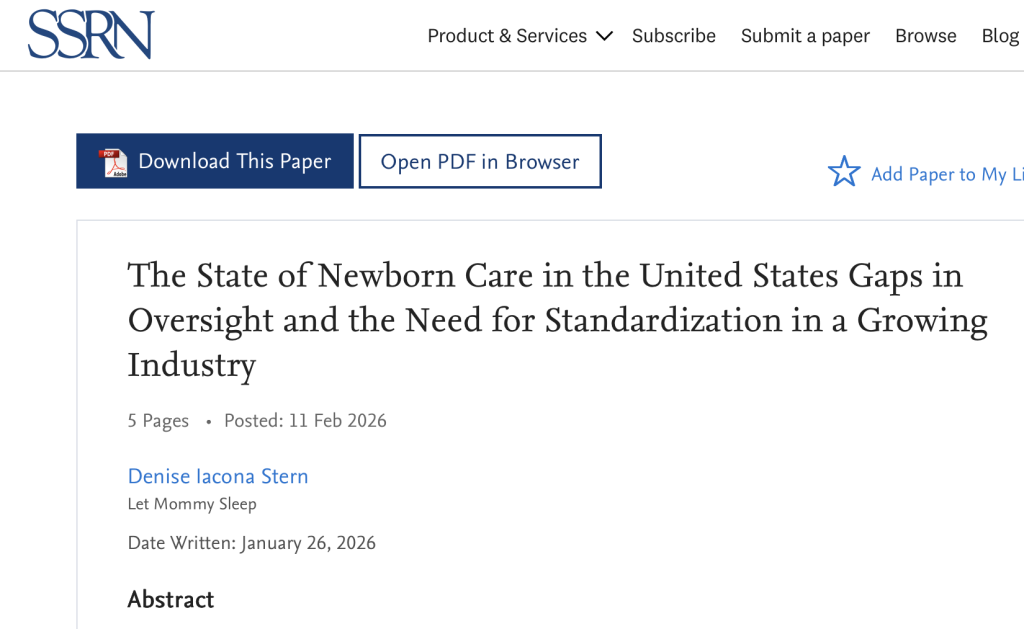
The State of Newborn Care in the United States: Gaps in Oversight and the Need for Standardization is a workforce policy paper written by Let Mommy Sleep Founder, Denise Iacona Stern. The full report is available on SSRN.
In-home newborn care and postpartum support is a rapidly growing industry. Medicaid now covers birth and postpartum doulas in most states, night nanny care is available as part of many employer benefit packages and caregivers are increasingly choosing in-home newborn care as a career path. The global postpartum products market is projected to reach $3.90 billion by 2030, a reflection of surging consumer demand for postpartum support across all categories, including in-home care services.
As use of private newborn and postpartum care becomes normalized, standards, protocols and oversight lag behind. And while the work is healthcare-adjacent, there is no recognized credential or oversight. Simply put, families cannot verify caregiver training and caregivers in turn have no mechanism for remediation in the event of a dispute.
The State of Newborn Care in the United States: What the Research Shows
- The first 12 weeks of life represent a high-risk period for newborns and parents, but there is no credential for those who support families during this time.
- In-home newborn care as a profession has grown rapidly driven by unmet demand during the postpartum phase.
- Despite increased use, the sector lacks national standards, creating preventable safety, public health and professional issues.
- Newborn care training and practices among caregivers vary widely.
- Aggregation and accountability are necessary to protect families and providers alike.
While private agencies and training programs offer certificate opportunities, there are no nationally accepted or enforced safety guidelines. The first step to elevating care for families, and protected the caregivers who are called to do this work, is meaningful credentialing.
The Newborn & Postpartum Support (NAPS) Night Doula Certificate was built in response to exactly this gap. It’s not a government credential, but it is a voluntary evidence-based standard for caregivers and families while the industry awaits the national oversight it needs. It is a rigorous, voluntary standard overseen by a third party Advisory Board of Registered Nurses and postpartum subject matter experts, developed by the organization that has been advocating for mandatory national standards since 2010. Read the full policy paper here.
Categories
- Corporate Care & Partners
- COVID19 Archive
- En Espanol
- Expert Guides
- Hiring a Night Nanny
- Infant Safety
- Infant Sleep Hub
- Newborn Care
- Postpartum Health
- Twins & Multiples
- Work as a Night Doula
- zPost Archives