Measles: What Expecting & New Parents Need to Know
Measles: What Expecting & New Parents Need to Know was last updated: October 18, 2025
Author: Laura Hegarty-Moore, RN, MPH, CIC
Laura Hegarty-Moore is an Infection Preventionist at Baystate Health, a Registered Nurse, mother of two, longtime Let Mommy Sleep contributor and a member of our Advisory Board serving as Public Health Advisor since 2020.With measles cases on the rise in the United States, and infants under six months being especially vulnerable, Laura answers the most common questions parents ask about measles, vaccines and prevention.
For the most current guidance, visit the CDC Measles Information Page: https://www.cdc.gov/measles
What Is Measles
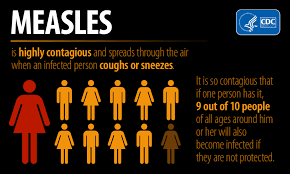
Let’s start at the beginning. Measles is one of the most contagious diseases known. It spreads through the air and can linger in a room for up to two hours after an infected person leaves. In fact, as the CDC says, if one person has it, up to 9 out of 10 people nearby will become infected if they are not protected. It can be serious or even fatal, especially for children under five years old.
But it is easily preventable through vaccination. The single best protection against measles is vaccination.
What Does It Mean to Be “Up to Date” on the Measles Vaccine
Being up to date means having two doses of the MMR (Measles, Mumps, Rubella) vaccine.
- One dose is 93% effective
- Two doses are 97% effective
If you are fully vaccinated, you are very well protected. Failure to vaccinate remains the biggest reason measles continues to spread.
Snippet Answer: To be “up to date” for measles, you need two documented doses of the MMR vaccine, typically given during childhood.
Do Adults Need a Measles Booster
In most cases, no booster is needed if you have had two MMR doses or were born before 1957.
Exception: If you received the inactivated measles vaccine between 1963 and 1967, ask your doctor whether you need a booster. Most people received the live vaccine during that time, but confirming your record helps conserve doses for children who have not yet been vaccinated.
Getting an extra MMR dose poses minimal risk but is usually unnecessary.
Can You Still Get Measles if You’re Vaccinated
Breakthrough cases are possible but rare. Vaccinated individuals are 35 times less likely to get measles than those unvaccinated. When they do occur, symptoms are typically mild and less contagious.
Snippet Answer: Yes, it is possible to get measles after vaccination, but the illness is usually mild, and vaccinated individuals are far less likely to spread it.
Should I Wear a Mask to Prevent Measles
Masking is not an effective prevention strategy against measles.
Reasons include:
- The MMR vaccine is highly effective and long-lasting.
- The measles virus is airborne and extremely contagious, infecting 12–18 people per case on average.
- You can contract it by being in a room up to two hours after an infected person leaves.
- The virus can survive on surfaces, so a mask alone cannot prevent infection.
However, if you are sick or have been exposed, you should wear a mask to help reduce spread.
Snippet Answer: Masks do not effectively prevent measles infection. Vaccination is the only reliable protection.
International Travel and Measles
Since routine vaccination began in 1963, U.S. measles cases have dropped by over 99%.
Still, travelers returning from other countries can bring measles back, potentially triggering outbreaks.
At-risk groups include:
- Babies too young for vaccination (under 12 months)
- Immunocompromised individuals
- Older adults with weakened immunity
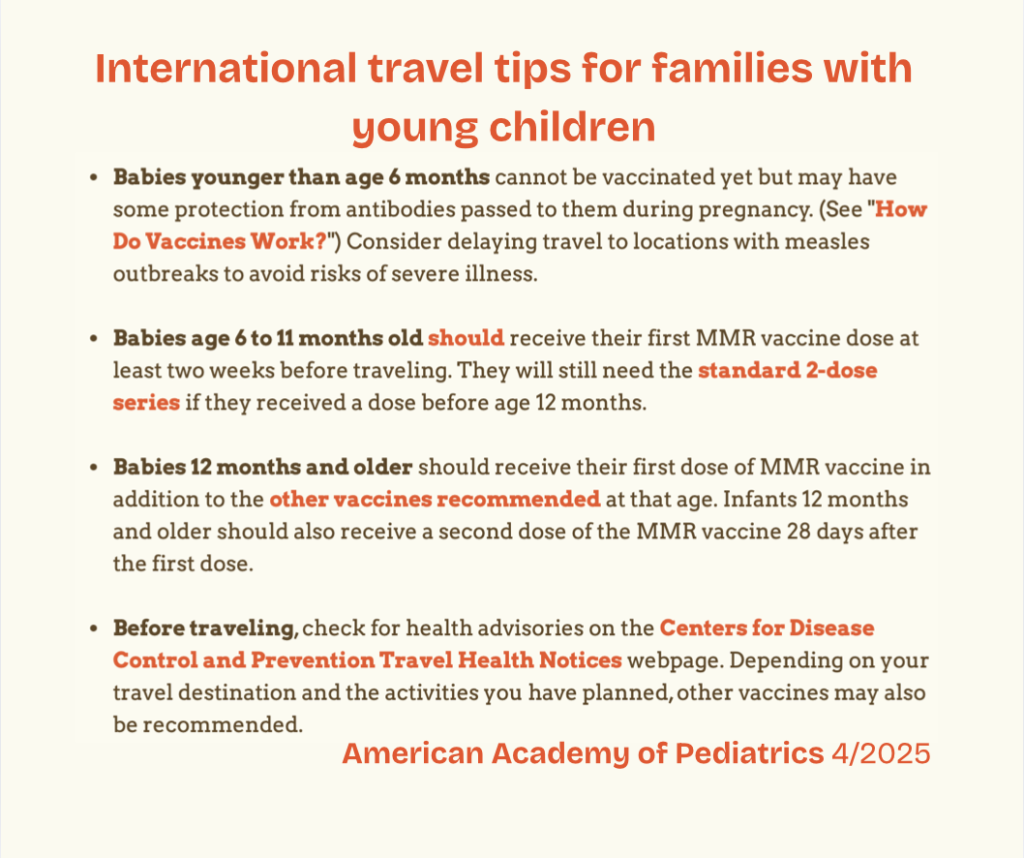
If you plan to travel internationally, check your MMR vaccination status. The CDC recommends that infants 6–11 months old receive one early MMR dose before international travel. For details, visit: https://www.cdc.gov/measles/travelers.html
Measles: What Expecting & New Parents Need to Know: A Message from Let Mommy Sleep
At Let Mommy Sleep, evidence-based care and newborn safety come first. All night nannies, night nurses and postpartum doulas are vaccinated for MMR (Measles, Mumps and Rubella) to protect infants who are too young to receive the vaccine.
Additionally, our caregivers follow strict hygiene and illness-prevention protocols in every family home:
- Handwashing upon arrival and before or after caring for baby, bottles or pump parts.
- Shoes removed upon entering the home.
- Masking available upon request or if anyone feels unwell.
- Surfaces cleaned and sanitized throughout the night.
- Open communication if a caregiver or family member feels unwell, so safety decisions can be made together.
We understand some folks have big feelings about vaccines. Our mission is to continue to provide safe, compassionate and evidence-based education on the subject of immunizations, in addition to any other newborn and postpartum care questions you may have.
For more information on measles and vaccine safety, visit:
- American Academy of Pediatrics (AAP): https://www.aap.org
- CDC Measles Resources: https://www.cdc.gov/measles
If you would like to learn more about the standards of our night doulas please visit Introducing the National NAPS Registry for Night Doulas or contact us anytime.
Categories
- Corporate Care & Partners
- COVID19 Archive
- En Espanol
- Expert Guides
- Hiring a Night Nanny
- Infant Safety
- Infant Sleep Hub
- Newborn Care
- Postpartum Health
- Twins & Multiples
- Work as a Night Doula
- zPost Archives