Pelvic Floor 101: Pregnancy and Postpartum
Pelvic floor therapy has gained more attention recently. There’s a growing understanding of its importance in women’s health, particularly around pregnancy, childbirth and aging. Historically, issues like incontinence or pelvic pain were underreported and under diagnosed. But with advances in medical research and honest conversations taking away the stigma of pelvic floor issues, we now have options and education to keep this vital area healthy! Pelvic Floor 101: Pregnancy and Postpartum has everything you need to know, and features the expert advice of our friends at Pelvic Pride in Baltimore, MD.
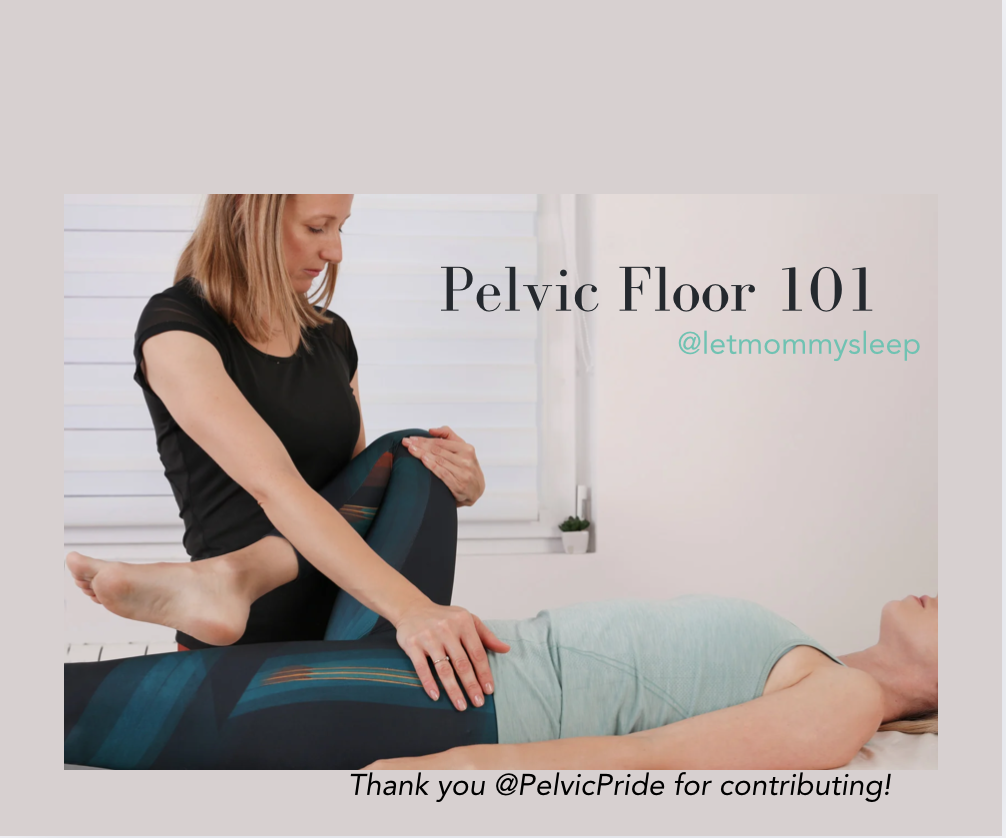
Remember that in seeking counsel, a pelvic floor therapist is a highly trained professional with the clinical designation of Doctor of Physical Therapy (DPT) or Occupational Therapist specializing in the pelvic floor. This is a doctoral degree involving extensive training in anatomy, physiology, and rehabilitation techniques. DPT’s have also completed clinical rotations in women’s health, orthopedics and more.
What is the Pelvic Floor?
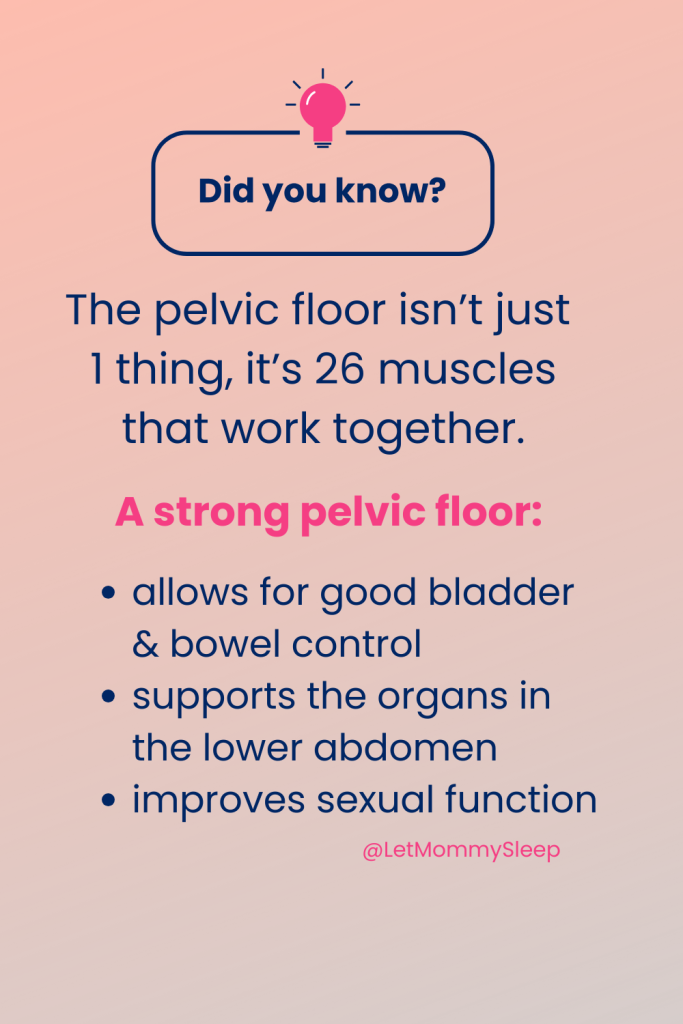
The pelvic floor is not just 1 thing- it is actually 26 muscles that work together. This team of muscles surround the urethra, vagina and anus that acts as a “hammock” of support for the bladder, uterus and rectum. (The prostate is also supported, but for this lesson we’re concentrating on women and people who don’t have a prostate). Like with all of our body parts, a strong properly functioning pelvic floor is important for overall well-being.
The main reasons to keep a strong pelvic floor are:
- to maintain good bladder and bowel control; your pelvic floor muscles help your bladder and anus open and close.
- support your internal organs; the pelvic floor is the structural support of all the organs in the lower abdomen: bladder, intestines and reproductive organs
- improved sexual function; a strong pelvic floor alleviates pain/discomfort during sex, increases blood
flow and allows for better orgasm control.
How can I help ensure a well functioning and healthy pelvic floor?
Pregnancy, labor and delivery and aging in general can affect the strength of the pelvic floor. Anyone can do pelvic floor exercises! But in the area of maternal health, there are specific exercises that are appropriate during pregnancy, and specific exercises during postpartum.
Your pelvic floor therapist and your own comfort can help you decide which exercises you’d like to do.
Pelvic Floor 101 During Pregnancy – 3 Exercises to Consider
- Kegel Exercises – Perhaps the most well-known pelvic floor exercise is the Kegel Exercise or “Kegels.” Kegels involve tightening and then releasing the muscles in the pelvic floor to strengthen them. You can assure that you’re doing the exercise correctly by practicing a few during urination. Kegels use the same group of muscles we use to stop and start the flow of urine. Kegels can be done before, during and post pregnancy. They can be done in a seated position and when tolerated, can also done in bridge pose.
However! It’s important to know that while they’re well known, the success of Kegels depends on your personal physiology. As Joy Noble, Doctor of Physical Therapy says, It may be worth noting that Kegels are not for everyone as they can contribute to a tight pelvic floor, this is where it is ideal to see a pelvic therapist to assess the state of your pelvic floor.
- Diaphragmatic Breathing – This deep breathing method engages the core muscles, including the pelvic floor, improves posture and core stability. Here’s how:
- Sit or lie down in a comfortable position
- Breathe in slowly through your nose, focusing on expanding your abdomen rather than your chest.
- Exhale slowly and fully through your mouth, using your abdominal muscles to push the air out.
- Repeat for several breaths
- Pelvic Tilts: Tilting the pelvis forward (anterior tilt) and backward (posterior tilt) while lying on your back, sitting, or standing. The focus is on isolating the movement of the pelvis without involving the rest of the spine.
Why Pelvic Floor Health Matters
Pelvic floor strength affects much more than bladder control. It supports your spine, posture and even breathing efficiency. A balanced pelvic floor also reduces lower back pain and can improve core strength and mobility in physical activity. While everyone can benefit from a healthy pelvic floor, new parents can especially benefit with recovery from childbirth faster and more comfortably.
Pelvic Floor 101: Pregnancy and Postpartum – Beyond the Basics
There are specific therapies for the postpartum phase as well. One well-tolerated exercise is called 360 Canister Breathing and engages your core while helping the pelvic floor. In addition to self-guided exercise, it’s recommended to include professional visits to a pelvic floor therapist. Here you can expect a specialized program based on your needs that may include Manual Therapy, where a physical therapist actually helps release tension and improve muscle function with you.
When to Seek Professional Help
If you experience pain, pressure, leakage or a feeling of heaviness in your pelvis, it’s best to see a licensed pelvic floor physical therapist. They can determine whether your muscles are weak, tight or both because strengthening alone isn’t always the answer. For more guidance on postpartum healing and recovery
Quick Facts About Pelvic Floor Therapy
• 26 muscles support your pelvic organs and control bladder/bowel function
• DPTs and OTs with pelvic specialization are the qualified providers
• Both pregnancy and menopause can weaken pelvic muscles
• Strength and relaxation are equally important
• Professional evaluation is recommended before starting exercises
Content reviewed with guidance from Joy Noble, DPT, Women’s Health and Pelvic Floor Specialist, Pelvic Pride Physical Therapy, Baltimore, MD. If you would like to learn more about postpartum recovery, visit Your First Week Home with Baby: Ultimate Q&A
{ “@context”: “https://schema.org”, “@type”: [“MedicalWebPage”, “Article”, “FAQPage”], “mainEntityOfPage”: { “@type”: “WebPage”, “@id”: “https://letmommysleep.com/blog/2024/11/18/pelvic-floor-101-pregnancy-and-postpartum/” }, “headline”: “Pelvic Floor 101: Pregnancy and Postpartum”, “description”: “Pelvic Floor 101 explains how the 26 muscles that support the bladder, uterus, and rectum work together, and why strengthening the pelvic floor during pregnancy and postpartum improves recovery, bladder control, and overall health. Includes expert input from Joy Noble, DPT, of Pelvic Pride Physical Therapy in Baltimore, MD.”, “keywords”: [ “pelvic floor therapy”, “postpartum recovery”, “pregnancy exercise”, “diaphragmatic breathing”, “360 canister breathing”, “pelvic health”, “Kegels” ], “datePublished”: “2025-11-03”, “dateModified”: “2025-11-03”, “author”: { “@type”: “Person”, “name”: “Let Mommy Sleep Editorial Team”, “url”: “https://www.letmommysleep.com/lms/faq” }, “reviewedBy”: { “@type”: “Person”, “name”: “Joy Noble, DPT”, “jobTitle”: “Doctor of Physical Therapy, Women’s Health and Pelvic Floor Specialist”, “affiliation”: { “@type”: “Organization”, “name”: “Pelvic Pride Physical Therapy”, “address”: { “@type”: “PostalAddress”, “addressLocality”: “Baltimore”, “addressRegion”: “MD”, “addressCountry”: “US” } } }, “publisher”: { “@type”: “Organization”, “name”: “Let Mommy Sleep”, “url”: “https://www.letmommysleep.com”, “logo”: { “@type”: “ImageObject”, “url”: “https://www.letmommysleep.com/logo.png” } }, “speakable”: { “@type”: “SpeakableSpecification”, “xpath”: [ “/html/head/title”, “/html/body//h1”, “/html/body//h2” ] }, “breadcrumb”: { “@type”: “BreadcrumbList”, “itemListElement”: [ { “@type”: “ListItem”, “position”: 1, “name”: “Home”, “item”: “https://www.letmommysleep.com/” }, { “@type”: “ListItem”, “position”: 2, “name”: “Newborn & Postpartum Blog”, “item”: “https://www.letmommysleep.com/blog/” }, { “@type”: “ListItem”, “position”: 3, “name”: “Pelvic Floor 101: Pregnancy and Postpartum”, “item”: “https://letmommysleep.com/blog/2024/11/18/pelvic-floor-101-pregnancy-and-postpartum/” } ] }, “mainEntity”: [ { “@type”: “Question”, “name”: “What is the pelvic floor?”, “acceptedAnswer”: { “@type”: “Answer”, “text”: “The pelvic floor is a group of 26 muscles that support the bladder, uterus, and rectum. These muscles work together to control bladder and bowel function, support internal organs, and enhance sexual health. A strong pelvic floor contributes to posture, stability, and overall well-being.” } }, { “@type”: “Question”, “name”: “Why is pelvic floor health important during and after pregnancy?”, “acceptedAnswer”: { “@type”: “Answer”, “text”: “Pregnancy, childbirth, and aging can weaken pelvic floor muscles, leading to issues like incontinence or pelvic pain. Maintaining strength and flexibility in the pelvic floor supports recovery from childbirth, spinal stability, and bladder control.” } }, { “@type”: “Question”, “name”: “What exercises help strengthen the pelvic floor during pregnancy and postpartum?”, “acceptedAnswer”: { “@type”: “Answer”, “text”: “Gentle exercises like Kegels, diaphragmatic breathing, 360° canister breathing, and pelvic tilts can help strengthen and coordinate the pelvic floor. A pelvic floor therapist can personalize exercises based on whether muscles are weak or overactive.” } }, { “@type”: “Question”, “name”: “When should someone see a pelvic floor therapist?”, “acceptedAnswer”: { “@type”: “Answer”, “text”: “If you experience pelvic pain, pressure, leakage, or a feeling of heaviness, it’s best to consult a licensed pelvic floor physical therapist (DPT or OT specializing in pelvic health). These clinicians evaluate whether muscles are weak, tight, or imbalanced, and develop a tailored therapy plan.” } } ], “about”: [ { “@type”: “MedicalCondition”, “name”: “Pelvic Floor Dysfunction”, “url”: “https://medlineplus.gov/pelvicfloordisorders.html”, “possibleTreatment”: { “@type”: “MedicalTherapy”, “name”: “Pelvic Floor Physical Therapy” } }, { “@type”: “MedicalCondition”, “name”: “Postpartum Recovery”, “url”: “https://www.aap.org/” } ], “citation”: [ “American Academy of Pediatrics (AAP) – Postpartum Physical Recovery and Exercise Guidelines”, “Pelvic Pride Physical Therapy, Baltimore, MD – Expert review by Joy Noble, DPT” ] }Categories
- Corporate Care & Partners
- COVID19 Archive
- En Espanol
- Expert Guides
- Hiring a Night Nanny
- Infant Safety
- Infant Sleep Hub
- Newborn Care
- Postpartum Health
- Twins & Multiples
- Work as a Night Doula
- zPost Archives