
How to Swaddle Like a Pro
There’s a reason why every newborn in the hospital looks like a little burrito! Swaddling is one of the simplest and most effective ways to soothe a newborn and help them sleep better at night. Many parents tell us their baby “doesn’t like” to be swaddled, but in most cases, the wrap just isn’t snug enough. A properly fitted swaddle mimics the secure feeling of being in the womb and helps calm babies who haven’t yet developed control of their arms and legs.
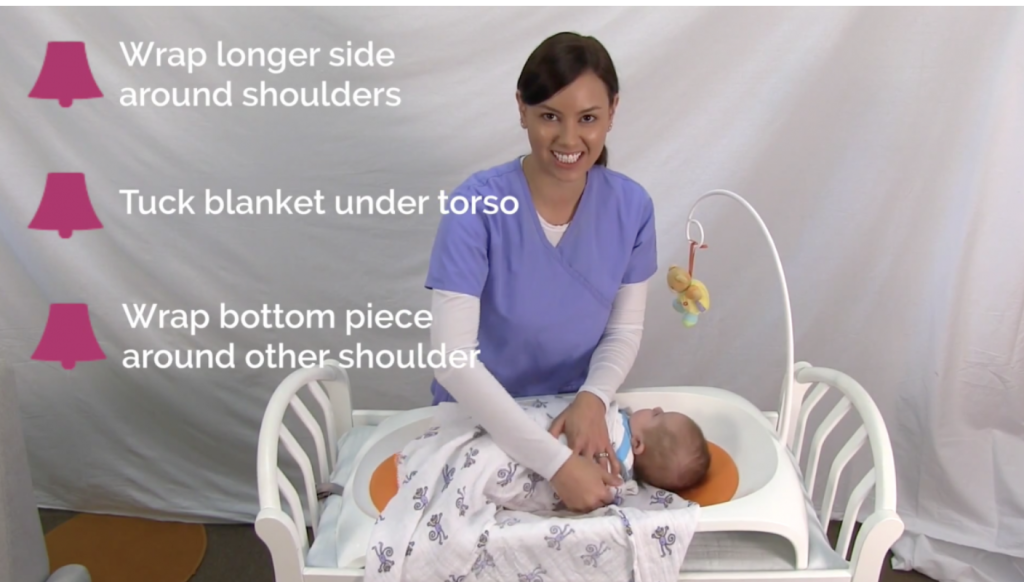
As Nurse Ashley demonstrates in our video, swaddling like a pro takes only a few tries to master, and the results are worth it. Babies sleep longer and more soundly when they feel snug and contained.
How to Swaddle Like a Pro
Why Swaddling Works
One reason swaddling is so effective is because it helps calm the Moro reflex, also known as the startle reflex. This is a completely normal, involuntary movement that all newborns have, where their bodies move as if startled. It’s a sign of a healthy nervous system and usually fades by 3 to 4 months of age. However, in the early weeks, the Moro reflex can cause babies to wake themselves up just as they’re falling asleep. A snug, safe swaddle helps limit those jerky movements so baby can stay asleep longer and feel secure, while still allowing the hips and legs to move naturally.
Safe Swaddling Basics
- Don’t swaddle the legs – It’s important to wrap only the torso and arms, never the newborn’s legs. Wrapping a baby’s legs down tightly can cause hip dysplasia, a condition where the hip joint doesn’t form properly. As the International Hip Dysplasia Institute states, Avoidance of forced or sustained passive hip extension and adduction in the first few months of life is essential for proper hip development. The American Academy of Pediatrics and also agrees that a safe swaddle allows the hips and legs to bend and move freely.
- Stop Swaddling when Baby Begins Rolling Over – Stop swaddling when baby begins to show signs of rolling over, which often happens around 2 or 3 months. For some babies, this can happen as early as 8 weeNot too aHotks. Even if your baby still enjoys being wrapped, it becomes unsafe once rolling begins. If your baby frequently breaks out of the swaddle or resists being wrapped, it’s also time to stop.
- No Weighted Products – Do not use weighted swaddles, weighted sleep sacs or weighted blankets. They can place too much pressure on a baby’s chest and lungs and go against AAP safe sleep guidelines.
- Not too Hot – Remember a swaddle blanket is another layer of clothing. Keep your home at a comfortable temperature and monitor baby to make sure they’re not getting too hot.
When to Swaddle and When Not To
Giving your baby lots of time outside the swaddle is great for their development too! Tummy time, being held facing out or even flat on their back in a safe spot all help strengthen muscles and coordination. Swaddling is for sleep and soothing, not for all-day use.
Transitioning Out of the Swaddle
You can help your baby adjust gradually by first leaving one arm out for several nights. Once they’re comfortable, let both arms out while keeping the wrap snug around the torso. After a few nights, you can eliminate the swaddle blanket altogether and transition to a sleep sack or wearable blanket.
Swaddling Troubleshooting
If your baby keeps breaking out, the blanket may be too small or loosely wrapped. Try a larger muslin or receiving blanket, or double-wrap using the techniques shown in our video. If your baby seems warm or fussy, make sure the room temperature is between 68–72°F and use a lightweight fabric. Babies who resist the swaddle may be approaching the rolling stage, in which case it’s time to start transitioning.
In our years of providing overnight newborn care, we’ve seen how proper swaddling helps reduce overstimulation and promote restful sleep. A snug, safe wrap helps babies calm more quickly and allows parents to get longer stretches of rest too. Always place your baby on their back to sleep and follow the 10 Steps to Safe Sleep for Baby.
For more baby care videos, visit our YouTube channel and to answer other newborn care questions, visit Your First Week Home with Baby: Ultimate Q&A
In addition to safe swaddling, your baby should always be placed on their back to sleep and following the 10 Steps to Safe Sleep for Baby.
And for more tips, visit Your Newborn and Postpartum Questions Answered: Expert Advice from Let Mommy Sleep
Categories
- Corporate Care & Partners
- COVID19 Archive
- En Espanol
- Expert Guides
- Hiring a Night Nanny
- Infant Safety
- Infant Sleep Hub
- Newborn Care
- Postpartum Health
- Twins & Multiples
- Work as a Night Doula
- zPost Archives